Rovos Rail can be a graceful introduction to Africa, but it should not be asked to represent the whole continent. The train offers one particular lens: heritage-style rail travel, formal dining, shared lounges, landscapes in motion and selected off-train visits.
A first journey becomes stronger when the chapters around the train add what it cannot—a close wildlife experience, time in a city, open-air landscapes or quiet at a lodge. The aim is contrast, not a collection of flags.
The short answer
For a first trip, choose a shorter Rovos Rail journey with clear gateways, then add one well-planned safari or destination stay. The current three-night Cape Town route is often the easiest fit. Durban or Victoria Falls may be better when their endpoints support the traveler’s priorities.
Arrive before the train, protect a hotel night after it and avoid putting a fixed international flight against the scheduled rail arrival. Rovos Rail depends on wider railway systems and states that routes, schedules and excursions can change.
Begin with the purpose of the first trip
“Africa” is not one itinerary. Ask what first drew the traveler: wildlife, Cape Town, wine, history, Victoria Falls, desert landscapes or the train itself.
The answer should determine how much time Rovos Rail receives. If a safari is the lifelong wish, the train should complement it rather than take nights away from it. If classic rail travel is the milestone, a longer journey may deserve the center.
Three first-trip structures often work:
Priority | Rail role | Possible wider shape |
|---|---|---|
South Africa introduction | Three-night Cape Town route | Cape Town, Winelands, Rovos Rail and one safari region |
Victoria Falls landmark | Three- or four-night Victoria Falls route | South Africa gateway, train, Victoria Falls and a nearby safari extension |
Rail-led expedition | Longer regional or multi-country journey | Strong gateway stays, the train as the main event and a simple recovery chapter |
These are planning frameworks, not packages. Current schedules, border requirements and availability decide what is feasible.

Choose a first route that leaves room
The current Cape Town journey is three nights over roughly 1,600 kilometres. It offers enough time to understand Rovos Rail’s daily rhythm without occupying most of a two-week vacation.
Cape Town is also a strong gateway. Several nights can support food, culture, coast, mountain scenery and private touring. The Winelands can be a separate stay or a day, depending on pace. Pretoria-area logistics at the other end require their own hotel and transfer plan.
The two-night Durban journey is shorter, but a short route is not automatically simpler. The wider KwaZulu-Natal chapter must have a purpose—coast, history, wildlife or another regional interest.
The Victoria Falls journey has a powerful endpoint and currently runs in three- and four-night patterns. It can create a natural first multi-country sequence, but border documents, flights and transfer arrangements must be checked carefully.
Longer journeys can be right for experienced slow travelers, yet they reduce the time available for independent Africa. For a first visit, route depth usually matters more than the number of countries.
Give the gateways time
The departure city should not be an airport waiting room. Arrive early enough to recover from long-haul travel, manage luggage, adapt to the time zone and resolve any delayed bag or flight.
Cape Town often deserves four or more nights when it is a major part of the trip. Weather can affect mountain and coastal touring, so multiple days create alternatives. One clear private touring plan is better than a packed checklist.
Pretoria and Johannesburg require precise logistics. Confirm the correct station or Rovos Rail departure point, hotel location, transfer time and security arrangements. A city name alone is not a plan.
Victoria Falls deserves time beyond the rail arrival. Seasonal water levels change the appearance and sound of the falls. Activities, viewpoints and regional combinations depend on the exact side, border and season.
At the final gateway, protect at least one hotel night before a fixed international flight when possible. This buffer respects the operator’s current warning that rail schedules can change. It also gives the traveler space after several formal, social days aboard.
Add a safari for contrast, not completion
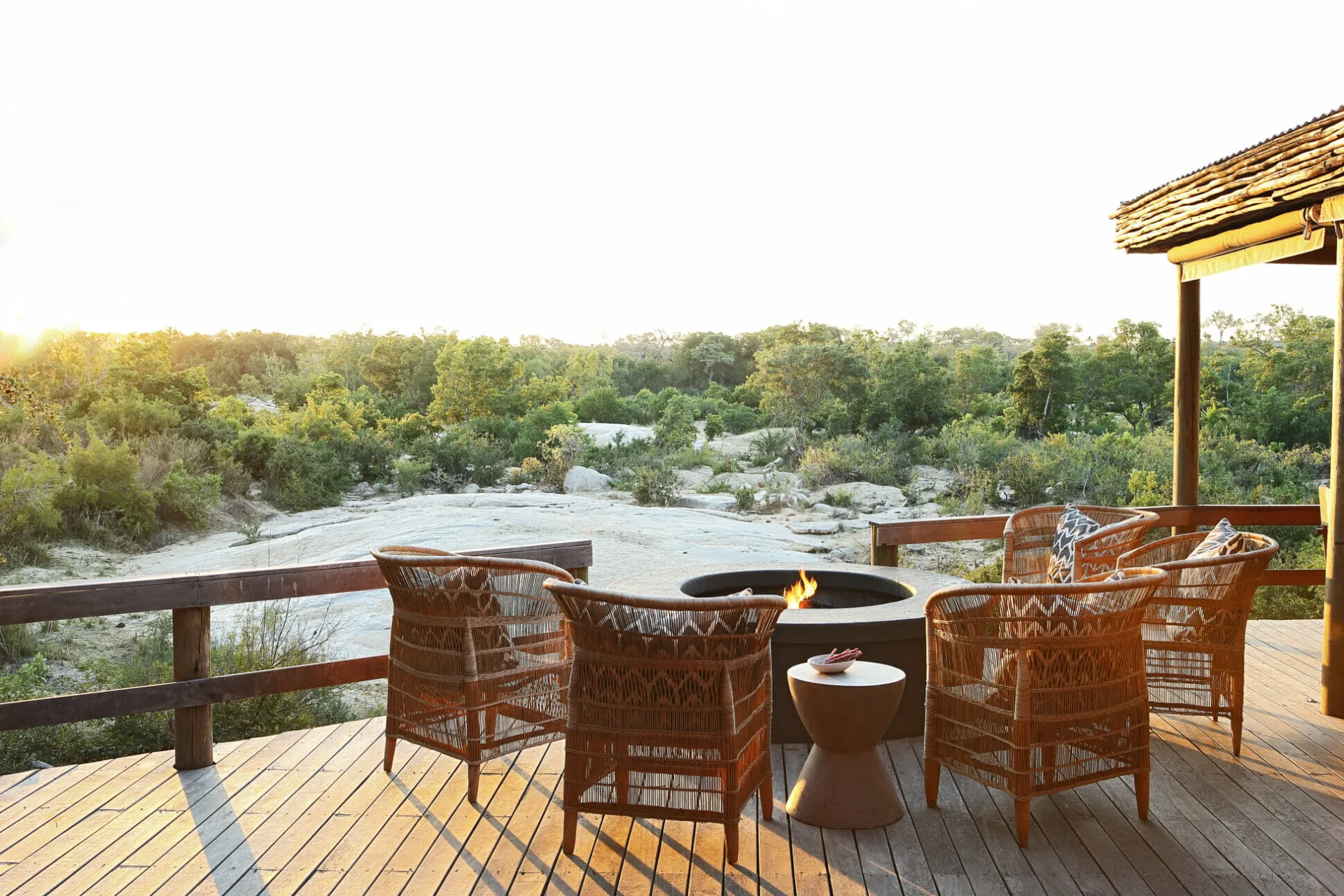
A safari can be the strongest companion to Rovos Rail because the rhythms are so different. The train is enclosed, linear and social. Safari days are open-air, early, quiet and responsive to wildlife.
Choose one region that fits the route and season. Avoid crossing the continent only to add a famous name. The best safari is the one whose lodge, guiding, habitat and travel time match the traveler.
Allow enough nights. A two-night safari often produces only one full day between transfers. Three or four nights create a better chance to settle into the landscape and accept that wildlife does not follow a schedule.
Check the transfer honestly. A “nearby” reserve may still require a flight, road journey and lodge transfer. Small-aircraft luggage rules may be stricter than the train’s. Soft-sided bags and a coordinated baggage plan can prevent a last-minute repack.
If safari is not the priority, choose a different contrast: coast, desert, a private art-and-food stay or quiet at a resort. The wider trip should reflect the traveler, not a standard first-Africa checklist.
Keep the itinerary geographically clear
Maps make Southern and East Africa look easier to combine than airline schedules do. Each border, domestic flight and remote transfer can consume most of a day.
A well-paced first trip often has three chapters: gateway, rail, safari or contrasting stay. Four can work when the traveler has enough time. Six usually turns the journey into logistics.
Group destinations by natural connections. Cape Town and the Winelands fit together. A South African safari can fit before or after the Cape Town route. Victoria Falls can combine with regional wildlife, but the exact border and flight plan needs review.
Ultralong Rovos journeys already contain several countries and off-train experiences. Do not add an equally ambitious land circuit immediately afterward. Choose a simple ending that allows rest.
Every additional flight should earn its place. Ask whether the new region provides something clearly different or simply another famous name.
Select the suite for the actual duration
Rovos Rail currently publishes Pullman/Pullman Gold at approximately 7 square metres, Deluxe at 10 and Royal at 16. All are ensuite, but their private living space differs.
Pullman can be suitable for a short first journey when guests expect to use the public cars. Deluxe provides a balanced private lounge area. Royal creates the strongest retreat and includes an ensuite with bath and shower.
On a three-night route, moving to Royal may matter less than adding a private guide or another safari night. On a two-week expedition, the larger suite may shape daily comfort enough to justify the tradeoff.
Review bed arrangement, bathroom use, storage and nighttime movement. Then consider the social rhythm. Formal meals and lounges are central to Rovos Rail. Travelers who prefer full privacy need to understand that a larger suite changes the retreat, not the communal character of the train.
Mobility needs route-specific confirmation. Historic carriages, narrow passages, boarding steps and off-train coaches may present challenges that suite size alone does not solve.
Prepare for borders, health and luggage
Entry requirements depend on nationality, route and date. Longer journeys may cross several countries. Passports, visas, health requirements and travel insurance need current, traveler-specific review from authoritative sources.
A travel planner can coordinate reminders and logistics, but travelers should obtain medical advice from a qualified professional. Some regions may involve malaria risk, heat, altitude or remote access. Do not rely on a generic Africa packing list.
Luggage should be planned across the strictest segment. A light-aircraft safari flight may set a lower limit than the train. Use soft-sided bags when required and arrange storage for items not needed during the remote chapter.
Pack for two worlds: practical daytime touring and the train’s current evening dress expectations. Neutral safari clothing does not need to become costume, and formal rail wear should not take over the suitcase.
Keep medication, documents and valuables accessible. Confirm refrigeration or other medical storage before travel if needed.
Protect the handoffs
Every point between air, road, rail and lodge needs a named owner. Confirm who meets the traveler, where, at what time and with what contact route if a flight changes.
Arrive at the train’s departure region with a buffer. Do not land internationally and attempt to board after a fragile connection. At the end, do not schedule a same-day long-haul departure unless the operator and itinerary make the risk explicit and the traveler accepts it.
Rovos Rail’s disclaimer notes its dependence on national railway services and the possibility of changes to schedule, route and excursions. That is not a reason to avoid the train. It is a reason to design the next day well.
Insurance should cover the actual trip value and activities. Read the policy rather than assuming “comprehensive” includes rail delay, remote medical care or every safari activity.
A calm handoff is part of luxury. It is rarely visible in a photograph, but it determines how the journey feels.
Before confirming, read the itinerary as if one small disruption has already happened. If the inbound bag arrives a day late, are essentials accessible? If the train reaches the final city later than expected, is the next flight protected? If weather changes a Cape Town day, is there another meaningful plan?
This does not require adding idle days everywhere. It means placing flexibility where failure would have the greatest effect. The night before boarding and the night after arrival are usually more valuable than a spare night in the middle of a stable hotel stay.
For a safari connection, confirm what happens if a scheduled flight moves. Know whether a private road transfer is realistic, whether a lodge charter can be changed and who holds responsibility for each piece. Do not make a same-day train-to-light-aircraft connection the only path.
Give travelers one simple contact plan for the whole journey. They should know who handles a rail question, who handles a delayed international flight and who meets them at a remote airstrip. The answer may involve several suppliers, but it should not feel like several separate vacations.
Finally, preserve rest. A first Africa trip carries sensory and emotional weight. A quiet afternoon after Rovos Rail or before safari may help the traveler experience more, not less.
Apply a “one reason per chapter” test. Cape Town may provide urban culture and coast. Rovos Rail provides the formal slow journey. Safari provides wildlife and open air. If another stop repeats one of those purposes without adding depth, remove it or extend the stronger chapter.
This test is especially useful when flight maps make another country look easy. A new border can add forms, waiting, baggage rules and a lost day while contributing only one hurried sight. First journeys benefit from continuity.
The order can still be personal. Active travelers may prefer safari first and the train as a refined finish. Others may want Rovos Rail first, followed by days with fewer dress expectations and more privacy. The best sequence balances energy, not prestige.
Discuss the emotional finish as carefully as the first arrival. Returning home immediately after a long expedition can feel abrupt. One quiet gateway night, a familiar hotel and a private transfer can close the trip more gracefully.
The completed itinerary should be explainable without a map: where the traveler settles, what the train adds, what the land chapter adds and how the trip ends. If that story is clear, the logistics usually become easier to defend.
Build three clear chapters
A first Africa journey does not need to prove how much ground can be covered. A thoughtful gateway, the right Rovos Rail route and one contrasting land experience can reveal far more.
Evyssa can coordinate the rail journey, suite, transfers, safari and gateway hotels as one complete plan. Explore Evyssa’s custom rail vacations.
Is Rovos Rail good for a first trip to Africa?
Yes, especially when a shorter route is paired with substantial gateway time and one contrasting land experience. The train should be one lens on the region, not the whole definition.
Which Rovos Rail route is best for a first visit?
The current three-night Cape Town route is often the easiest to place within South Africa. Durban or Victoria Falls may be better when those destinations are already central to the trip.
Should the safari come before or after the train?
Either can work. Safari first creates an active opening and a refined rail finish. Train first creates a structured beginning and an open-air contrast. Flights, season and lodge availability should decide.
How many days should a first Africa trip allow?
There is no universal number. Allow enough time for gateway recovery, the complete rail journey and at least three or four safari nights if wildlife matters. Avoid measuring the trip by country count.
Can we fly home on the day the train arrives?
It is safer to protect a hotel night because Rovos Rail states that schedules can change. The buffer also creates a more comfortable end after a long journey.

Csilla Dali
Founder & Lead Travel Advisor
Itineraries to consider
Are You Planning Your Next Vacation?
Check out our top recommendations!