Packing for the Venice Simplon-Orient-Express is easier once you stop treating it as a single formal dinner. Your clothes also have to work at the station, through daytime meals, inside a compact cabin and on arrival in another city.
The official standard is clear, but it still leaves practical questions. How formal is formal? Which shoes make sense on a moving train? Where does the suitcase go? The useful answer is a small wardrobe planned around the train's dress guidance and the space available in your cabin.
The short answer
Pack smart daywear and formal evening attire. Belmond's current guidance requests formal dress at dinner, notes that many guests choose black tie, recommends smart daywear and does not accept jeans at any time. Bring daytime pieces that hold their shape, a complete formal look, one versatile outer layer and stable shoes.
Keep everything needed aboard in your hand luggage, overnight bag or suit carrier. The suitcase stored in the baggage car is not accessible until the destination on the standard luggage arrangement. Final departure documents should still be checked because routes, special events and luggage handling can differ.
Start with the official dress standard
Venice Simplon-Orient-Express is more formal than many contemporary luxury trains. The current operator FAQ makes the main expectations unusually direct:
formal evening attire is requested for dinner;
many guests choose black tie;
smart daywear is appropriate, with a jacket and tie or equivalent suggested for lunch;
jeans are not accepted at any time.
Those are the operator's rules. The rest of the wardrobe advice in this guide translates them into a packing plan; it does not add new prohibitions.
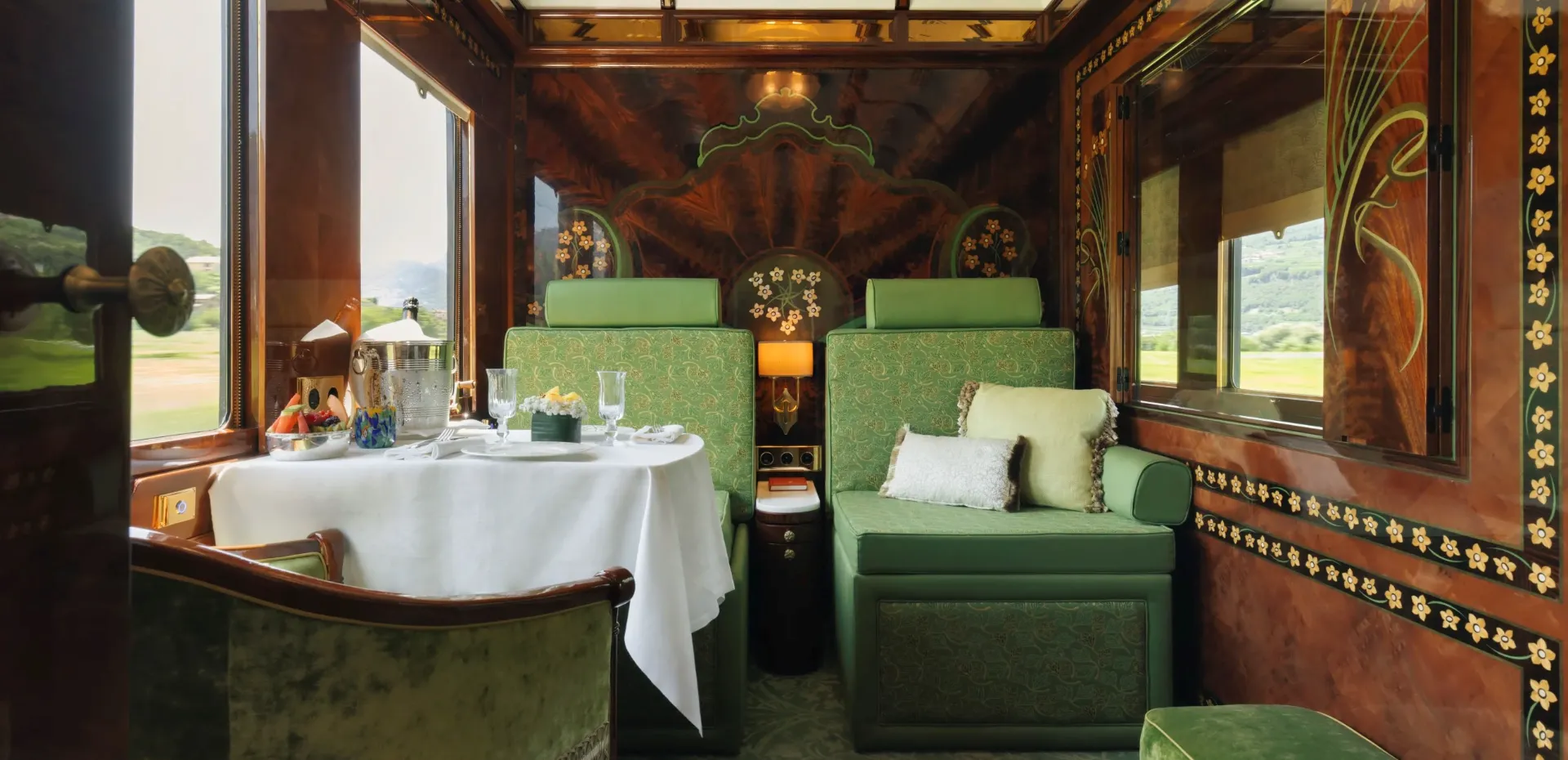
For dinner, a tuxedo is a straightforward choice. A dark formal suit may also meet the written standard when the final guidance confirms it. Other suitable options can include a long dress, cocktail dress, formal jumpsuit or polished evening separates. The exact garment matters less than whether the complete look reads as formal and can be worn comfortably through dinner and the bar car.
Special departures may have their own theme or instructions. Ask through the booking channel if a planned outfit sits near the edge of the guidance. Written departure information should control the final decision.
During the day, aim for clothing that would feel appropriate at a smart lunch. Tailored trousers, refined knitwear, a day dress, a skirt with a polished top or a collared shirt with a jacket all work within that idea. Choose fabrics that recover after sitting and pieces that do not need constant adjustment.

Build one wardrobe for day, dinner and arrival
A useful capsule covers three scenes rather than assigning a different outfit to every hour.
Daytime aboard
Start with one polished boarding outfit that works through lunch and the afternoon. A fine knit, blouse or shirt under a jacket gives flexibility if the carriage or platform feels cooler than expected. Trousers, skirts and dresses should be comfortable while seated for long stretches.
Breakfast may be served in the cabin, but the rest of the day can involve restaurant cars, the bar and moving between carriages. Clothing should allow you to stand, turn and walk normally. Very long hems, tight tailoring and pieces that crease at the first bend create more work than pleasure.
Formal dinner
Pack the dinner look as a complete set: clothing, shoes, hosiery or socks, belt or braces, jewelry and any grooming item that cannot be replaced aboard. Put every part in cabin luggage. A formal jacket in the stored suitcase is no use once the train has left.
Choose closures and layers that can be managed in the space you booked. A dress with a simple fastening, a formal jumpsuit or evening separates can be easier than a garment that needs another person and a large dressing area. For a suit or tuxedo, check that the shirt, shoes and small accessories are together before check-in.
Morning and arrival
Set aside a fresh smart outfit before the cabin is prepared for sleep. It should be easy to reach in the morning and suitable for the weather and plans at the destination. If Venice, Paris or another gateway includes a hotel transfer, lunch or sightseeing before check-in, dress for that sequence rather than for the train alone.
Repeating a jacket, shoe or evening separate is sensible on longer journeys. A restrained color palette makes the wardrobe smaller without making it feel repetitive.
Accessories should earn their place. One evening bag, a compact scarf or wrap and a small jewelry edit are usually enough. Keep valuable pieces with you rather than in checked luggage, and leave irreplaceable items at home if wearing them would create worry. The aim is to get dressed without turning every change of clothes into an inventory exercise.
Sleepwear should also suit the cabin. In a Historic Cabin, the washbasin is in the room and the restroom is down the carriage, so a robe or polished cover-up can be useful. Pack slippers only if they are stable underfoot; a secure shoe is safer when walking through the carriage at night.
Let the cabin and luggage plan set the volume
The level of formality stays the same across cabin categories, but the dressing experience changes.
A Historic Cabin is compact. Its banquette converts to upper and lower berths, a washbasin sits inside the cabin and shared restrooms are at the end of the carriage. Two travelers may need to dress in turns. Formalwear with complicated trains, broad skirts or several bulky layers can be awkward in this arrangement.
A Suite adds a private en-suite bathroom and a double or twin bed configuration that converts to a daytime lounge. It removes the shared-restroom question but remains a train cabin with limited storage.
A Grand Suite adds separate sleeping and lounge space plus a larger private bathroom. That can make dressing easier, particularly when two people keep different routines, but the room is still not a reason to bring an unlimited wardrobe.
Before closing the suitcase, ask:
Where will the dinner clothes hang?
Can both travelers change comfortably, or should they take turns?
Which toiletries and medication must remain accessible?
What will you wear if the cabin is already set for sleep?
Which pieces can serve more than one scene?
Belmond currently separates luggage into three groups. Hand luggage stays with the passenger and should contain documents, medication, valuables and essential personal items. Cabin luggage holds the clothes and toiletries needed during the journey; the operator suggests an overnight bag or suit carrier. Through luggage goes into the baggage car and is not accessible until the destination.
The current allowance is one suitable hand-luggage item, one suit carrier or overnight bag in the cabin and one suitcase in the baggage car per passenger. London and cross-Channel journeys involve extra handling, so confirm the exact instructions rather than applying a continental journey's routine automatically.
Do not use the cabin bag as overflow from the larger vacation. Pack it for the train in the order you will need things. Documents and medication stay at the top of hand luggage. Dinner clothes should remain protected but accessible. Morning clothing should sit where it can be reached after the beds are made up.
Couples should divide essential items rather than put everything into one case. If one bag is delayed before boarding, each traveler should still have medication, documents and at least the core of the formal and arrival wardrobe. This is general travel-risk advice, not an operator luggage rule.
Choose shoes, layers and grooming for a moving train
Shoes have to satisfy both the dress standard and the setting. A polished loafer, low heel or stable formal shoe is often more useful than a narrow stiletto. Wear each pair before travel; the train is a poor place to discover that a new shoe slips or causes blisters.
Belmond's public FAQ does not name trainers as a separate prohibited category. Avoiding athletic trainers is Evyssa packing advice based on the smart-daywear and formal-dinner standards, not a quoted operator ban. A clean, supportive shoe may be necessary for medical or mobility reasons. In that case, protect safe movement first and confirm any concern through the booking channel.
Most travelers do not need a different shoe for every look. A practical plan often includes a smart daytime shoe, a stable formal shoe and, only when the wider trip requires it, an outdoor pair for weather or excursions. Sometimes one polished shoe can cover both daytime and dinner.
Layers should follow the full route. A light knit, wrap, jacket, trench or wool coat can bridge the carriage, station and destination. Check the weather in every gateway close to departure; Paris, the Alps and Venice can produce different conditions within the same journey.
The current FAQ says there is no laundry service and no iron aboard. Choose fabrics that travel well and arrange pressing at the hotel before the train if a formal piece needs it. A hanging garment bag protects clothing, but it does not create more cabin space.
Keep grooming compact. Travel-size products, a small brush or comb and only the tools you actually use are enough. Confirm plug and voltage needs for the wider trip, and do not pack an item that the final train guidance restricts.
Adjust the capsule to the length of the journey
For a one-night Paris–Venice journey, the onboard wardrobe can stay small: one smart boarding outfit, one formal dinner look, sleepwear and a fresh arrival outfit. A jacket, shoes or daytime layer may repeat.
Longer journeys need a scene-by-scene plan rather than a multiplication of the one-night list. Separate train nights from hotel nights and excursions. Confirm when the larger suitcase is available, which formal evenings take place aboard and whether hotel pressing or laundry can be arranged off the train.
A longer program may need:
smart daytime clothing for several carriage days;
formal looks built from repeatable pieces;
practical layers and shoes for each off-train program;
hotel clothing that does not depend on opening the wrong bag;
a clean outfit reserved for the final arrival.
For a wider European vacation, keep train-only pieces together. Clothes needed later in Italy, France or another destination can stay in through luggage if the written handling plan confirms they will not be needed sooner.
Do a final first-24-hours check. Picture boarding, lunch, changing, dinner, sleep, breakfast and arrival in order. If any stage requires an item from the stored suitcase, repack it.
Photograph the finished packing list or keep it on your phone. A quick record makes repacking after a hotel stop easier and helps confirm that formal shoes, small accessories and medication returned to the correct bag. It also reduces the chance of leaving an item in a wardrobe when the itinerary includes several gateways.
Common mistakes and who may prefer another train
The most common error is packing for photographs rather than movement. Formal clothing still has to work while sitting, using a compact bathroom and walking through narrow corridors. Stable shoes and manageable garments do more for confidence than an extra outfit.
Another mistake is treating formal dress as optional. Travelers who want denim, casual T-shirts and athletic footwear throughout the vacation may be happier on a rail product with a more relaxed code. The same is true for anyone who dislikes formal social settings or sees dressing for dinner as an obligation.
Overpacking creates its own strain. Too many separate outfits compete with cabin storage and make getting ready slower. Repeated pieces, a planned color palette and a complete packing list are more useful than a wardrobe assembled by impulse.
Travelers with mobility needs should choose clothes and shoes around safe movement first. Clothing cannot solve steps, corridor width or carriage access. Discuss assistance for the exact train, cabin and off-train program separately.
Families should confirm the current dining and public-car guidance for children. The operator describes the atmosphere as adult-oriented and leaves some access decisions to the Train Manager. A child's clothes should meet the setting without making a long meal uncomfortable.
Is black tie mandatory on Venice Simplon-Orient-Express?
Belmond requests formal evening attire and says many guests choose black tie. The public wording does not say that every guest must wear a tuxedo. Confirm any special-event instruction in the final documents.
Can I wear jeans during the day?
No. The current official FAQ says jeans are not acceptable at any time. Choose smart trousers, a skirt, dress or another polished daytime option.
Can I wear trainers?
The official FAQ does not list trainers by name. Evyssa's practical advice is to choose polished footwear that fits smart daywear and formal dinner, while keeping any medical or mobility need first. Confirm an uncertain pair before travel.
Is there room for a large suitcase in the cabin?
The current plan provides for a suit carrier or overnight bag in the cabin and a suitcase in the baggage car. The stored suitcase is not accessible until the destination, so all onboard clothes belong in cabin luggage.
Do longer journeys need several formal outfits?
They need a plan for each formal evening, but that does not require completely separate looks. Repeat a tuxedo, suit, dress, shoe or evening separate when it travels well, and confirm the exact train and hotel sequence first.
A successful wardrobe helps you move comfortably from station to lunch, dinner and arrival. It respects the train's formal standard without turning the cabin into a dressing room.
If you want the rail journey, gateways and luggage plan designed together, explore Evyssa's custom rail vacations.

Csilla Dali
Founder & Lead Travel Advisor
Itineraries to consider
Are You Planning Your Next Vacation?
Check out our top recommendations!