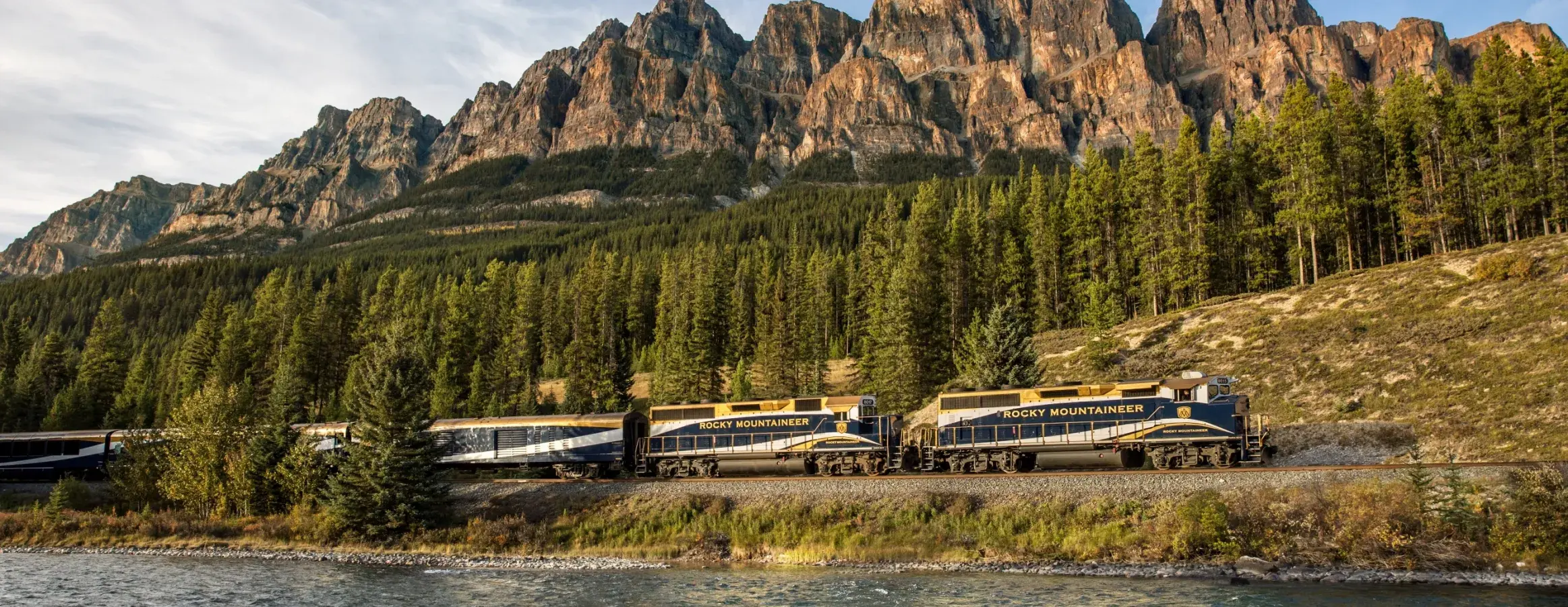
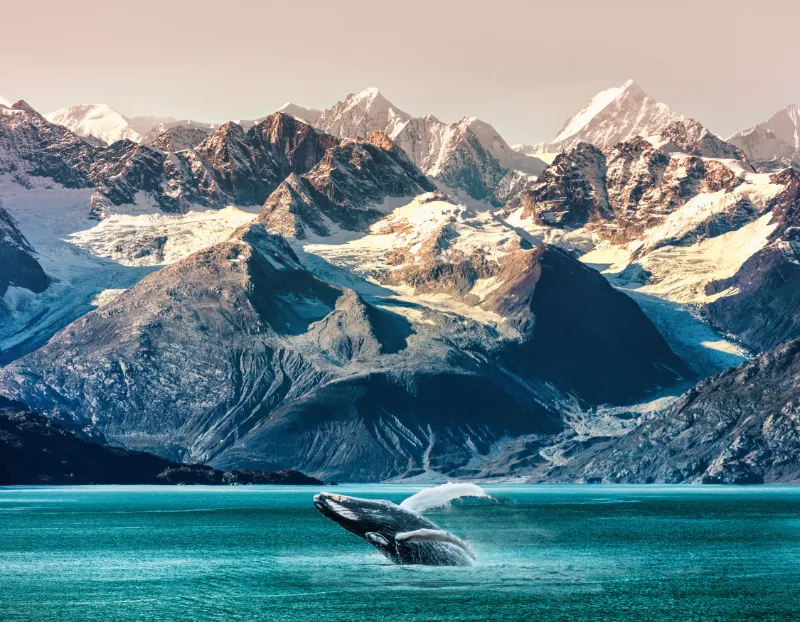
On Rocky Mountaineer, both service levels travel through the same landscape on the same train. The peaks do not become taller in GoldLeaf, and the river does not move more slowly in SilverLeaf. What changes is how the day is organized around the view.
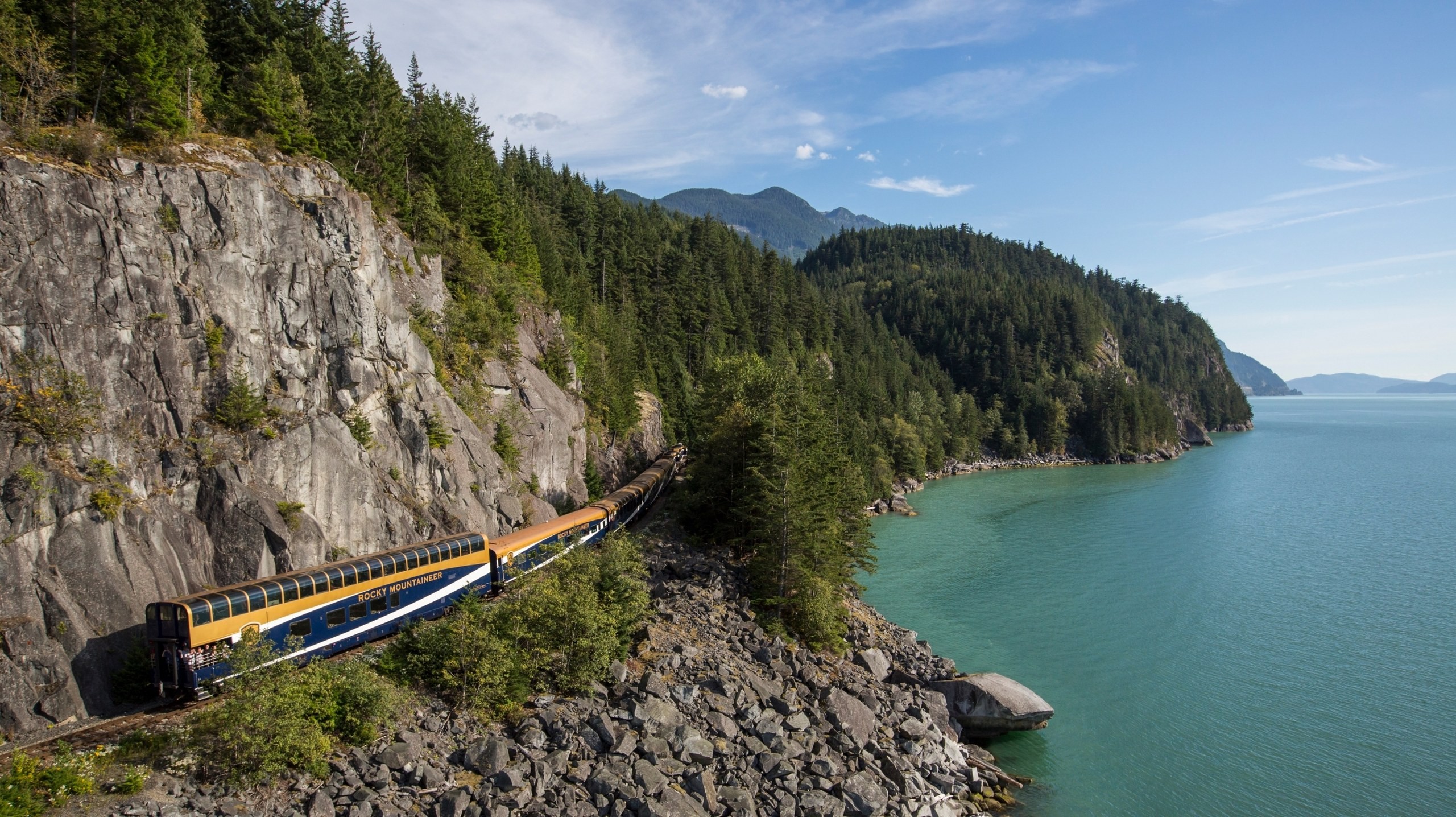
GoldLeaf uses a bi-level coach: panoramic seating upstairs, a dining room below and a larger outdoor platform. SilverLeaf keeps the experience on one level, with oversized windows and meals served at the seat. The right choice depends on movement, dining preference, social style, route availability and what the upgrade would replace elsewhere in the Canadian journey.
The short answer
Choose GoldLeaf when upper-level dome views, a separate dining room and a larger outdoor platform will materially improve the experience. Choose SilverLeaf when staying on one level, eating at the seat and retaining the same core daylight scenery feels more comfortable or better balanced with the total trip budget.
Both currently include meals, beverages, snacks, host storytelling and scenic daylight rail travel. Neither is a sleeper cabin: guests leave the train for a hotel night in the route's midpoint city. Train service level and hotel category are separate choices, so never assume a GoldLeaf seat automatically determines the best available hotel throughout a package.
Compare the day, not just the feature list
Decision point | SilverLeaf | GoldLeaf |
|---|---|---|
Coach | Single level with oversized windows | Bi-level glass-dome coach |
Meals | Served at the seat | Served in a separate lower-level dining room |
Outdoor viewing | Smaller viewing area | Larger outdoor viewing platform |
Movement | Most of the day remains on one level | Two levels; confirm staircase or elevator arrangements in advance |
Route availability | Confirm the selected 2027 departure on First Passage to the West or Journey Through the Clouds | Confirm the selected 2027 departure; do not assume that every route in an older brochure remains available |
Best fit | Travelers who value simplicity, continuity and the scenery itself | Travelers who value a more theatrical viewpoint and restaurant-style change of scene |
This is not a comparison between basic and luxurious. SilverLeaf is a hosted premium rail experience. GoldLeaf adds space and a different rhythm. The important question is whether those additions fit the people traveling.

GoldLeaf: a more layered day
GoldLeaf's upper level places guests beneath a glass dome with broad views. The separate dining room below creates a change of scene at mealtimes, and the larger outdoor platform offers fresh air and photography without glass between camera and landscape.
That physical separation gives the day chapters. Guests watch from above, move downstairs for breakfast or lunch, step outside for a photograph, then return to their seats. Some travelers find this movement energizing. It makes the service feel more like several experiences inside one day.
The view is not simply “better” from every angle. The elevated perspective and dome can reveal more of the mountain skyline, while an outdoor platform can produce clearer photographs. Yet weather, light, seat position and the side of a specific scene still matter. No service level guarantees an unobstructed image at every moment.
GoldLeaf has two levels, connected by a spiral staircase. The operator also describes an elevator for guests who need it, with advance arrangements. Confirm the exact coach, boarding assistance and transfers before choosing a service for a traveler with limited mobility.
SilverLeaf: continuity and simplicity
SilverLeaf keeps seating, views and meal service on one level. Guests remain in their reclining seats while food is served, and oversized windows keep the scenery central. A smaller outdoor viewing area is available.
For some travelers, this continuity is the luxury. There is no need to interrupt a conversation or descend to a separate restaurant as a river bend appears. A person who dislikes stairs may feel more confident. A couple who wants a quieter, less ceremonious day may prefer the format.
Meals at the seat change the atmosphere. Dining becomes part of watching the landscape rather than a separate social occasion. That can feel relaxed and intimate, though travelers who love restaurant ritual may miss the dedicated room.
SilverLeaf should not be described as access-free or universally suitable. Station boarding, coach thresholds, restroom layout and the outdoor area still need individual confirmation. Staying on one level addresses only one part of the journey.
Let mobility make an honest contribution to the decision
The service-level conversation should include every traveler, not only the person making the reservation. Can everyone manage stairs on a moving train? Does anyone use a cane, walker or other aid? Would repeated changes of level create fatigue? Is a smaller outdoor area enough for the desired photographs?
Ask Rocky Mountaineer for current, specific accessibility information. Describe the person's needs in plain detail rather than asking whether the train is “accessible.” The useful answer explains boarding, seat transfer, steps, restroom access, mobility-aid storage, hotel transfer and platform assistance.
Mobility also continues after the train. Canadian Rockies itineraries can involve motorcoach steps, hotel changes, uneven viewpoints and national-park paths. Choosing SilverLeaf does not solve an unsuitable land program. Choosing GoldLeaf does not require every traveler to use every feature, but that should be confirmed rather than assumed.
If travelers have different mobility needs, compare the whole journey before choosing a service. Ask whether the confirmed elevator, boarding and transfer arrangements would make GoldLeaf comfortable for everyone. SilverLeaf may still offer a simpler day, but stairs alone should not decide the comparison.
Also consider how often someone needs to leave the seat. Restroom location, balance while walking, fatigue and the timing of medication can influence the day. Ask for an explanation of the current coach rather than relying on a label such as “easy access.” A useful answer names the path a traveler must take.
For a guest with hearing or vision needs, host storytelling and window position may matter as much as stairs. Ask what assistance can be arranged and whether a companion seat request is confirmed. Accessibility is a complete service conversation, not a reason to assume SilverLeaf or GoldLeaf without evidence.
Decide how you want meals to feel
Rocky Mountaineer currently includes breakfast and lunch on full rail days, together with beverages and snacks, but the style differs. GoldLeaf's separate dining room creates a restaurant rhythm. SilverLeaf serves meals at the seat, keeping guests with the view.
GoldLeaf can suit travelers who enjoy meeting others over a meal and like the ceremony of moving to another space. The seating and dining rotation may introduce conversation beyond the immediate pair. Ask how tables are arranged if privacy or social interaction matters.
SilverLeaf suits travelers who want a more continuous scenic experience. It can also be simpler for someone who manages medication, fatigue or movement around meals. Yet the tray and seat environment may feel less like a destination restaurant.
Dietary needs require advance confirmation in either service. State allergies, medical restrictions and strict preferences before travel. Ask what can be accommodated, how meals are handled, and whether the hotel and land portions of a package have separate arrangements.
Photography and the outdoor platforms
Glass-dome views are part of GoldLeaf's appeal, but glass can produce reflection. The larger outdoor platform offers a place to photograph without it. SilverLeaf's smaller outdoor area can serve the same basic purpose, though space may be more limited.
Photographers should think beyond coach category. Light direction, weather, smoke, rain, seat position and the speed of a scene all affect the result. Keep equipment compact and secure. A large camera bag underfoot can reduce comfort for everyone.
Do not spend the entire journey waiting on a platform. The hosts often provide context before major views, and some landscapes unfold for hours rather than seconds. The best photograph may come from being ready at the seat, not chasing every opening outdoors.
If open-air access is essential, ask how it works on the exact coach and what restrictions apply. Operational or weather conditions can affect access. Treat it as a feature, not an unconditional guarantee.
Route availability may decide before preference does
For a 2027 trip, confirm SilverLeaf and GoldLeaf on the exact First Passage to the West or Journey Through the Clouds departure under consideration. A general service description does not establish live availability. Routes found in older guides, including Rainforest to Gold Rush, need a fresh year-specific check before being offered as alternatives.
Choose the route around the places you want on land. First Passage naturally supports Banff or Lake Louise; Journey Through the Clouds connects with Jasper. Then confirm the available service levels on the chosen date. A longer route from an older guide should not shape the land plan until its 2027 availability is confirmed.
Availability also changes by departure. A preferred service can sell before a date does. Ask for live inventory and avoid building the entire Canadian itinerary around a category shown only in general marketing.
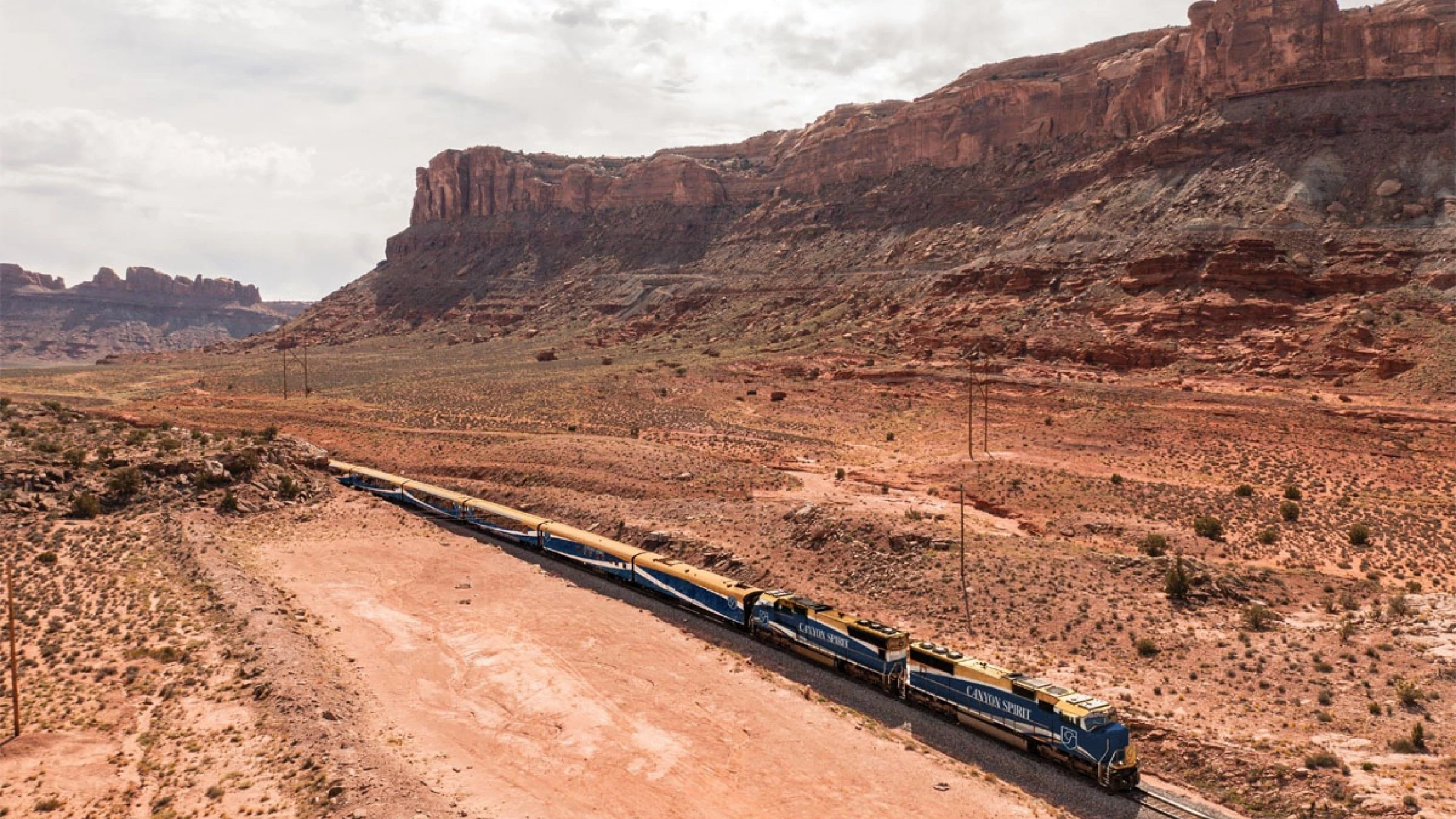
Do not confuse Rocky Mountaineer's Canadian services with Canyon Spirit, the separate brand now used for the former United States route. The names, routes and products should stay distinct in public copy and booking documents.
Separate train service from hotel quality
Rocky Mountaineer is daylight-only. Guests sleep in a hotel at the midpoint, such as Kamloops on the two-day Vancouver–Rockies routes, then return to the train the next day. The rail seat and the hotel are different product decisions.
Package names can combine service and hotel expectations in ways that are easy to misunderstand. Ask for the exact hotel category and then the actual property when it becomes available. In smaller rail towns, the hotel may be practical rather than resort-like. The point is rest and logistics, not necessarily another luxury destination.
The land hotels before and after the train matter more. A well-positioned stay in Vancouver, Banff, Lake Louise or Jasper can shape several days of the trip. It may be wiser to choose SilverLeaf and protect a stronger land sequence than to upgrade the coach and compromise those hotels.
Compare complete, current costs without placing supplier prices in evergreen copy. Measure what the GoldLeaf difference buys and what else it might displace: an extra park night, private transfer, specialist guide or room category. Luxury is the balance of the whole itinerary.
Do the comparison for every traveler, not only per room. A family or group upgrade can become a major share of the Canada budget. The extra cost may still be worthwhile for a milestone, but the decision should be made beside the land itinerary rather than in isolation.
Value also depends on the number of rail days. A two-day route gives guests two days to use the service. Calculate the upgrade’s value from the confirmed 2027 itinerary and the features each traveler will use, rather than from a photograph of one lunch.
Ask what is included in the live proposal: service, meals, beverages, midpoint hotel, transfers and any land package. Then mark what remains separate. Two quotes using the same service name can represent different complete trips.
Finally, protect the places after the train. Banff, Lake Louise and Jasper need time, not only expensive rooms. If GoldLeaf forces those stays to become shorter, SilverLeaf may create the stronger luxury vacation. If the upgrade leaves the land plan intact and its features matter, GoldLeaf can be a clear, personal choice.
When two travelers disagree, ask each to rank the dome view, dining room, outdoor platform, stairs and remaining land budget. The result usually reveals whether the preference is about one important feature or the idea of choosing the highest category. Solve for the feature that matters. A shared decision is more valuable than an upgrade one traveler quietly resents. The most useful choice leaves both people comfortable, curious and ready for the Rockies beyond the train.
Choose the rhythm that lets you notice the landscape
GoldLeaf and SilverLeaf are two ways to spend the same scenic day. One divides it into dome, dining room and platform; the other keeps meals and views together on one level. The better choice is the one that leaves the travelers comfortable enough to pay attention.
Evyssa can compare current route and service availability, then balance the hotels, park time and transfers around the rail experience. Explore Evyssa's custom rail vacations.
Do GoldLeaf and SilverLeaf travel through different scenery?
No, not when they are on the same train and route. They see the same landscape. The viewing height, dining format, outdoor area and movement through the coach differ.
Does Rocky Mountaineer have sleeper cabins?
No. It is a daylight scenic train. Guests stay in a hotel overnight at the route's midpoint and return to the train the next day.
Is GoldLeaf better for photography?
Its elevated dome and larger outdoor platform can help, especially for photographs without glass reflections. Weather, light, seat position and access still matter, so no category guarantees a particular image.
Is SilverLeaf suitable for someone who avoids stairs?
Its single-level service can reduce movement between seating and dining, but boarding, restroom access and transfers still need individual confirmation. GoldLeaf’s elevator arrangements should also be discussed before deciding that stairs rule it out.
Does GoldLeaf include a better hotel?
Not automatically. Train service and hotel tier are separate decisions. Review the exact package and written hotel information rather than inferring accommodation from the coach.

Csilla Dali
Founder & Lead Travel Advisor
Itineraries to consider
Are You Planning Your Next Vacation?
Check out our top recommendations!