Paris to Venice and Paris to Istanbul share the same train name, yet they play very different roles in a vacation. One is a single overnight between two city stays. The other is a five-night program with several countries, hotel stops and guided experiences.
The useful comparison is not which route sounds more impressive. It is how much time you want the railway to occupy, how you feel about a structured multi-day program and what the surrounding cities need from the wider itinerary.
The short answer
Choose Paris to Venice for a one-night introduction that fits easily between longer stays in Paris and Italy. Choose Paris to Istanbul when you want the rail route to become the center of the trip and can give it five nights overall.
The current 2026 Paris–Istanbul program lists three nights aboard, plus hotel nights in Budapest and Bucharest. It is not five consecutive nights in one cabin. Compare the exact year and direction, the train and hotel sequence, excursions, luggage handling and entry requirements before choosing.
The two journeys at a glance
Decision | Paris to Venice | Paris to Istanbul |
|---|---|---|
Current program length | One night | Five nights overall |
Current nights aboard | One | Three |
Hotel nights inside the program | None | Current plan includes Budapest and Bucharest |
Daily rhythm | Board, dine, sleep and arrive the next day | Train days, hotel stops, guided experiences and border crossings |
Stronger fit | A first experience or a vacation already centered on Paris and Italy | A rail-focused trip that gives the route itself substantial time |
Main planning question | Can both gateways have enough time around the train? | Do the structure, cabin time and hotel changes suit both travelers? |
This table reflects the official 2026 pages checked on August 28, 2026. Railway constraints can change timings, and future programs may change the sequence or inclusions.

Compare the full shape of each route
Paris to Venice
The current Paris-to-Venice journey departs in the afternoon and arrives in Venice late the following afternoon. That gives travelers the central onboard sequence: settle into the cabin, dress for dinner, spend time in the restaurant and bar, sleep aboard, then have breakfast and lunch before arrival.
It is concentrated. After dinner, the cabin is converted for sleep; after the following lunch, attention shifts to Venice. Travelers who want several uninterrupted days of railway life may find it too brief. For someone who wants the atmosphere without making compact sleeper accommodation the center of a week, the brevity is useful.
Paris to Venice may fit when:
this is your first formal sleeper journey;
Paris and Venice already matter as destinations;
one formal dinner is enough ceremony;
you prefer one cabin night and a simpler bag plan;
the train should connect two larger stays rather than lead the whole vacation.
The route works best when neither city is treated as a station stop. Paris needs time before boarding, especially after an international flight. Venice deserves more than an immediate transfer to the airport after the train.
Paris to Istanbul
The current Paris-to-Istanbul page lists a five-night journey and three nights aboard. The program includes Budapest and Bucharest, city experiences in both, a Danube cruise and a visit to Peleș Castle. The written itinerary for the chosen departure controls the exact details.
This is a moving program rather than a long uninterrupted cabin stay. Travelers shift between train and hotel, join guided experiences and move through several countries. That creates more variety, but also more fixed timing and more points where luggage, clothing and energy need to be managed.
Paris to Istanbul may fit when:
the historic route has meaning beyond the two endpoint cities;
you want several cycles of dining, sleeping and daytime life aboard;
Budapest and Bucharest belong in the trip, rather than feeling like necessary stops;
guided experiences and a set program reduce rather than create stress;
you are comfortable building the rest of the vacation around the railway dates.
The current reverse direction is also a five-night program. Direction changes which gateway carries the pre-train buffer, where the trip ends and how flights and hotel stays should be arranged.
The hotel stops need the same scrutiny as the cabin. Ask for the current hotel names and room categories, how arrival and check-in are handled, what luggage reaches the room and when the group returns to the train. A hotel night can provide welcome space and a full bathroom, but it also adds another packing and timing transition.
Guided experiences reduce the amount of independent time in the intermediate cities. Review the pace, walking distance, transport and any alternatives before deciding that every listed activity suits both travelers. The exact written itinerary should settle these questions; a route summary cannot.
Count train nights, hotel nights and usable cabin time separately
A five-night headline does not mean five nights of continuous access to the same cabin. On the current Paris-to-Istanbul program, three nights are aboard and the other nights are in hotels. Ask for the day-by-day plan before deciding how much private train space is worth to you.
Useful questions include:
Where does each night take place?
When is the cabin available on boarding and return days?
Which bags move into each hotel?
Are formal clothes needed before the next full-luggage access?
How long are the guided activities and transfers?
Which meals take place aboard, at a hotel or elsewhere?
How much unscheduled time exists in each stop?
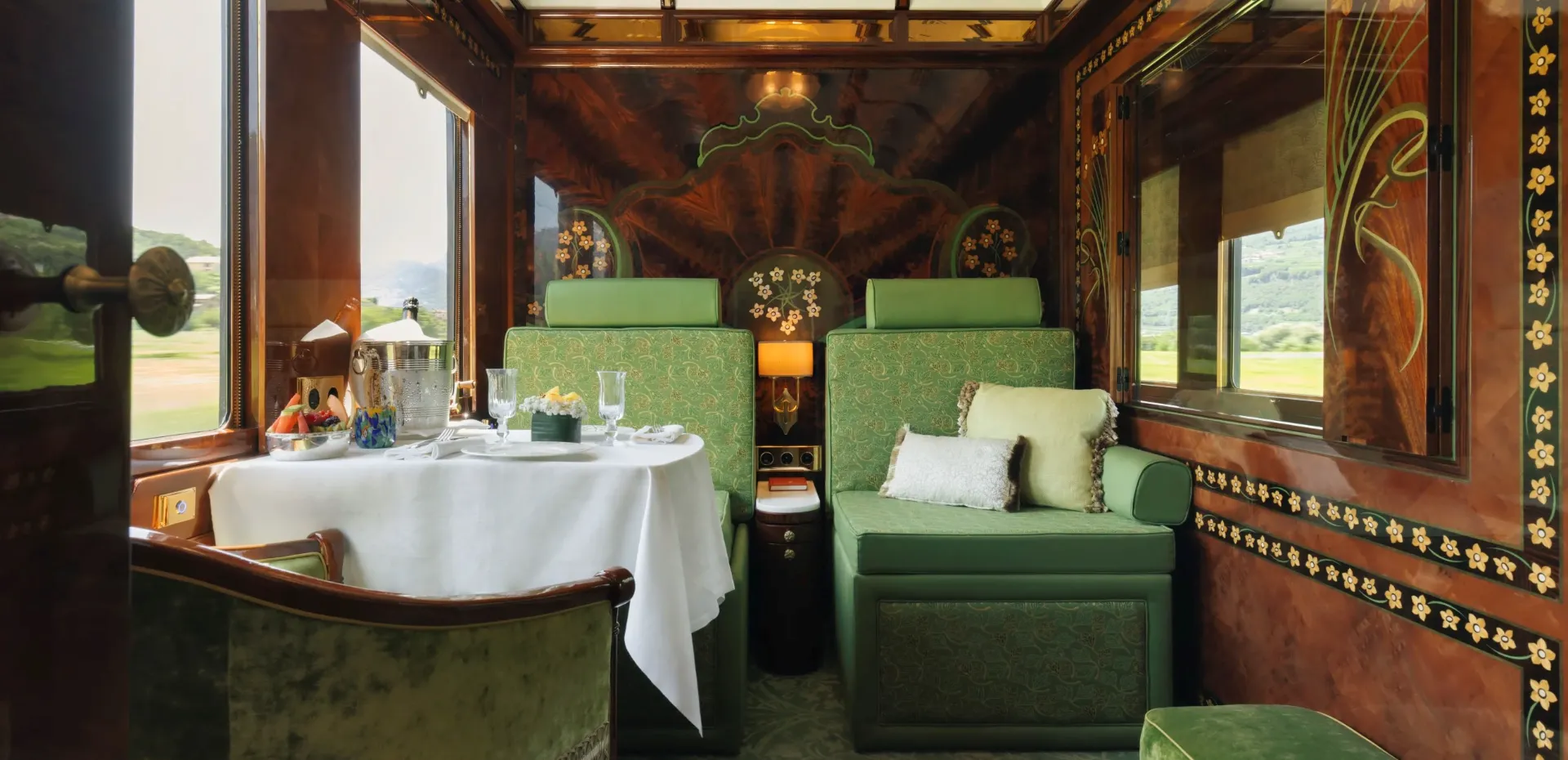
These details affect cabin value. A Historic Cabin can be an appealing one-night choice for travelers comfortable with upper and lower berths, a washbasin and shared restrooms. It gives the traditional sleeping arrangement without requiring several consecutive nights in that format.
For three actual train nights, a Suite's private shower and toilet plus floor-level double or twin configuration may matter more. A Grand Suite adds separate living space and service, but the hotel breaks reduce the number of nights it is used. Those breaks can make a Suite sufficient even on the longest advertised program.
Test the cabin against ordinary habits. Can both travelers use the berths? Do they keep different sleep schedules? Does one need a floor-level bed? Will they spend daytime hours in the cabin, or join every activity and use the public cars? The answer can make a Suite more valuable than a Grand Suite, or a one-night Historic Cabin more sensible than either.
Plan luggage and clothing for the actual sequence
The one-night Paris–Venice journey has a simple onboard packing need: smart daywear, one formal dinner look, sleepwear, toiletries and an arrival outfit. These items belong in the overnight bag or suit carrier delivered to the cabin.
Belmond's current general VSOE guidance separates hand luggage, cabin luggage and through luggage. Through luggage is stored in the baggage car and is not normally accessible until the destination. Passports, medication, travel documents and valuables stay in hand luggage.
The longer Paris–Istanbul program needs a written handling plan because hotel stops interrupt the standard sleeper pattern. Do not assume the large suitcase follows one routine for the entire five nights. Confirm:
which bag is available at each hotel;
whether through luggage remains sealed between specific points;
where formal clothing should be packed;
whether porters handle bags at each transfer;
what each traveler must carry personally;
any size or weight limits in the final documents.
Build the wardrobe around the day-by-day scenes. Formal dinners follow the current train guidance. Daytime aboard calls for smart clothing, while excursions need stable shoes and layers for the forecast in each city. Hotel evenings may have a different tone. Repeating a jacket, formal shoe or evening separate keeps the system manageable.
Entry rules also need a current check for every passport held, every country visited and the chosen direction. The blog cannot determine visa or border requirements for an individual traveler. Final government guidance and written travel documents control.
Keep one compact "next stop" bag within the approved luggage plan. It should contain the medication, documents, chargers, toiletries and clothing needed before the next confirmed access to the main suitcase. This is Evyssa planning advice, not a separate allowance from the operator.
Give Paris, Venice and Istanbul enough room
For Paris to Venice, the train is most satisfying when it connects two genuine stays. A pre-train night in Paris protects the departure from a late international flight; more time is appropriate when Paris is part of the vacation. Venice should have a planned hotel transfer and enough nights to enjoy the city after arrival.
Avoid booking a tight flight connection after either route. Belmond states that train timings are approximate and subject to national railway constraints. A same-day onward flight turns a rail delay into a much larger problem and reduces the value of reaching an important city by train.
Paris to Istanbul needs the same protection at both ends, plus enough total vacation time that the five-night program does not squeeze the gateways. Istanbul should not be reduced to an arrival platform and a short sleep before the airport. Paris should not be reduced to jet lag and check-in.
The surrounding land plan can settle a close decision. Travelers who want Paris, Venice and another part of Italy may gain more from the one-night route. Travelers interested in the countries between Paris and Istanbul may prefer the five-night structure because those stops are part of the point.
Evyssa's planning preference is to protect major departures with a hotel buffer rather than rely on an international arrival the same day. That is advisor guidance, not an operator inclusion. The exact hotels, transfers and timing still need to be designed for the individual trip.
Direction and pace should work for both travelers
Direction changes more than the view. It decides where travelers recover before boarding, where they unpack after the train and how the rail dates align with flights. It also changes the order of hotel stops and excursions on the longer route.
Compare both directions against practical questions:
Which gateway has the more reliable flight plan?
Where would you rather spend the pre-train recovery days?
Which city should have the slower stay after the railway?
Does the seasonal weather improve one order?
Does one direction create an avoidable backtrack?
Which entry or assistance arrangements require more time?
Pace matters just as much. Paris to Venice is intense because the onboard time is short and much happens in one evening and morning. Paris to Istanbul is demanding in another way: several formal meals, fixed activities, hotel moves and longer time away from an independent routine.
Neither format is universally more luxurious. The better route is the one that protects time, fits both travelers' energy and leaves enough room for the cities that matter.
Who is each journey likely to suit?
Paris to Venice is often the better introduction for couples or friends who want the formal ritual of the train within a broader European vacation. It also suits travelers who enjoy historic design and social dining but are unsure about several nights in a sleeper cabin.
Pause on it if one night will feel frustratingly short, if either gateway is being rushed or if the trip is being booked only to check off the train name.
Paris to Istanbul is stronger for rail-focused travelers who are interested in Budapest, Bucharest and the route between the endpoints. It can suit a milestone trip when the set program feels welcome and the dates can anchor the full vacation.
Pause on it if you prefer independent days, dislike repeated formal evenings, need a large modern hotel room every night or are interested only in Paris and Istanbul. The intermediate program should feel meaningful, not like time taken away from the endpoints.
Mobility and stamina need a separate review on both journeys. The longer route adds hotel transfers and excursions, so steps, walking distance, uneven ground, pace and alternatives may matter more than the cabin category. Ask for an exact assistance plan rather than inferring suitability from a route name.
How many nights is Paris to Venice?
The current 2026 official page lists one night aboard, with an afternoon departure and arrival in Venice the following day. Timings are approximate and can change.
How many nights is Paris to Istanbul?
The current 2026 program is five nights overall, including three nights aboard. The other nights are hotel stays in Budapest and Bucharest on the plan reviewed.
Is Paris to Istanbul five nights in the same cabin?
No. The current program includes hotel nights and guided stops. Review the exact train-hotel sequence and luggage handling before selecting a cabin.
Which route is easier for a first VSOE journey?
Paris to Venice is the simpler introduction because it requires one night aboard and fewer bag transitions. Travelers who already know they want a rail-centered multi-country program may prefer Paris to Istanbul first.
Does direction matter?
Yes. It changes the pre-train city, final stay, flight logic, excursion order and where recovery time belongs. Compare the complete vacation in both directions.
Paris to Venice gives the train a clear place inside a larger European trip. Paris to Istanbul asks the wider trip to make room for the railway. That difference should decide the route before prestige or duration does.
For help comparing the exact departures and designing the cities around them, explore Evyssa's custom rail vacations.

Csilla Dali
Founder & Lead Travel Advisor
Itineraries to consider
Are You Planning Your Next Vacation?
Check out our top recommendations!