The right lead time depends on what you are trying to protect. A traveler who wants one rare suite on a milestone date has a different problem from someone who can choose among several routes, months, and service classes.
There is another complication: planning can begin before a train opens its reservations. Some luxury rail programs publish journeys more than a year ahead. Other scenic trains release ordinary seats only a few months before departure. Waiting for a booking button to appear is not the same as waiting to plan.
The short answer
Start planning 9 to 18 months ahead when a specific train, premium cabin, rare departure, celebration date, or connected itinerary matters. Twelve months is a sensible working point for many high-demand luxury rail trips, but it is planning guidance rather than a supplier rule.
Flexible travelers may find good options 4 to 8 months ahead, and sometimes later. At the other extreme, an operator may not release the exact seat or class that early. The safest approach is to decide what is non-negotiable, learn the exact sales window, and prepare the surrounding trip before reservations open.
Planning lead time and booking window are different
“How early should I book?” sounds like one question, but it contains two.
The planning lead time is how early you should decide on route, direction, dates, cabin, and the trip around the train. The booking window is when the operator allows the reservation to be made.
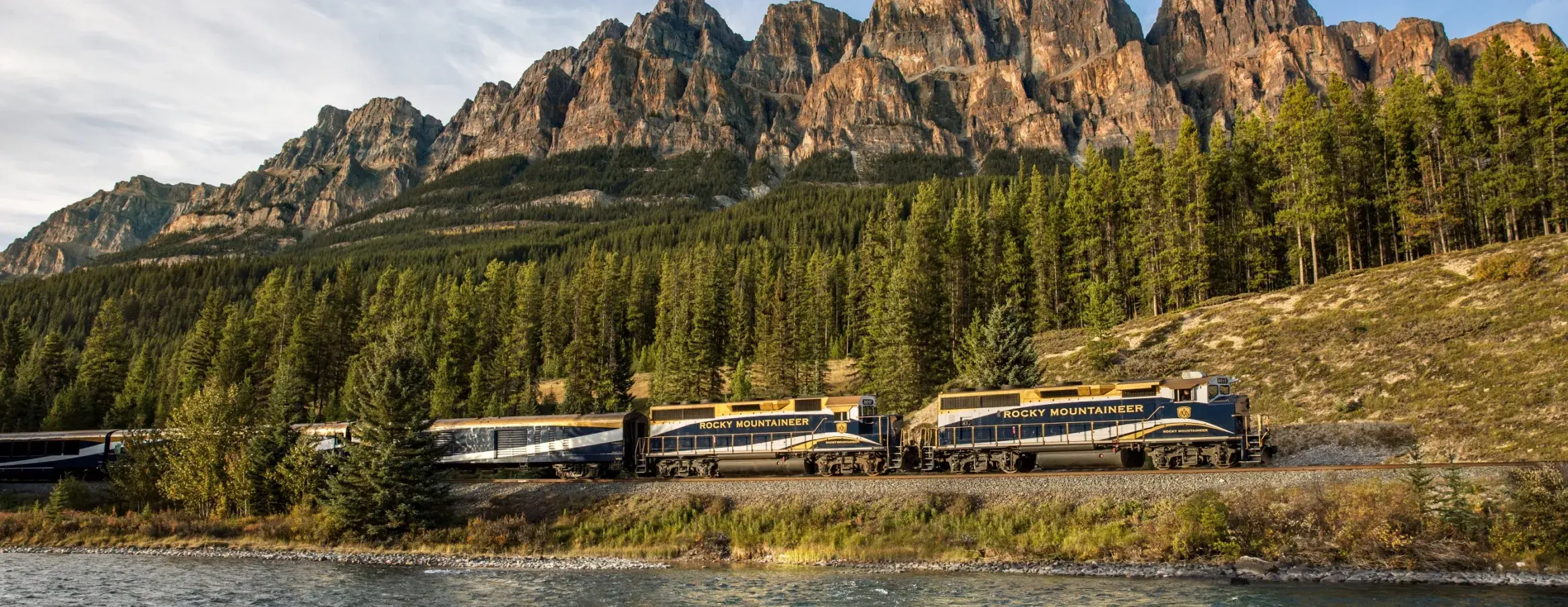
Those dates can be far apart. As of August 28, 2026, Venice Simplon-Orient-Express is displaying journeys for 2027. Rocky Mountaineer has published a 2027 schedule, and Journey Beyond lists 2027 timetables. Glacier Express uses another model: its official FAQ says 1st- and 2nd-class seat reservations open 93 days before travel, while Excellence Class can be reserved for a full timetable period.
This difference matters. If an ordinary Swiss panoramic seat opens 93 days ahead, “book 12 months early” is impossible. You can still plan the Swiss itinerary, protect flexible hotel arrangements where appropriate, and note the date on which the rail reservation should be made.
Build a small booking calendar as soon as the trip becomes serious. Record when the operator expects to release the timetable, when reservations open, how long a courtesy hold lasts, when the deposit is due, and when final payment becomes nonrefundable. Add the opening dates for flights, hotels, park permits, cruises, or events that affect the same itinerary. This turns “book early” into a sequence of decisions rather than one anxious deadline.
Use that calendar to separate preparation from commitment. Before rail space opens, compare date patterns, decide which cabins truly work, and identify surrounding hotels you would accept. Where possible, keep early hotel or flight arrangements flexible until the train is confirmed. A published timetable is not proof that every class is on sale, and a request, waitlist, or courtesy hold is not the same as a confirmed cabin. Record each step in writing.

Use a 9-to-18-month window for scarce, specific trips
The longer window fits trips where losing one element changes the reason for traveling. That might be a Grand Suite, a multi-night journey, a particular direction, or an anniversary that cannot move.
Structural scarcity is real even when sellout data is not public. Belmond's current Venice Simplon-Orient-Express accommodation page lists six Grand Suites. Its standard Suites are arranged four per carriage. The exact inventory on a departure can vary, but the premium categories are not unlimited hotel towers on rails.
Begin 9 to 18 months ahead when several of these are true:
the trip is tied to a wedding, birthday, anniversary, school break, or public holiday;
only one route or direction will work;
you need the most private or spacious cabin category;
the departure runs only a few times each season;
the train must connect with a cruise, safari, event, or another scarce journey;
you need two cabins together, a specific bed arrangement, or careful mobility planning;
business-class or first-class flights and particular gateway hotels matter.
Early planning does not justify rushing into the wrong category. It gives you time to compare the few decisions that change the trip materially.
Four to eight months can work when flexibility is real
A shorter lead time can be enough when the traveler can move across several dates, accept more than one direction, or compare different rail products with a similar travel rhythm.
The word “flexible” deserves honesty. It does not mean accepting a bunk when climbing is difficult, giving up a private bathroom, or replacing the destination that motivated the trip. It means there are several choices you would be genuinely happy to take.
Useful flexibility can include:
traveling midweek rather than only on a weekend;
choosing among two or three months in the same season;
reversing direction when the surrounding itinerary still works;
accepting more than one bed configuration;
comparing two rail journeys that serve the same larger trip;
adjusting the cities before or after the train.
Flexibility is less useful when every alternative weakens the experience. A famous name in the wrong cabin, on the wrong date, inside a rushed itinerary is not a successful compromise.
Last-minute bookings are possible, but they are a different kind of trip
Late availability can appear because of cancellations, newly released inventory, or a route that never filled. It should be treated as an opportunity, not a dependable planning method.
A last-minute rail booking works best for travelers who already have valid documents, can choose among several airports, and do not need a rare suite or tightly sequenced itinerary. They should also be comfortable making prompt decisions after reviewing current terms.
The train may be only the beginning of the problem. Flights can be awkward. The right gateway hotel may be full. A private transfer at the arrival time may need special handling. Formal clothing and limited cabin luggage can make a hurried packing plan less forgiving.
We would avoid a speculative last-minute strategy for a milestone trip, a multigenerational group, a traveler with mobility requirements, or any journey involving several fixed reservations. In those cases, the cost of compromise is usually larger than the thrill of finding a late opening.
Protect the complete trip around the cabin
Luxury rail often fails at the seams rather than on the train itself. An international flight arrives too close to departure. A hotel is on the wrong side of the city. Through luggage cannot be accessed during the journey. A one-night rail experience is surrounded by hurried transfers and no time to enjoy either endpoint.
Once the train space is available, check the entire chain:
Arrival flight and at least one sensible pre-train night.
Hotel location in relation to the station or meeting point.
Private or shared transfer rules and exact pickup place.
Luggage that can remain accessible in the cabin.
Clothing and any formal dress requirements.
Post-train hotel, touring, or onward flight.
Insurance, payment dates, and cancellation terms.
For a major sleeper journey, arriving two nights early may protect the experience better than one more rail upgrade. The right answer depends on flight reliability, time zones, the event, and how much recovery time each traveler needs.
What to do before reservations open
An unopened booking window does not have to be dead time. Use it to make the reservation easier and safer when the date arrives.
First, rank the priorities. Decide whether route, cabin, date, or direction comes first. Ask each traveler about bed access, bathroom privacy, space, temperature, dietary needs, and mobility. These details are much easier to solve before inventory is held.
Second, build two or three acceptable date patterns. Include the hotels and cities around the train, not just the rail segment. If one date opens without a suitable hotel plan, the second pattern may be better.
Third, confirm what “on sale” means. Some operators release a full season. Others use rolling windows. A timetable may be published before reservations can be ticketed. A request or waitlist may not be a confirmed booking.
Finally, decide what must be reviewed before payment. Keep the exact route, cabin, inclusions, nights, payment schedule, cancellation terms, and travel insurance decision in one place. A vague “Orient Express trip” is not specific enough for a meaningful comparison.
Availability should never choose the cabin for you
When a preferred cabin disappears, it is tempting to take whatever remains. Pause and return to the physical experience.
For sleeper trains, ask how each person gets into bed, whether the bathroom is inside the cabin, how much room remains at night, and where luggage goes. On a daytime scenic train, compare sightlines, service, meal format, and any observation area. On expedition-style rail, examine the off-train experiences as carefully as the cabin.
An available cabin is a good choice only if it still meets the non-negotiables. If not, the better decision may be another date, another direction, or a different train.
This is especially important when traveling with children or anyone who needs assistance. Age rules, sleeping arrangements, access, and the atmosphere of public cars vary. These are qualification questions, not details to solve after a deposit.
Review the terms at the same time as the space
Availability is only half of a booking decision. The money timeline deserves the same attention.
Before authorizing a deposit or payment, confirm:
the exact amount due now and the final payment date;
whether the fare or deposit is refundable;
change and cancellation rules;
what happens if the operator changes the route or timing;
whether hotel nights, transfers, excursions, meals, drinks, or gratuities are included;
which currency applies and how exchange-rate changes are handled;
the name and age details required for ticketing;
insurance timing and any limits on pre-existing-condition coverage.
These terms can vary by operator, fare, departure, country, and sales channel. The issued written terms control. Do not rely on a general blog, an old quote, or the policy from another train.
Who should plan earliest
Some travelers benefit much more from early planning than others.
Plan at the longer end of the range for:
milestone celebrations with fixed dates;
couples who want the smallest-inventory suite category;
families or groups needing adjacent or compatible cabins;
travelers with limited mobility or strict dietary needs;
complex trips connecting rail with safari, cruise, expedition, or major events;
international travelers who need scarce premium flights;
anyone unwilling to change direction, route, or gateway city.
A shorter timeline may be reasonable for a couple who can travel in several months, accepts more than one cabin, and is building a simple city-to-city trip. Even then, the booking window and current availability should guide the decision.
Early planning is also useful when two travelers rank priorities differently. One may care most about the route while the other needs a private bathroom or a floor-level bed. Resolving that difference before inventory is held prevents a fast reservation from becoming the wrong reservation.
Is one year ahead too early to plan a luxury train journey?
No. One year is a sensible planning point for a scarce cabin, milestone date, or complicated trip. The exact reservation may not be open yet, so distinguish research and itinerary planning from ticketing.
Do luxury trains release all cabins at once?
Not necessarily. Sales calendars vary by operator and class. Glacier Express, for example, currently uses a 93-day window for 1st- and 2nd-class reservations while Excellence Class can be booked for the full timetable period.
Which cabin categories tend to need the most lead time?
The smallest-inventory and most private categories deserve the earliest attention, as do connected cabins and unusual bed arrangements. Confirm the actual inventory and configuration on the exact departure rather than assuming every train set is identical.
Can an advisor hold a cabin before I decide?
Hold rules vary. A quote, request, option, or waitlist is not always a confirmed booking. Ask for the hold expiry, deposit requirement, cancellation terms, and written confirmation of the exact cabin and departure.
Should I book the train before the flights?
Usually, protect the scarce rail space and build the flight plan around it, but review both before committing to nonrefundable pieces. Leave a sensible arrival buffer. The correct order changes when award flights, events, or another fixed journey are even scarcer.
Is it worth joining a waitlist?
It can be when you would genuinely take the exact route and cabin if it opens. Keep a workable alternative and clarify whether the waitlist creates any payment obligation. Do not leave the rest of the trip indefinitely exposed.
What if only a lower cabin category is available?
Compare the missing feature with your non-negotiables. A shared restroom, upper berth, smaller bed, or reduced space can change the experience. If the compromise affects sleep, mobility, or privacy, another date is often wiser.
When should I buy travel insurance?
Insurance timing depends on the policy and your circumstances. Review coverage as soon as you make the first trip payment, and rely on the issued policy and the insurer's written answers. Evyssa does not interpret benefits or guarantee claims.
The goal is not to book as early as possible. It is to make the important decisions before availability makes them for you.
If you want help matching a booking window to the right route, cabin, and complete itinerary, explore Evyssa's custom rail vacations.

Csilla Dali
Founder & Lead Travel Advisor
Itineraries to consider
Are You Planning Your Next Vacation?
Check out our top recommendations!