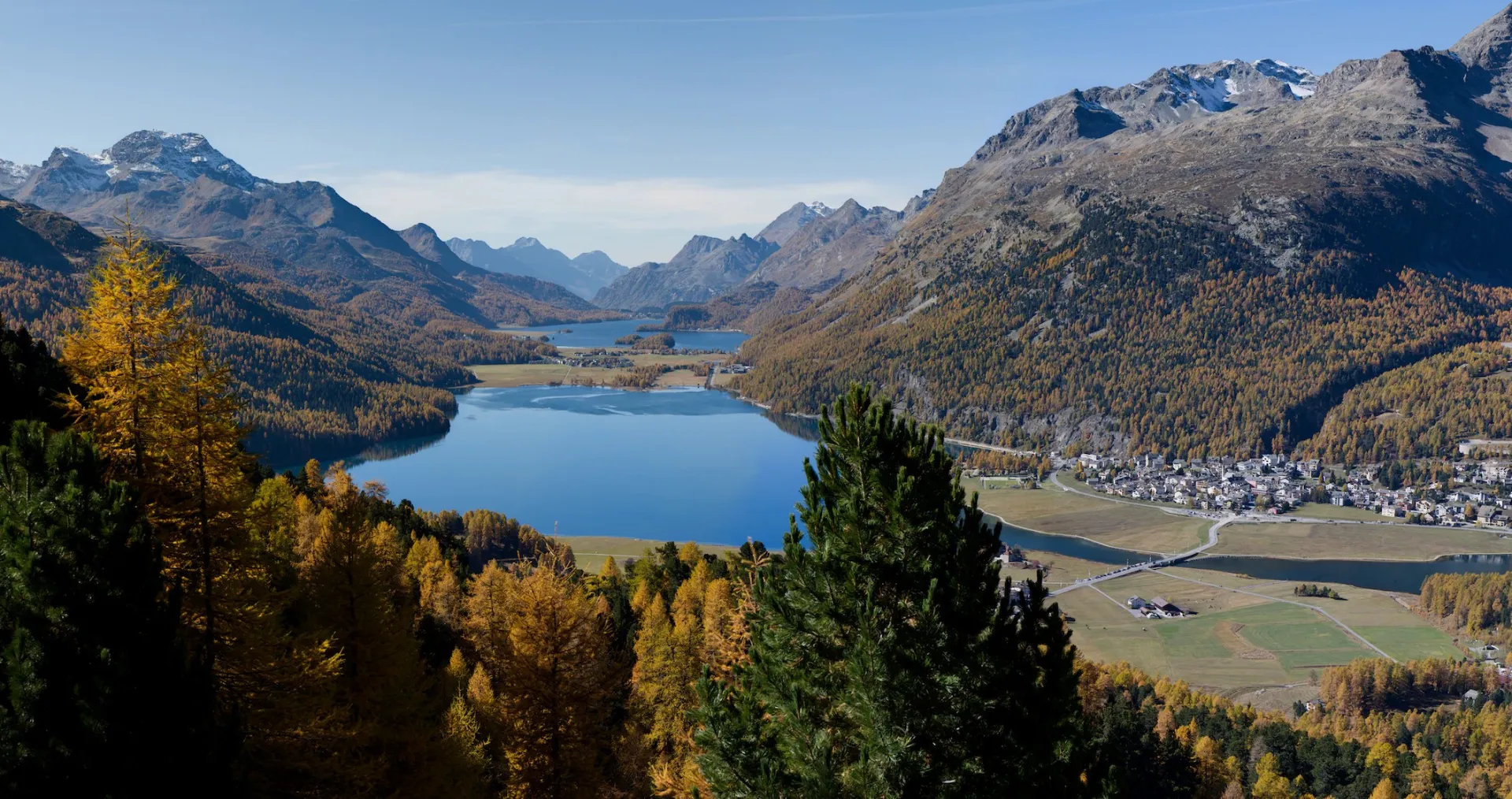
The water story becomes much more interesting when you stop treating Evian as a label and start looking at where it comes from.
Learning about the water during my stay at Hôtel Royal made the whole destination more interesting to me. The spring, the mountains and the town’s long spa history began to fit together. It is a connection that is easy to miss when your only encounter with Évian has been ordering a bottle at dinner.

Where does Evian water actually come from?
Evian starts as rain and snow on the Gavot Plateau above Évian-les-Bains. It spends more than fifteen years filtering naturally through layers of glacial geology, acquiring minerals along the way before reaching its source. The Cachat Spring is the source associated with the bottled water.
That is a much more specific story than “water from the Alps.” The plateau is a catchment area, and the underground route is part of what gives the water its composition. The lake gives Évian its setting, but Lake Geneva is not the source of the Evian in the bottle.
I like knowing those distinctions when I visit somewhere. They turn the scenery into something you can understand. The mountains behind town are involved in the story, even when your immediate plan is simply to sit somewhere with a view of them.
More than fifteen years is also an impressive amount of time to spend getting anywhere. It puts a delayed flight into perspective, although I am not suggesting that is the moment to mention it to your travelling companions.

What minerals are in Evian, and what are the benefits?
Evian contains eighty milligrams of calcium and twenty-six milligrams of magnesium per liter, along with bicarbonate and other naturally occurring minerals. Its pH is 7.2, close to neutral. Those minerals come from the water’s journey through the ground; they aren’t added for flavor.
Drinking it contributes to everyday hydration, just as other safe drinking water does. After a day out in the mountains or by the lake, that is quite enough of a benefit to appreciate.
The mineral story is fascinating without turning it into a cure or a detox. I’m much more interested in the fact that you can stay here, visit the source and understand where something so familiar actually comes from.

Why did people come to Évian to take the waters?
Visitors were coming to Évian for its reputed therapeutic waters by the late eighteenth century, and the water was being analyzed in 1807. The town grew around that spa tradition.
The buildings make that history visible. The Buvette Cachat was a place associated with drinking the waters, while the Palais Lumière began as a thermal establishment in 1902 and is now a cultural venue. A spa visit once came with an entire way of spending time here.
I can see the attraction of a trip with enough time for a daily walk and an unhurried meal. We have become very good at making holidays efficient. Sometimes I think we should be slightly more suspicious of that achievement.

Can you visit the Cachat Spring yourself?
Yes. The Cachat Spring on Avenue des Sources is free to visit and open daily throughout the year. The water flows at a constant 11.6°C, about 53°F. It is an accessible stop in town, rather than an expedition into the mountains.
The Buvette Cachat adds another part of the story, with its Art Nouveau architecture and history as a place to take the waters. A visit to the spring fits easily into a morning in town, followed by a walk along the lake.
The appeal of seeing a source is simple: the name on a bottle becomes attached to a real location. That was the premise of my first Évian article. For a wellness-focused stay, it also provides some context before you head back to a hotel whose spa draws inspiration from the water’s journey.

What is the connection with the spa at Hôtel Royal?
At Hôtel Royal, the evian®SPA takes its inspiration from the water’s journey. With heated indoor and outdoor pools as well as treatments, the hotel gives you plenty of reasons to make wellness part of the stay. Knowing the story behind it made that connection feel much more relevant to me.
Some clients want a massage after being active; others want a quiet afternoon and no appointments at all. Both sound perfectly reasonable to me. A wellness holiday should not require you to become a different sort of person the moment you check in.
Are Les Thermes Évian and the hotel spa the same place?
Les Thermes Évian is in town, separate from evian®SPA at Hôtel Royal. Hôtel Ermitage also has its own Spa Quatre Terres. That gives clients with a particular interest in wellness several places to explore during a stay.
How would I plan a wellness stay in Évian?
For me, a few days here need some breathing room. A treatment you’re looking forward to, a walk, a good meal and time at the hotel are a very appealing start. There is no need to make relaxing an ambitious undertaking.
The lake and mountains give the stay some variety when you feel like getting out. After a busy stretch of Europe, an afternoon with no departure time attached can be particularly welcome.
What stayed with me is how closely the water’s story belongs to the town. It explains why visitors came, why the spa buildings are here and why wellness still has such a place in Évian today.
This is a place I’ll be returning to in conversations with clients who want a few days of rest in Europe. We can let the water supply the long backstory. Your part can be considerably less complicated.


Csilla Dali
Founder & Lead Travel Advisor
Itineraries to consider
Are You Planning Your Next Vacation?
Check out our top recommendations!