The Bernina Express crosses the same pass all year, but it does not offer the same journey all year. In winter, the high lakes freeze and the landscape turns white and graphic. In summer, the lakes reflect the sky and the valleys below are green. In autumn, the larch forests of the Engadin turn gold.
Each season is beautiful. The more useful question is which season suits the rest of your trip, because the days before and after the train often matter more than the view from one window. Here is how we think about timing a Bernina crossing.
The short answer
Winter suits travelers who want snow, crisp light and a classic Alpine atmosphere, and who are pairing the train with a ski or winter stay in the Engadin. Summer suits travelers who want long days, walks at stops along the line, the seasonal bus to Lugano and easy extensions to the Italian lakes. Autumn suits travelers who want golden larches, quieter trains and comfortable walking weather, provided the dates avoid the season's closures and engineering works.
The best month is the one that fits the full Alps and Italy itinerary, not a single photograph.
The train runs all year, but the trip around it changes
The Rhaetian Railway operates the Bernina Express under both summer and winter timetables, so the train itself is a year-round option. That is one of its advantages over some other scenic journeys.
What changes with the season is everything around it:
the landscape you see from the window;
the length of the day and the quality of the light;
whether the seasonal Bernina Express bus from Tirano to Lugano is running;
whether the premium Bernina Express Pullman Class is operating;
which hotels in the Engadin and the Italian lakes are open;
how busy the trains are;
what you can comfortably do at stops along the line and in Tirano.
We start every Bernina conversation by asking what the traveler wants to do on either side of the train. The season usually follows from that.
RhB’s published summer timetable runs from April 24 through October 3, 2027. RhB has scheduled track work between Cavaglia and Tirano from October 4 to November 25, 2027. Check the operator’s plans for your travel date before booking an autumn crossing.

Winter: snow, light and a classic Alpine mood
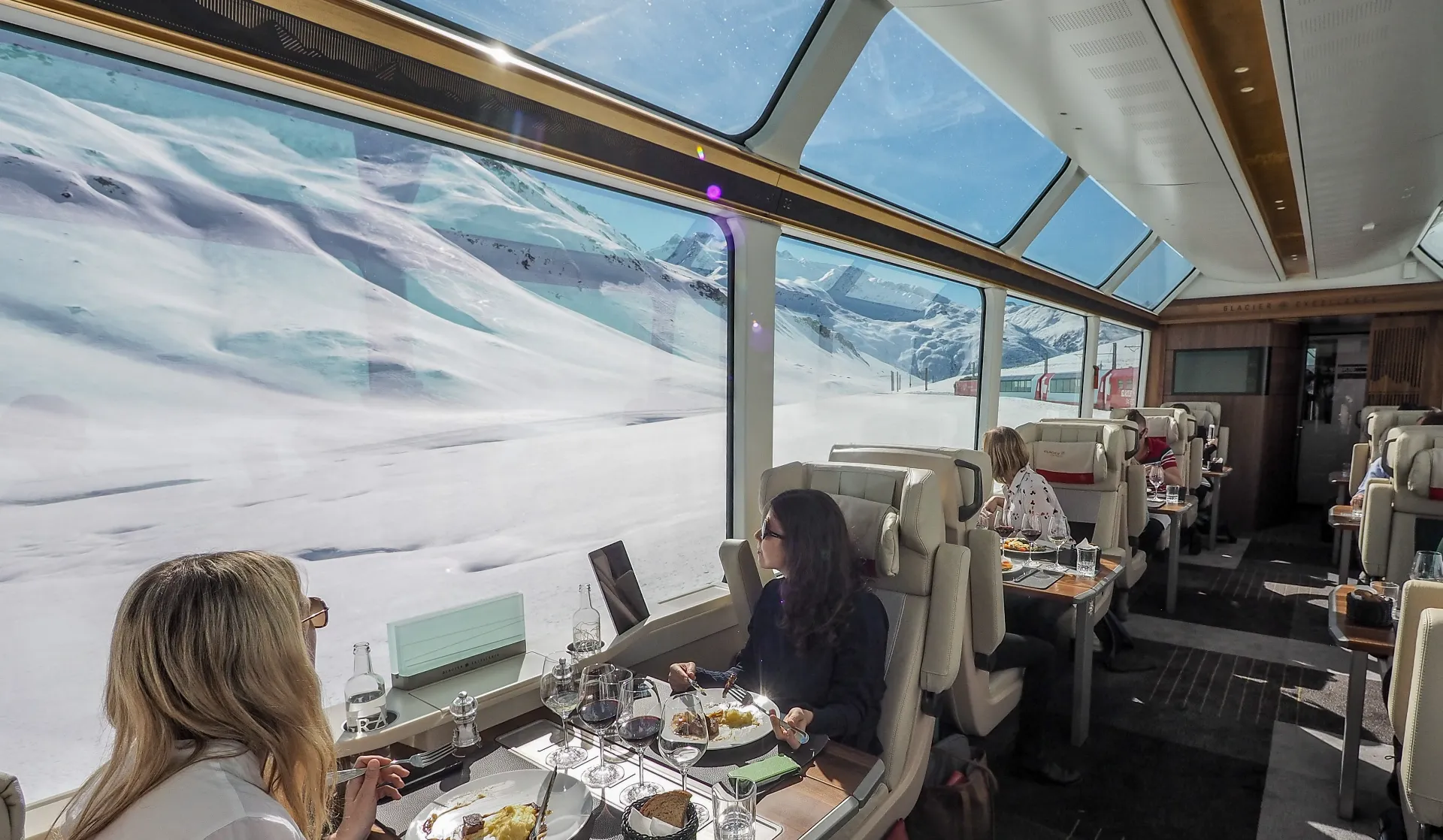
From December through the early spring, the Bernina Pass is usually deep in snow. The high lakes near Ospizio Bernina freeze and disappear under white, peaks stand out sharply against the sky and the contrast between the frozen summit and the milder valley around Tirano can be striking.
Winter suits travelers who:
want the most dramatic, snow-covered version of the line;
are combining the train with a ski or winter stay in St. Moritz, Pontresina or elsewhere in the Engadin;
enjoy crisp, clear days and cozy evenings;
like the idea of stepping off the train into an Italian town after a morning in the snow.
The festive period around Christmas and New Year is the busiest part of winter in the Engadin, with hotels in high demand and a lively atmosphere in the resorts. January and February often bring settled cold weather and excellent snow, while March adds longer, brighter days.
There are trade-offs to weigh. Days are short, so a long route from Chur leaves less daylight for the rest of the day. Weather on the pass can be severe, and while the railway is built to operate in winter, conditions can affect roads, walking routes and connections. The seasonal bus to Lugano does not run in winter, so onward travel from Tirano needs another plan, such as a private driver or rail connections.
Snow also changes the light. Sunshine on fresh snow can be dazzling at altitude, so sunglasses are as useful inside the panoramic carriage as outside it, and photographs of white landscapes need care with exposure.
Pack for real cold. Even if you spend most of the day in a heated carriage, the platforms at high stations and the walk to a waiting car can be very chilly.
Summer: long days, walks and easy extensions
Summer brings the longest days and the widest range of things to do around the train. The lakes on the pass reflect the sky, the meadows below are green and the walks between stations are open.
Summer suits travelers who:
want to combine the train with hiking or walking at stops such as Ospizio Bernina and Alp Grüm;
plan to continue from Tirano to Lugano on the seasonal Bernina Express bus;
are moving on to Lake Como or the Italian lakes and want warm evenings there;
would like to ride in Bernina Express Pullman Class, which operates seasonally.
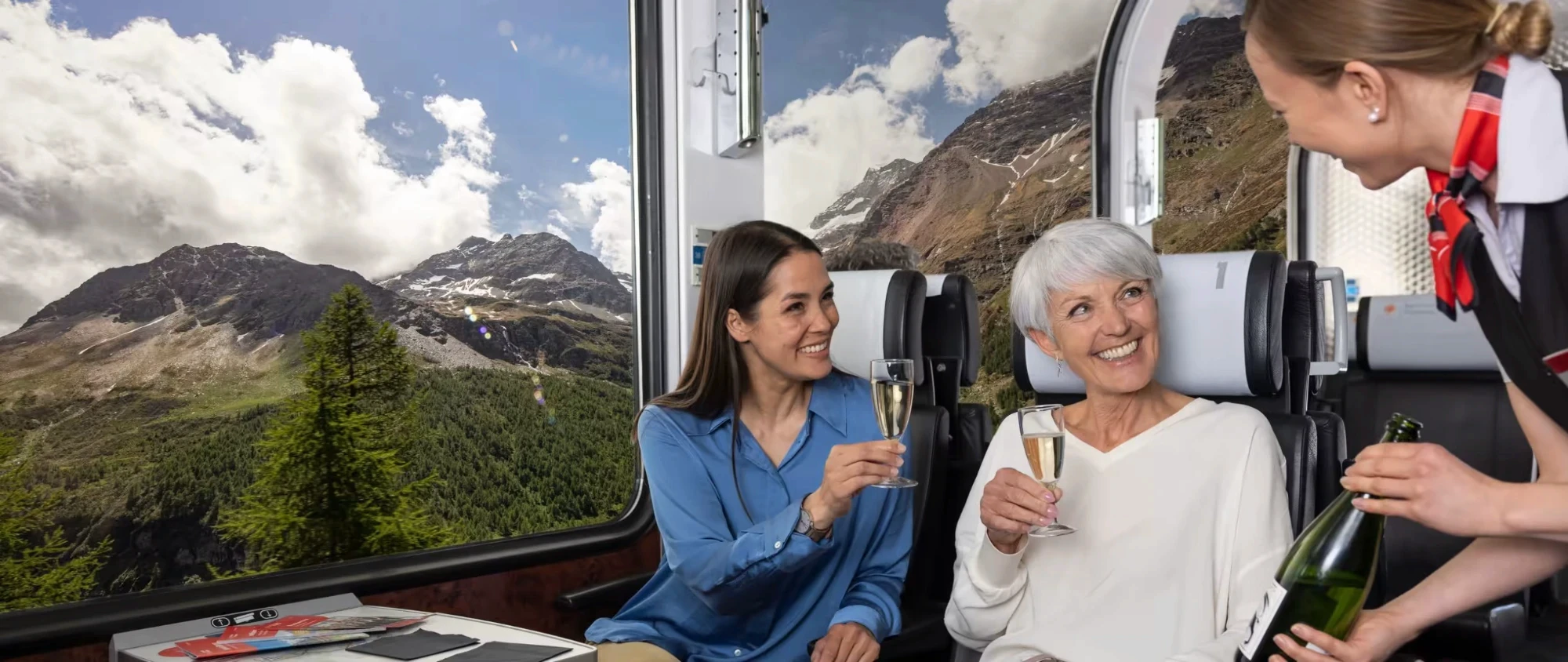
Pullman Class adds a special option in this season. The current offer runs in a historic 1930s-style carriage between St. Moritz and Tirano for a maximum of thirty-two guests, with champagne and canapés, coffee and petits fours on the return and an optional winery lunch near Tirano. Luggage space is very limited and the carriage is not barrier-free, so it suits travelers with light bags and no mobility concerns.
The trade-off is demand. Summer is the busiest season, both on the Bernina Express and on the regional trains that share the line. The Rhaetian Railway currently strongly recommends reserving seats on regional trains because of high demand. For the Bernina Express itself, reserving early for popular dates is wise.
Heat is a smaller consideration on the pass, but Tirano and the Italian lakes can be warm in high summer. Travelers who dislike heat may prefer early or late summer to mid-season.
Autumn: golden larches and quieter trains
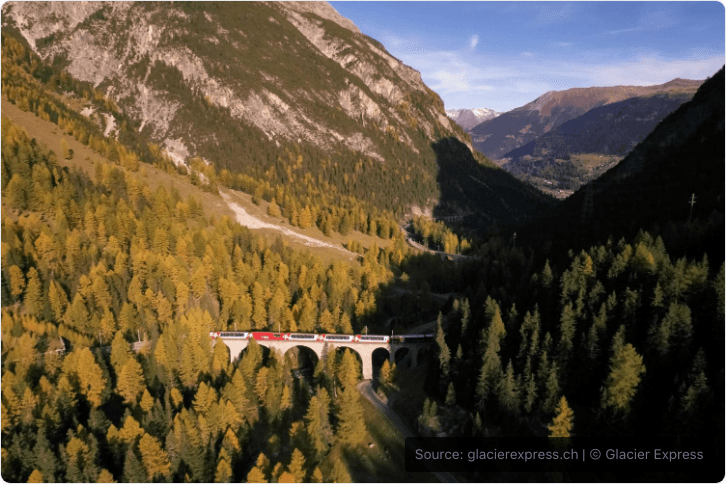
Autumn is many travelers' favorite season in the Engadin. The larch forests turn gold, usually around October, and the light softens. Trains are often quieter than in summer and walking weather can be very pleasant.
Autumn suits travelers who:
love color and softer light more than snow or summer greenery;
prefer quieter carriages and fewer crowds at stops;
want comfortable walking weather at stations and in the valleys;
enjoy pairing mountain scenery with a harvest-season visit to Valtellina or the lakes.
On the Italian side, autumn is harvest season in the Valtellina, the wine valley around Tirano. A crossing at this time of year can end with a long lunch among the vineyards, which gives the day a lovely contrast between high Alpine color and Italian table.
Autumn also requires the most careful planning. Late in the season, some services and hotels begin to wind down. The seasonal bus to Lugano and the Pullman Class do not run all year. Some Engadin hotels close between the summer and winter seasons. And autumn is a common time for engineering works on mountain railways: in 2026, for example, the Rhaetian Railway announced a temporary diversion of the Chur route for several weeks from late October.
If you are combining the Bernina Express with the Glacier Express, note that the Glacier Express takes an annual break from mid-October to the beginning of December. An autumn trip that includes both trains needs to start earlier in the season.
Spring: a quieter, more variable season
Spring on the Bernina line is a season of contrasts. The pass can still be snow-covered while the valley below Alp Grüm and around Tirano is already green. Light is improving, days are lengthening and trains are usually less busy than in summer.
Spring suits travelers who:
want snow on the pass and spring in the valleys on the same day;
prefer fewer crowds and do not mind changeable weather;
are traveling on to northern Italy as the lakes come into season.
Spring can also be a good choice for travelers who want to see the snow without committing to a full winter holiday. A short stay in the Engadin while the slopes are still white, followed by the crossing to Italy and a few warm days by a lake, gives two seasons in one trip.
The trade-offs are variability and timing. Weather can change quickly at altitude, walking routes near the summit may still be under snow and some hotels in the Engadin close between the winter and summer seasons. Late spring generally offers more choice than early spring. If you have flexibility, May and early June often balance lingering snow on the pass with open hotels and longer days.
Light, daylight and the time of day
Within any season, the time of day affects the experience.
Morning light on the high pass is often clear, and mountain cloud tends to build as the day goes on, though this varies a great deal and nothing is guaranteed. In winter, short days make an earlier departure more valuable, especially on the longer route from Chur. In summer, long evenings give more flexibility, and a later train still leaves time to enjoy Tirano or a lakeside arrival.
Direction plays a part as well. A southbound morning departure from St. Moritz reaches Tirano around the middle of the day, leaving the afternoon for Italy. A northbound afternoon journey climbs into the Engadin as the light lengthens, which can be beautiful in summer. In midwinter, the light may fade before the train reaches the top of the pass, so an earlier northbound departure is usually the better choice.
Sun position also affects comfort and photography. On some stretches, strong sun can shine directly into the panoramic windows, which makes viewing and photographs harder. A relaxed attitude to seating, and a willingness to look across the carriage, helps in every season.
Match the season to the wider itinerary
The Bernina Express is rarely the whole reason for a trip. It is usually one day inside a wider Alps and Italy journey, and the season should suit that journey.
Some combinations work especially well:
A winter Engadin stay followed by Italy. Several nights in St. Moritz or Pontresina, then the Bernina Express to Tirano and a private car to Lake Como or Milan.
A summer walking holiday. A base in the Engadin with a regional-train day on the Bernina line, then the Bernina Express and the seasonal bus to Lugano.
An autumn color journey. The Engadin larches, a quieter Bernina crossing and an onward stay in the Valtellina or on the lakes, timed before the season’s closures.
A spring contrast. Snow on the pass, then the first warm days of the season by an Italian lake.
Families often have less choice of season because of school holidays. In that case, the planning focuses on making a busy period comfortable: reserving the Bernina Express early, booking hotels well ahead and building quieter days around the crossing so children are not rushed.
Work backward from the stays you most want. If Lake Como is the priority, choose a season when its hotels are open and the weather suits you. If skiing is the priority, winter decides itself. The train date then slots into that plan.
Plan for variability in every season
Mountain travel always carries some uncertainty. Weather, seasonal services, engineering works and road conditions can all change a plan.
We build in a few simple protections:
a night in the Engadin before a southbound journey, so the morning is unhurried;
no tight onward flight or train after arrival in Tirano;
a private driver or a clear plan for luggage, because panoramic carriages have limited space;
a quick recheck of the timetable, the bus season and any planned works close to travel.
Travel insurance that covers delays and changes is worth reviewing for any mountain journey, particularly in winter and in the shoulder seasons. It does not change the view, but it can change how calm the traveler feels if a connection moves.
A little flexibility protects the experience without draining it of spontaneity. If clouds sit over the pass on the morning of your journey, a calm traveler with a free afternoon still enjoys the descent into Italy.
Let the season serve the journey
Every season on the Bernina line has its own beauty. The right one is the season that makes the whole trip work, from the stay before the train to the evening after it.
If you would like help choosing the season and building the Bernina Express into a complete Alps and Italy journey, we can plan it around you. Explore Evyssa’s custom rail vacations.
Does the Bernina Express run all year?
Yes. The Rhaetian Railway operates it under summer and winter timetables. Some related services, such as the Tirano to Lugano bus and Pullman Class, are seasonal.
What is the best month for the Bernina Express?
There is no single best month. Winter offers snow, summer offers long days and walks, autumn offers golden larches and quieter trains, and spring offers contrasts. Choose the month that suits the stays on either side.
When do the larches turn gold?
Usually around October in the Engadin, depending on the year and altitude. Confirm current conditions close to travel, and check hotel and service dates late in the season.
Is the Bernina Express worth taking in winter?
Yes, for travelers who want snow and crisp light. Days are short and the Lugano bus does not run, so plan onward travel from Tirano in advance.
Can you combine the Bernina Express and the Glacier Express in autumn?
Yes, early in the season. The Glacier Express takes an annual break from mid-October to the beginning of December, so a combined trip should be planned before that.

Csilla Dali
Founder & Lead Travel Advisor
Itineraries to consider
Are You Planning Your Next Vacation?
Check out our top recommendations!