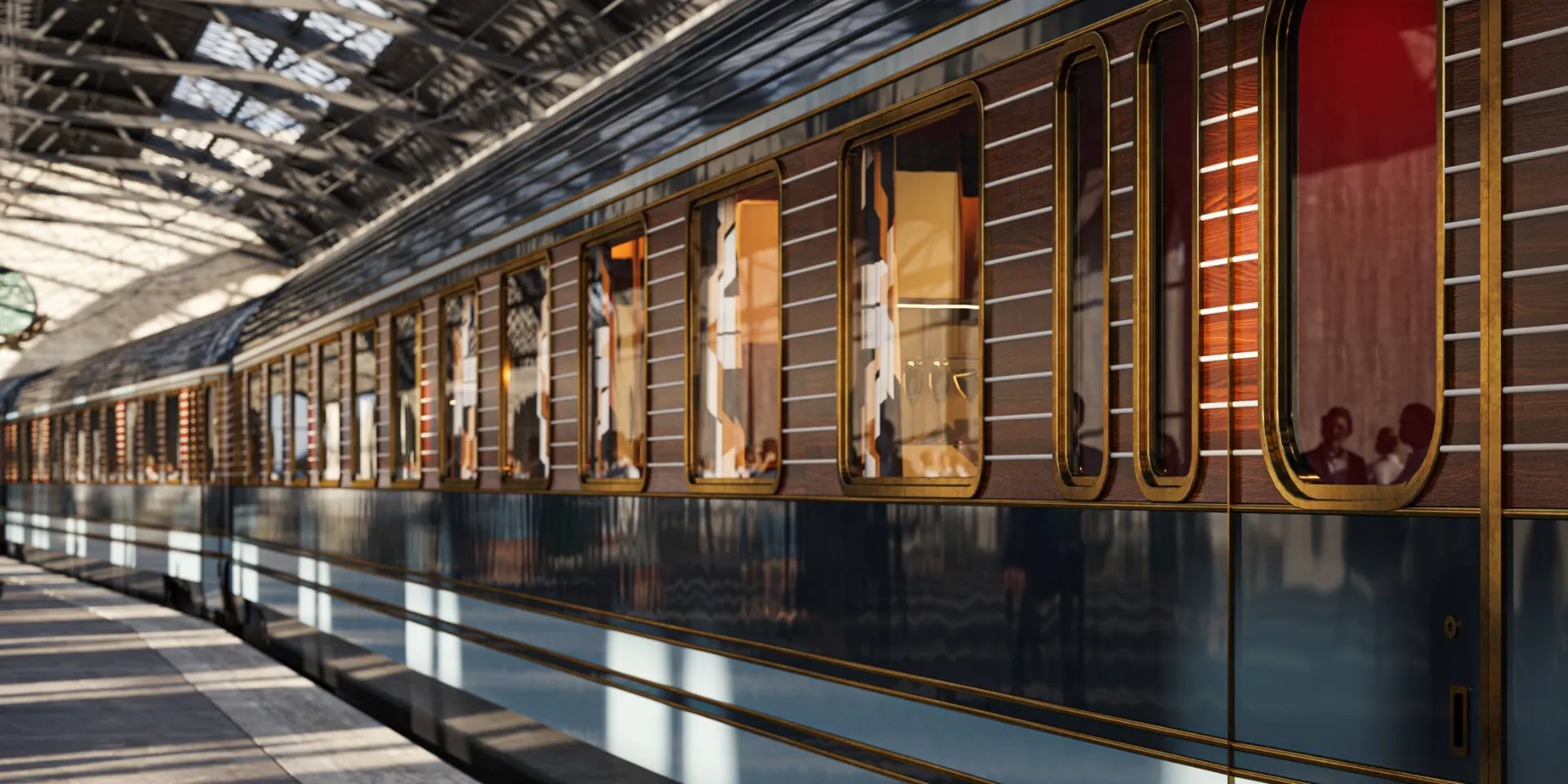
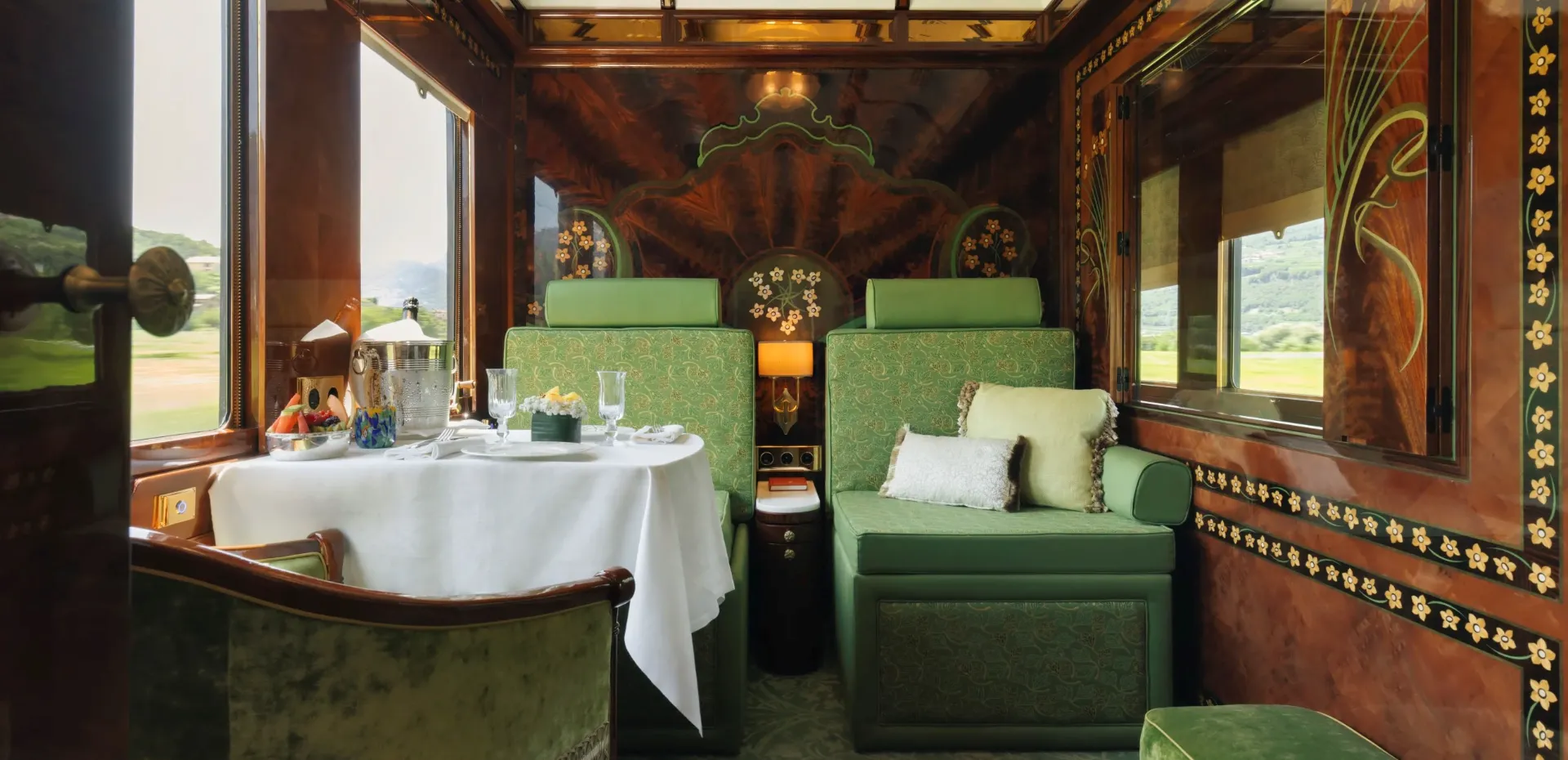
La Dolce Vita Orient Express invites travelers to dress well, but it does not ask them to become characters in a period film. The train's mood is contemporary Italian glamour: assured, considered and comfortable enough that the person remains visible inside the clothes.
The most useful wardrobe works across three scenes. There is daytime aboard, when guests move between their cabin, the Restaurant Car and the Bar Car. There is dinner, when the atmosphere becomes more polished. Then there are the off-train experiences, where weather, stone streets and walking matter more than the photograph taken inside the carriage.
The short answer
Wear smart daywear aboard and refined eveningwear for dinner. For excursions, choose comfortable clothing and shoes suited to the current weather and program. Think elegant Italian ease rather than costume: a compact set of polished separates, dresses, knitwear or tailoring that can be layered and repeated.
La Dolce Vita's current FAQ uses those three ideas—smart daywear, refined eveningwear and practical excursion clothing—rather than prescribing one universal formal uniform. The exact route, season and event can still change the tone. Recheck the departure documents, and let cabin storage and luggage access limit how much you bring.
Build the wardrobe around three real moments
Moment | Useful direction | What to avoid |
|---|---|---|
Daytime aboard | Refined separates, a comfortable dress, polished trousers, knitwear, loafers or another neat shoe | Clothes that crease badly, pinch while seated or require constant adjustment |
Dinner and evening | A jacket, elegant dress, elevated separates, fine knit or another considered evening look | Assuming black tie is required when the current documents do not say so |
Off-train experiences | Weather-ready layers, supportive shoes and clothing suited to walking and transfers | Choosing shoes only for the dining car or ignoring the destination's surface and climate |
The best pieces often work in more than one column. A tailored trouser can move from afternoon to dinner with a change of top. A simple dress can become more evening-ready with jewelry and a jacket. A fine knit can warm a daytime look and return after dinner.
Plan outfits as combinations rather than complete, unrelated looks. That keeps the cabin calmer and leaves room for the actual journey.

Daytime aboard: polished enough, relaxed enough
Smart daywear should look intentional without making several hours of sitting uncomfortable. Soft tailoring, knit dresses, refined shirts, structured trousers and well-cut denim alternatives can all fit the mood. Choose fabrics that recover after sitting and layers that are easy to remove.
Carriage temperature is controlled, but comfort is personal. A light cardigan, jacket or wrap solves more problems than a rigid outfit. Natural fibers can help across changes in temperature, though wrinkle resistance may matter on a longer trip.
Footwear should feel secure while the train is moving. Low heels, loafers, elegant flats or polished boots can work depending on season. A beautiful shoe that makes a traveler reluctant to walk between cars is not serving the experience.
Daywear is also what you may wear at check-in or immediately after boarding. Keep one complete outfit in the cabin bag rather than in stored luggage. The current operator guidance says registered luggage may be inaccessible during the journey, so the wardrobe must be planned before the larger case is handed over.
Think about the first photograph only after thinking about the first five hours. A waistband that feels fine while standing may be tiring at lunch. A pale fabric may be vulnerable to a travel-day spill. A jacket that cannot be folded may occupy the only useful hanging space. Elegant clothes should reduce self-consciousness, not create it.
If you arrive from a flight or hotel transfer, board in a look that already meets the daytime standard. Relying on an immediate change can add pressure during check-in and luggage handling. Keep a small grooming kit accessible, but avoid turning the cabin into a dressing room before you have understood its layout.
Dinner: refined eveningwear, not a borrowed personality
The current official guidance encourages refined eveningwear. That is an invitation to make dinner feel like an occasion. It does not, by itself, mean that every departure requires black tie or a floor-length gown.
For women, an elegant midi dress, a fluid trouser with a silk or evening top, or a tailored suit can fit easily. For men, a jacket with a fine shirt or knit and tailored trousers is a dependable starting point. The best look should feel natural to the wearer and appropriate to the current departure instructions.
Consider the cabin while choosing. A garment that needs extensive steaming, a large skirt or several pairs of evening shoes can consume the room. Pieces that hang well, layer easily and share accessories are kinder to both luggage and schedule.
If the journey marks an anniversary or birthday, choose one element that carries emotion: a favorite watch, family jewelry, a beautiful scarf or a jacket that photographs well. The train already supplies the setting. The clothes do not need to compete with it.
Before departure, ask whether the exact itinerary includes a special gala, themed evening or private event with stronger dress expectations. Only the current written guidance can settle that question.
Excursions: dress for the place outside the window
Italy's surfaces are part of its beauty and part of its packing problem. Historic centers can mean cobbles, slopes, steps and long walks from vehicle access points. A countryside tasting may involve uneven ground. A station platform can require more movement than the dining car.
The operator currently recommends casual, comfortable excursion clothing with appropriate footwear and says weather-specific guidance will be provided. Translate that into a real outfit for the named stop. Check temperature, rain, sun, wind and walking distance shortly before travel.
Supportive shoes do not need to look athletic, but they do need to work. Break them in before the trip. If a traveler has balance or mobility concerns, ask about the route, vehicles and alternatives rather than trying to solve accessibility through footwear alone.
Bring a compact outer layer. Spring and autumn temperatures can change between morning and evening; summer heat outside can contrast with controlled temperatures aboard. A small umbrella or weatherproof layer may be more useful than another formal outfit.
Religious sites sometimes have clothing expectations around shoulders or knees. If an off-train program includes a church or sacred place, verify current visitor rules for that site and carry an appropriate layer.
Pack for the actual cabin, not an imaginary wardrobe
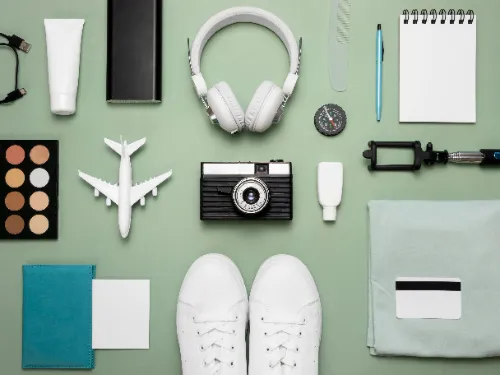
La Dolce Vita's current FAQ recommends traveling with one cabin bag. It publishes specific storage dimensions for Deluxe Cabins and Suites and states that additional registered luggage will be stored separately and will not be accessible during the journey.
That means the cabin bag must contain every item needed aboard:
travel documents, medication and valuables;
daytime and evening outfits;
excursion shoes and weather layer;
essential toiletries and chargers;
sleepwear and undergarments;
one backup for a spill or weather change.
Keep the capsule tight. Two bottoms, several interchangeable tops, one evening piece, one light layer and two practical pairs of shoes can cover many short itineraries. Adjust for journey length, season and personal needs rather than following a universal packing number.
Compare the physical bag with the current storage measurements. A rigid case can meet a volume allowance and still be awkward to open. Soft construction may help, but do not assume any bag fits until the exact category and dimensions are checked.
Use color, texture and accessories intelligently
A capsule does not need to look repetitive. Choose a small palette that reflects the traveler and allows every top to work with every bottom. Deep neutrals, cream, tobacco, navy, black, olive or soft color can sit naturally inside La Dolce Vita's warm interiors without attempting to match them.
Texture creates evening interest without adding volume. Silk, velvet accents, fine wool, satin or a sculptural accessory can make a repeated base feel different. Jewelry, a pocket square or a scarf travels more easily than another complete outfit.
Be mindful of photographs, but do not plan only for them. Tiny patterns can look busy; a strong solid often reads clearly. More important, the wearer should be able to sit, eat and walk naturally. Discomfort is visible too.
Avoid bringing irreplaceable items if losing them would overshadow the trip. Use the cabin safe for appropriate valuables, but keep passports and medication under personal control. Travel insurance and ordinary caution still matter on a luxury train.
Dress as a couple or group without becoming coordinated costumes
When photographs matter, a group can look harmonious without wearing matching colors. Agree on the level of formality and a loose palette. One person's jacket can echo another's accessory; everyone can avoid a color that clashes strongly with the rest.
The more important coordination is practical. Make sure every traveler has heard the same dress guidance. A person invited on a surprise trip may arrive with only casual shoes. Give enough information to pack confidently even if the full itinerary remains a surprise.
For multigenerational groups, comfort needs differ. A younger traveler may enjoy a more fashion-forward evening look, while an older relative may need secure shoes and easy fastenings. The celebration succeeds when everyone feels included, not when every outfit meets one person's idea of elegance.
Children and younger travelers are subject to the operator's current age rules. The current FAQ says children under twelve are not permitted. Confirm the exact policy and documentation before planning family attire or surrounding rooms.
Match clothing to route, season and journey length
A one-night Rome–Venice journey needs a different wardrobe from a longer Rome–Istanbul departure. The short trip may require only one dinner look and one excursion outfit. A longer journey needs repeatable layers, laundry thinking and a clearer system for stored luggage.
Gateway cities matter. Clothing needed for several days in Rome or Venice may not all belong in the train cabin. Repack at the hotel before boarding, moving only the rail capsule into the cabin bag. On a one-way route, confirm how the remaining luggage reaches the final city.
Season changes both appearance and function. Summer calls for breathable fabrics, sun protection and perhaps a light layer for controlled interiors. Spring and autumn reward layers and rain planning. Winter or mountain routes may need much warmer outerwear even when evening clothes remain polished.
Check weather close to departure, but do not chase a single forecast. Prepare for a realistic range. The objective is to look at ease whether dinner runs late, a platform is windy or an excursion includes more walking than expected.
Create the packing list beside the itinerary. Mark each arrival, onboard day, dinner, excursion and final transfer, then assign an outfit using pieces already on the page. This reveals unnecessary duplicates quickly and shows whether an essential layer is missing.
For a longer journey, ask whether pressing, steaming or laundry support is available and exactly what it includes. Do not assume hotel-level services inside a train. A small stain-removal wipe and garments that recover well can be more useful than a complicated outfit that depends on professional care.
The days before and after the train may need the most ordinary clothing: a long walking day in Rome, a boat transfer in Venice or an airport morning. Keep those needs visible. A rail capsule succeeds only when it belongs to the complete Italy suitcase.
Try every planned combination before travel, including the shoes and outer layer. Sit down, reach, walk and carry the cabin bag. This quick rehearsal exposes a tight jacket, unstable shoe or missing layer before it becomes part of the journey. It also confirms that each repeated piece still feels polished in a different combination.
Aim for ease, not performance
The most convincing La Dolce Vita wardrobe looks as though the traveler belongs in it. It respects the train's elegance, works in the real cabin and remains comfortable when the doors open onto Italy.
Evyssa can match the wardrobe guidance to the current route, season and off-train program while planning the wider Italy journey around the rail dates. Explore Evyssa's custom rail vacations.
Is La Dolce Vita Orient Express formal?
It is elegant rather than uniformly formal. Current guidance recommends smart daywear, refined eveningwear for dinner and comfortable clothing for excursions. Check the exact departure for special requirements.
Do men need a tuxedo?
Not under the general current guidance. A jacket and tailored evening look are a reliable starting point unless the specific journey documents name a more formal event.
Can women wear trousers to dinner?
Yes. Elegant trousers with a refined top or jacket can fit the contemporary mood. The quality, fit and overall polish matter more than choosing a dress by default.
How many pairs of shoes should I pack?
For many short journeys, one polished pair and one supportive excursion pair can work. Personal needs, weather and journey length may require more, but cabin space argues for restraint.
Will I have access to my large suitcase?
The current FAQ says stored luggage is not accessible during the journey. Keep every onboard outfit, medicine, document and essential item in the cabin bag.

Csilla Dali
Founder & Lead Travel Advisor
Itineraries to consider
Are You Planning Your Next Vacation?
Check out our top recommendations!