Some luxury train fares contain almost an entire vacation: a cabin, every meal, drinks, guided excursions, hotel nights and transfers. Others cover a reserved seat and a remarkable day of scenery, with lunch ordered and paid for separately. Both are called luxury rail.
That is why “what is included” is one of the most important questions to ask before comparing trains, and one of the easiest to get wrong. Here is how we separate what the train provides from what the complete trip still needs, so that travelers compare like with like.
The short answer
It depends on the type of train. Multi-night sleeper journeys often include the cabin, meals, many drinks and a program of excursions, and some also include hotel nights, transfers and gratuities. Daytime panoramic trains usually include a seat and the journey, with a compulsory reservation and meals sold separately unless you book a premium class. Daylight trains with hotel nights, such as Rocky Mountaineer, are sold as packages whose contents vary by route.
Whatever the train, flights, gateway hotels, private transfers, extra touring, insurance and entry requirements usually sit outside the fare. Always read the current inclusions for the exact departure, then add everything the complete trip still needs.
Why "included" means different things on different trains
Luxury trains fall into a few broad families, and each family packages its experience differently.
Sleeper journeys carry guests overnight in cabins, usually with dining aboard and often with guided excursions. The fare tends to cover a great deal.
Daytime panoramic trains carry guests on a scenic route during the day. The fare covers the journey, with services added by class.
Daylight trains with hotel nights travel by day and stop overnight in hotels. They are typically sold as packages.
Day excursion trains, such as dining journeys from a single city, are occasions in themselves, with a menu as part of the booking.
The word “luxury” does not settle the question either. It describes the standard of the experience, not the contents of the fare. A beautifully served daytime journey with lunch extra and a multi-night sleeper with every meal and drink included can both deserve the label, while asking very different amounts of planning from the traveler.
The same word, “included”, covers very different contents in each case. Comparing a one-night sleeper fare with a panoramic day ticket, without accounting for what each contains, leads to poor decisions.

Sleeper journeys: what is usually inside the fare
Multi-night sleeper journeys tend to include the most, but the details still vary by operator and departure. Three current examples show how.
Venice Simplon-Orient-Express, Paris to Venice. Belmond’s current journey page lists one night aboard, dinner, breakfast, lunch and a transfer from the station to the traveler’s Venice accommodation. The cabin category determines whether the bathroom is private or shared.
Al Andalus in Spain. Renfe currently lists the selected cabin, breakfasts, lunches and dinners with specified drinks, onboard activities, programmed visits and admissions, a gala dinner, an excursion coach, a multilingual guide, regular Renfe positioning trains and station lounge access. Laundry and bar purchases are charged separately.
Golden Eagle Danube Express, Castles of Transylvania. The operator currently lists five-star hotel accommodation before and after the train, the private cabin, a set number of meals, inclusive alcoholic and non-alcoholic drinks, guided excursions as detailed in the itinerary, arrival and departure transfers, luggage porterage and all gratuities on and off the train.
Length matters as well. A one-night journey covers a dinner, a breakfast and perhaps a lunch, and the traveler arranges everything else. A week-long program can cover almost every meal and activity for that week, which shifts the planning effort to the days before and after the train.
These are generous packages, but notice the differences. One includes gratuities and hotels; another charges for bar drinks and laundry; a third includes a transfer at only one end. The phrase “all-inclusive” rarely means exactly the same thing twice, so we read each departure line by line.
Day and panoramic trains: a ticket, a reservation and choices
Daytime scenic trains work differently. The fare usually buys the journey, and the experience is shaped by class and by what you add.
Glacier Express. The operator requires a valid ticket and a separate compulsory seat reservation. In First and Second Class, meals are freshly prepared on board and served at your seat, but they are not included; pre-ordering up to 48 hours ahead is recommended. Excellence Class is the exception: it includes a five-course menu with wine, an aperitif with champagne, unlimited soft drinks and coffee, a concierge and luggage handling on the platform, and requires a First Class ticket or pass plus its own reservation.
Bernina Express. A seat reservation supplement applies to every traveler. Snacks and drinks are served at your seat for purchase. The premium Pullman Class, a seasonal option, includes champagne and canapés, with an optional winery lunch near Tirano.
British Pullman. Belmond’s day excursions from London are built around the meal, with seasonal menus of three, four or five courses depending on the journey, so dining is part of what you book.
Day excursion trains often include the meal but not the journey to the station, the dress for the occasion or the evening afterward. A celebratory lunch on a restored train from London, for example, is complete in itself, yet the traveler still needs a hotel, a transfer to the departure station and a plan for the rest of the day.
With a Swiss Travel Pass, the ticket for Swiss panoramic trains is covered, but the compulsory reservations are not. This catches many travelers by surprise.
Daylight trains with hotel nights
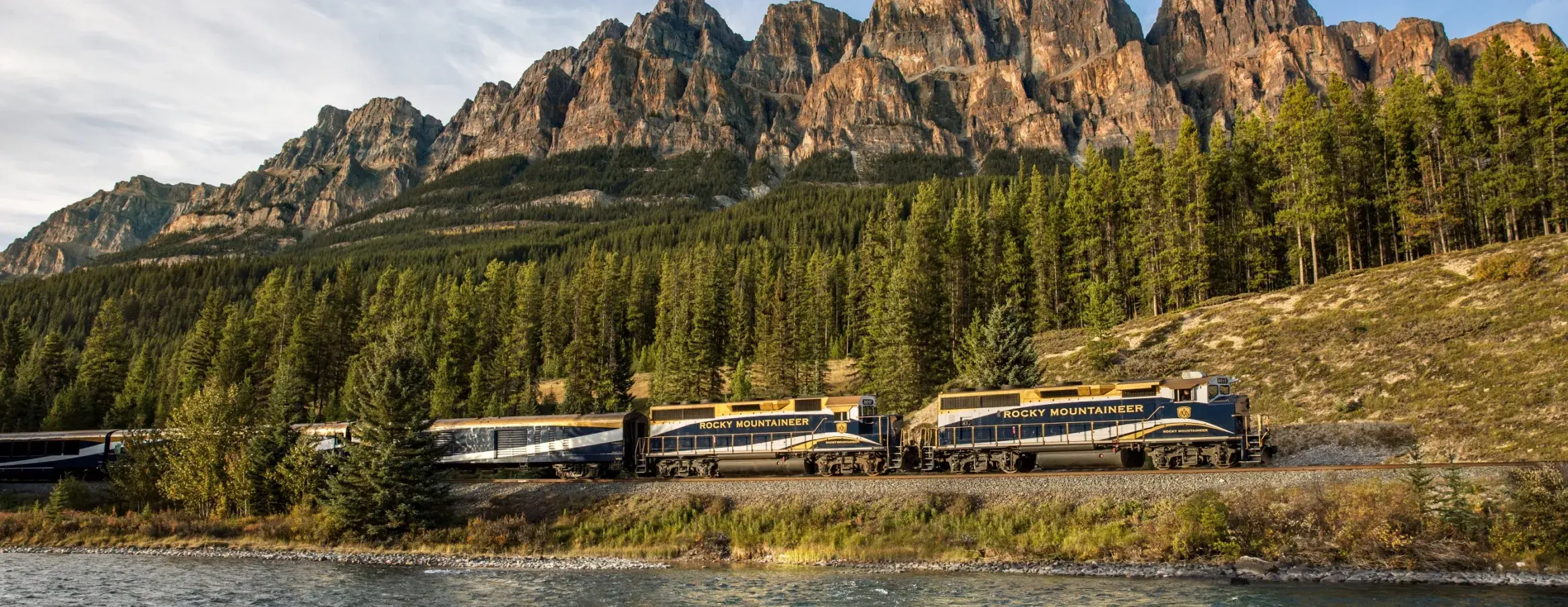
Rocky Mountaineer is the best-known example of this format. It is a daylight train, not a sleeper. Guests travel and dine aboard during the day, then stay in hotels at night.
Current Rocky Mountaineer packages may combine rail travel, selected meals, luggage handling, station transfers, hotel nights and specific activities, but the details vary by route, service and package. The onboard service, such as SilverLeaf or GoldLeaf on eligible routes, is a separate choice from the hotel category.
For this kind of journey, the important questions are about the hotels as much as the train:
How many hotel nights are included, and where?
Which hotel category is included, and can it be changed?
Are transfers between stations and hotels included at both ends?
Is any touring included, or is it optional?
Small gaps can appear at the edges of each day. A package may include the hotel but not dinner on the evening of arrival, or a transfer from the station but not to a restaurant across town. These are easily solved when known in advance, and frustrating when discovered on the day.
A package that looks similar to another on the surface may differ greatly in its hotel nights and activities.
Drinks, gratuities and the small print
Some of the most common surprises sit in the small print rather than the headline.
Drinks. Some trains include alcoholic drinks throughout; others include specified drinks with meals; others charge for the bar. “Wine with dinner” is not the same as an open bar, and premium spirits or champagne may be extra even on generous packages.
Gratuities. Some operators include gratuities on and off the train; others leave them to the guest. It is worth knowing in advance, both for budgeting and so the traveler is not left wondering at the end.
Laundry, spa and personal services. These are often charged separately, even on long journeys.
Excursions. Some sleeper journeys include almost all off-train excursions; others mark certain activities, such as a hot-air balloon flight, as optional extras. Read the itinerary for which visits are part of the program.
Single travelers. Single-occupancy terms differ widely, and some trains have purpose-built single cabins while others offer sole use of a double cabin.
Payment terms. Deposits, final payment dates and cancellation conditions vary by operator and are often stricter on rail journeys than on hotels, because capacity is small. Prices may also be quoted in a currency different from the traveler’s own. These terms are part of what you are buying, even though they do not appear in a list of inclusions.
None of these points is a criticism of any train. They simply need to be understood before comparing one fare with another.
What almost always sits outside the train
However generous the rail fare, certain parts of the trip nearly always remain outside it:
international and domestic flights;
hotel nights before and after the train, beyond any included in the package;
private transfers, especially at the end not covered by the operator;
luggage forwarding between hotels, where useful;
private touring before or after the journey;
travel insurance;
passports, visas and entry requirements;
meals and activities on the days around the train.
The connection between the station and the next hotel deserves particular attention. Operators that include a transfer often do so at only one end, or within a defined area, so the traveler needs to know exactly who meets them, where, and with their luggage.
These items are where the complete vacation takes shape. They also determine whether the rail journey feels calm or rushed. A beautiful train followed by a same-day international flight can be stressful; the same train followed by two nights in a good hotel feels like an experience rather than a transfer.
How to read a rail package line by line
When we compare luxury trains for a traveler, we use a simple two-column method: included, and still to arrange.
For the exact departure, we check:
the cabin or seat category, bed arrangement and bathroom;
meals included, and which ones are not;
drinks: with meals only, throughout, or charged;
excursions, admissions and guiding;
hotel nights within the program, with their location and category;
transfers at each end;
gratuities, laundry and other services;
luggage limits and handling;
any reservations or supplements required in addition to the fare;
what changes by route, direction, class or date.
We use the operator’s current written information for this, not an older brochure or a general description. Inclusions can change between seasons and years, and the confirmed proposal is what counts.
Building the complete-trip total
Once the train's inclusions are clear, the comparison becomes fair.
A sleeper journey with hotels, meals, drinks, excursions and gratuities included may look expensive next to a panoramic day ticket. But it may replace several hotel nights, many restaurant meals and days of private touring. A panoramic train may look modest until the meals, the hotels on either side and the private transfers are added.
We build the complete-trip total for each option: the rail fare, everything the train does not include, and the private elements that make the journey work. Only then do we compare. That total, not the rail fare alone, is the honest basis for a decision.
As a simple illustration, imagine choosing between a one-night sleeper between two cities and a full day on a panoramic train. The sleeper may include dinner, breakfast and a transfer, but still needs hotels on either side. The panoramic day needs a hotel on either side, lunch and probably luggage forwarding. Once both are laid out in full, the difference between them is often smaller, or larger, than the fares alone suggested.
It also shows where money will make the biggest difference. Sometimes it is a higher cabin category. Sometimes it is a better hotel before the train, a private driver at the end or one more unscheduled night.
Separate the train from the trip
A luxury train can contain a little or a great deal. Once you know exactly what it includes, it becomes much easier to see what the rest of the journey needs and to compare options fairly.
If you would like us to compare rail journeys line by line and build the complete trip around the one that fits, we can do that for you. Explore Evyssa’s custom rail vacations.
Are meals included on a luxury train?
It depends on the train. Many sleeper journeys include meals, while panoramic day trains such as the Glacier Express sell meals separately in First and Second Class. Premium classes, such as Glacier Express Excellence Class, include a full menu.
Are drinks included?
Sometimes. Some journeys include alcoholic and non-alcoholic drinks throughout, some include specified drinks with meals and charge for the bar, and some charge for all drinks. Check the exact package.
Are hotels and transfers included?
On some journeys. Certain sleeper packages include hotel nights before and after the train and transfers, and daylight trains like Rocky Mountaineer are sold with hotel nights. Many trains include neither, so read the package carefully.
Does a Swiss Travel Pass cover panoramic trains?
It covers the ticket on Swiss panoramic trains such as the Glacier Express and Bernina Express, but not the compulsory seat reservations, which must be paid separately.
What usually is not included?
Flights, extra hotel nights, private transfers not named in the package, private touring, travel insurance and entry requirements are usually outside the rail fare.

Csilla Dali
Founder & Lead Travel Advisor
Itineraries to consider
Are You Planning Your Next Vacation?
Check out our top recommendations!