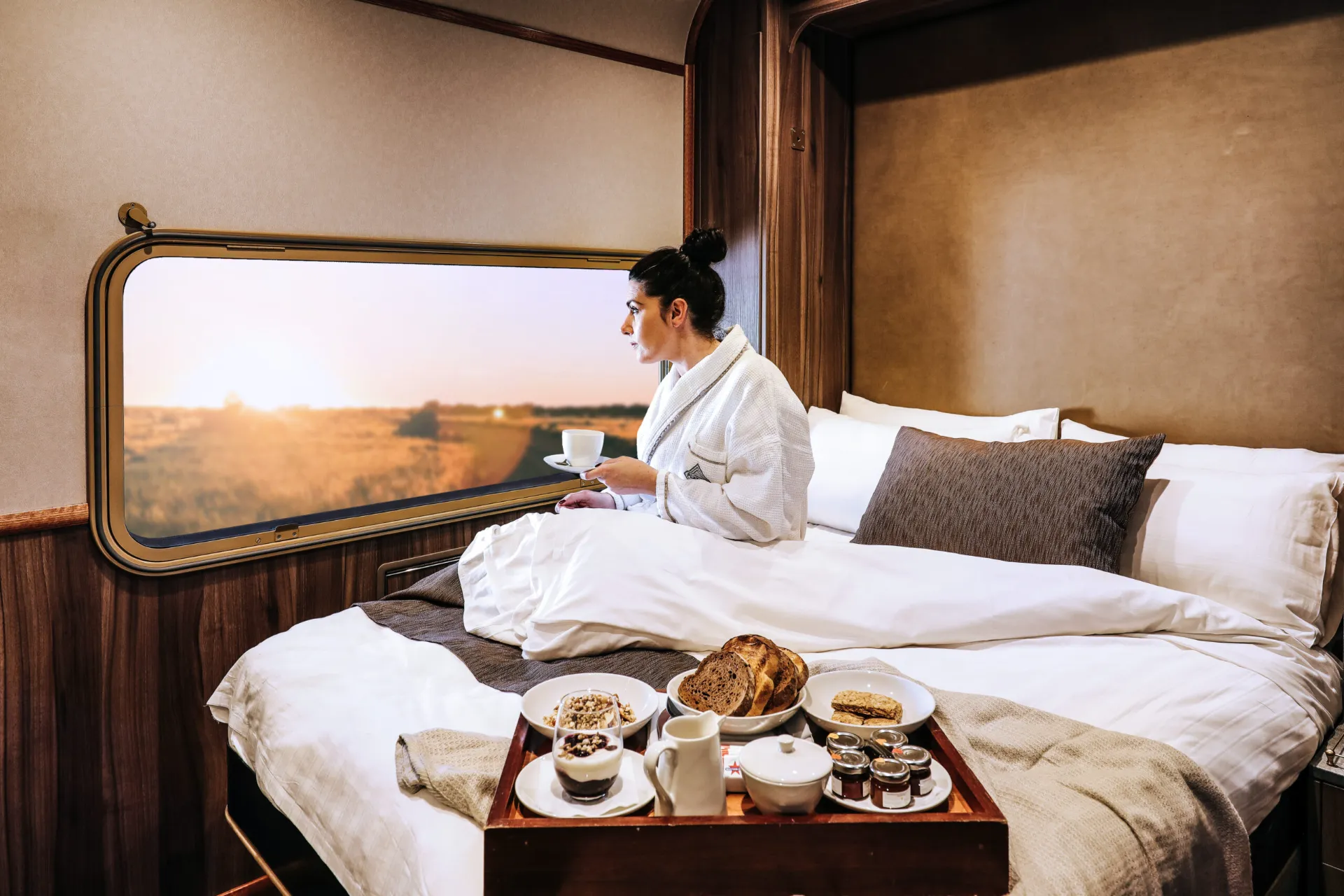
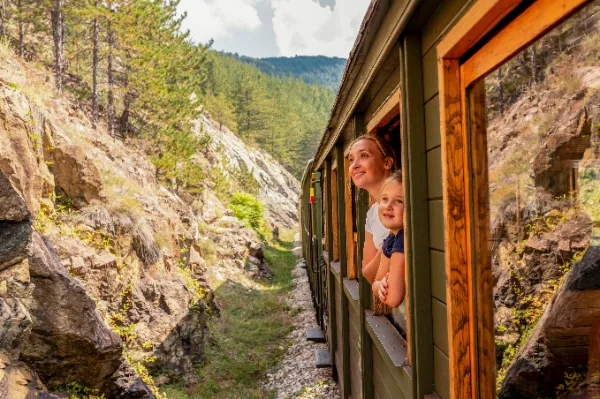
The Ghan crosses the same continent in both directions, but the surrounding vacation does not feel the same. Northbound travel can build from Adelaide toward tropical Darwin. Southbound travel can begin in the Top End and settle gradually toward South Australia. The seasonal Ghan Expedition adds another night and a broader off-train program.
The best direction depends less on which side of the window seems more dramatic and more on climate, journey length, gateway flights and what belongs before or after the train.
The short answer
Choose northbound when you want Adelaide to open the trip and Darwin or the Top End to provide the finale. Choose southbound when the seasonal Ghan Expedition’s longer four-day, three-night format and its current off-train program fit your dates and interests, or when you want to begin with the tropical north and finish in Adelaide.
Direction does not guarantee better scenery. It changes the order, timing and emotional arc. Check the exact 2026 departure because the operator’s current pages are not perfectly consistent about the Expedition’s operating window, and off-train experiences can change.
Compare the two journey shapes
Decision point | Northbound Adelaide to Darwin | Southbound Darwin to Adelaide |
|---|---|---|
Current core format | Legendary Ghan: three days, two nights | Ghan Expedition: four days, three nights on current seasonal program |
Emotional arc | Temperate south toward the tropical Top End | Tropical north through the Red Centre toward Adelaide |
Best opening chapter | Adelaide, wine regions or South Australia | Darwin and a carefully timed Top End stay |
Best finishing chapter | Darwin, Kakadu or another northern extension when conditions allow | Adelaide, South Australian dining or a softer city finish |
Main planning risk | Rushing into Top End touring without enough nights | Building flights from a calendar assumption that is no longer current |
These are planning patterns, not fixed rules. A particular departure, flight schedule or off-train option may make the opposite direction more practical.
Current 2026 pages also list a shorter three-day, two-night Darwin-to-Adelaide journey on selected shoulder dates. Do not use “southbound” as a synonym for “Expedition.” Confirm the exact product name, duration and program before comparing directions.

Northbound: let the continent grow warmer
The current northbound Ghan is presented as a three-day, two-night journey from Adelaide to Darwin. It creates a strong geographical progression: South Australia, the interior and then the tropical north.
Adelaide works well as a beginning because it is an easy place to slow down after a long flight. Two or three nights allow time for restaurants, markets, museums or a private day in a nearby wine region. The train then becomes the central transition rather than the first obligation after landing.
Darwin can provide a dramatic finish, but it needs more than an airport connection. The city, harbor, food cultures and Top End landscapes belong to a different climate from Adelaide. Add enough time to understand that change.
If Kakadu or another wider northern experience is a priority, check current access, weather, lodge operation and touring before fixing the rail date. Some sites and roads can change with seasonal conditions. Do not sell the Top End as a guaranteed list of stops simply because the train arrives in Darwin.
Northbound is often the cleaner choice for travelers with less time because the core rail journey is shorter than the current Expedition. It can also suit guests who prefer the train to build toward the most climatically distinct part of the trip.
Southbound: give the Expedition room
The current Ghan Expedition from Darwin to Adelaide is presented as four days and three nights, covering 2,979 kilometres with nine meals and programmed off-train experiences in Katherine, Alice Springs, Coober Pedy and Manguri.
That extra night changes the balance. The train carries more of the vacation, and the off-train program becomes more substantial. Travelers should want the full rhythm rather than choosing southbound only because of flight convenience.
Darwin belongs before the train, not merely on the morning of departure. A buffer protects against flight disruption and lets travelers adjust to heat and humidity. It also creates room for Top End touring when the season and access are right.
Adelaide makes a calm ending. A final hotel stay can absorb any rail timing change, provide a good dinner and separate the experience from the long flight home. South Australia can also extend the story with wine, coast or wildlife, but avoid adding several regions simply because the train has moved south.
The operator’s current pages do not align perfectly on the Expedition’s precise 2026 operating months and days. Use the live calendar tied to the actual proposal. An old timetable is not reliable enough for flights.
Season matters most at the northern end
The Ghan crosses several climate zones. Adelaide has a temperate rhythm, Central Australia has large day-night contrasts, and Darwin’s Top End has distinct wet and dry seasons. One packing list and one weather expectation will not serve the whole route.
Many travelers favor the drier months for the Top End because touring can be more predictable and humidity is generally lower. That does not make every day cool or every site open. It also does not mean shoulder periods are wrong. A traveler who values dramatic skies, fewer visitors or a particular northern experience may make a different choice.
Use the surrounding trip to choose the month. If Darwin and Kakadu are major reasons for traveling, their current conditions and lodge calendars should lead. If Adelaide, dining and the train itself lead, a wider range of dates may work, subject to the rail schedule.
Central Australia deserves separate preparation. Days can feel warm while nights or early mornings are cooler. Off-train experiences may involve sun, dust, uneven ground and time away from the climate-controlled train. Pack layers, sun protection and stable shoes even if the journey is described as luxury rail.
Climate averages help set expectations, but they do not predict a particular departure. Recheck forecasts and destination notices shortly before travel.
Direction changes what comes before and after
The train should connect two meaningful chapters rather than create two frantic airport transfers.
For northbound travel, consider Adelaide first. A city stay, Barossa or another South Australian experience can settle the traveler before the rail journey. After Darwin, choose one clear northern chapter. That might be a private city and harbor stay, a lodge-based nature experience or a carefully timed national-park itinerary.
For southbound travel, reverse the logic. Begin in Darwin with a buffer and any northern touring. Let The Ghan carry the transition south, then finish in Adelaide with time to rest. A South Australian extension can follow if the vacation is long enough.
Uluru is not simply “on the way” between either gateway and the train. It requires flights or substantial land logistics and deserves its own nights. If the Red Centre matters beyond the train’s scheduled off-train experiences, plan it as a separate chapter rather than squeezing it into a transfer day.
The same is true of Sydney, Melbourne or the Great Barrier Reef. Australia’s scale punishes optimistic maps. Add one region because it deepens the journey, not three because they appear on the same continent.
Protect flights and fixed reservations
Journey Beyond advises allowing an overnight stop before a connecting flight. That guidance matters in both directions. Long-distance rail uses a live network, and exact arrival times can change.
Arrive in the departure city at least a night before boarding; international travelers often benefit from more. At the finish, stay overnight before a fixed long-haul flight. A protected hotel night is part of the trip design, not wasted time.
Also check the train’s meeting point, luggage process and transfer arrangements. A city name does not tell you the door-to-door plan. Confirm how the traveler moves from the hotel to the station, what time luggage is accepted and what remains accessible aboard.
If a schedule changes, the land itinerary should have room to absorb it. Avoid non-refundable restaurant, flight or private-tour commitments immediately after the expected arrival.
Cabin and excursion choices still matter
Direction is only one decision. Gold Single, Gold Twin, Gold Premium and Platinum have different bed, bathroom and private-space arrangements. A traveler who sleeps poorly in an upper berth will not be rescued by the perfect seasonal direction.
Eligible departures from April 2026 may also list the newer Aurora and Australis Suites. Confirm the full live cabin inventory rather than treating the four familiar service names as the entire current range.
Review off-train experiences attached to the exact journey. Northbound and southbound programs are not necessarily mirror images. Current Expedition material names Katherine, Alice Springs, Coober Pedy and Manguri, but exact options, timing, walking and capacity should be checked.
Some excursions may require early starts, coach travel, steps or uneven ground. Confirm mobility and heat tolerance. If an alternative experience is available, reserve it early rather than assuming it can be changed aboard.
Dining and social life are central to The Ghan, but dietary needs should be disclosed before departure. Service-level inclusions and premium selections can change, so use the current confirmation rather than an old brochure.
Direction should be the final fit between climate, itinerary and availability—not a substitute for these other checks.
A simple decision order
Start with the non-negotiable destination. If the Top End is central, identify the months and experiences that work there. Next decide whether the longer southbound Expedition or the shorter northbound journey fits the available time.
Then place gateway nights on both sides and test realistic flights. Only after that should you choose the cabin and optional touring.
This order prevents a common mistake: choosing a train date first, then discovering that the desired lodge, park access or international flight requires a rushed connection.
When both directions work, choose the emotional arc. Northbound feels like an opening toward heat and tropical scale. Southbound feels like a gradual settling from the Top End toward Adelaide. Neither owns the “best” views.
Test the decision with two sample calendars. In the northbound version, place the Adelaide arrival, recovery nights, rail journey, Darwin stay, any Top End extension and homeward flight. In the southbound version, place the northern arrival and touring first, then the Expedition, Adelaide recovery and flight.
Count hotel changes, early starts and unprotected connections. The prettier route description may lose once real flights are added. A direction that removes one fragile domestic connection or preserves two full nights at a desired lodge can be the more luxurious choice.
Also compare which end carries the weather risk. A northbound arrival into Darwin leaves northern touring after the train. A southbound departure requires the northern program to finish on time before boarding. Neither is inherently unsafe; they simply need different buffers.
For groups, check whether every traveler can reach the same gateway without an overnight scramble. A direction that works for one international airport may be awkward for another.
Finally, record why the direction was chosen. “Southbound for the longer Expedition and confirmed Top End lodge dates” is useful. “Southbound is better” is not. A clear reason makes it easier to revise the trip if the timetable, cabin inventory or park access changes.
If the itinerary includes a celebration, decide where it should fall. A birthday in Darwin has a different feel from one in Adelaide or aboard. Restaurant opening days, lodge minimum stays and the rail schedule can make one direction more natural without changing the scenery at all.
Travelers using loyalty flights should compare protected alternatives before committing. An attractive award seat that forces a same-day train connection may create more risk than value. The direction should fit the real ticket, including arrival time, baggage process and recovery after a long flight.
These practical details are not separate from the experience. They decide whether the journey begins with anticipation or with a race against the clock.
Review the final calendar once more after every flight and hotel is confirmed. A direction remains right only when its buffers still exist.
That final check should include every traveler, not only the person leading the booking.
Choose the direction that supports the whole map
The Ghan’s direction matters because it organizes the vacation. The right choice protects the desired season, gives Darwin and Adelaide enough time and leaves fixed flights outside the fragile edges of the rail schedule.
Evyssa can compare live departures and build the gateway hotels, Top End or South Australian touring and cabin choice around the journey. Explore Evyssa’s custom rail vacations.
Is northbound or southbound better on The Ghan?
Neither is universally better. Northbound currently offers the shorter Adelaide-to-Darwin core journey. Southbound currently offers the longer seasonal Ghan Expedition. Choose according to trip length, Top End timing and the desired gateway sequence.
Does the scenery differ by direction?
The continental landscapes are shared, but daylight, timing, weather and the order of experiences change. No direction can guarantee a particular view at a particular hour.
When does the Ghan Expedition operate in 2026?
Current official pages are not perfectly consistent about the precise 2026 window. Confirm the live timetable and exact departure before arranging flights or land touring.
Should Darwin come before or after the train?
It depends on direction, but Darwin should receive real time either way. Add a buffer before a Darwin departure and a planned northern stay after a Darwin arrival when the wider trip includes the Top End.
Can we connect directly to a flight after The Ghan?
The operator recommends an overnight stop before a connecting flight. A hotel night protects the traveler from rail timing changes and creates a calmer finish.

Csilla Dali
Founder & Lead Travel Advisor
Itineraries to consider
Are You Planning Your Next Vacation?
Check out our top recommendations!