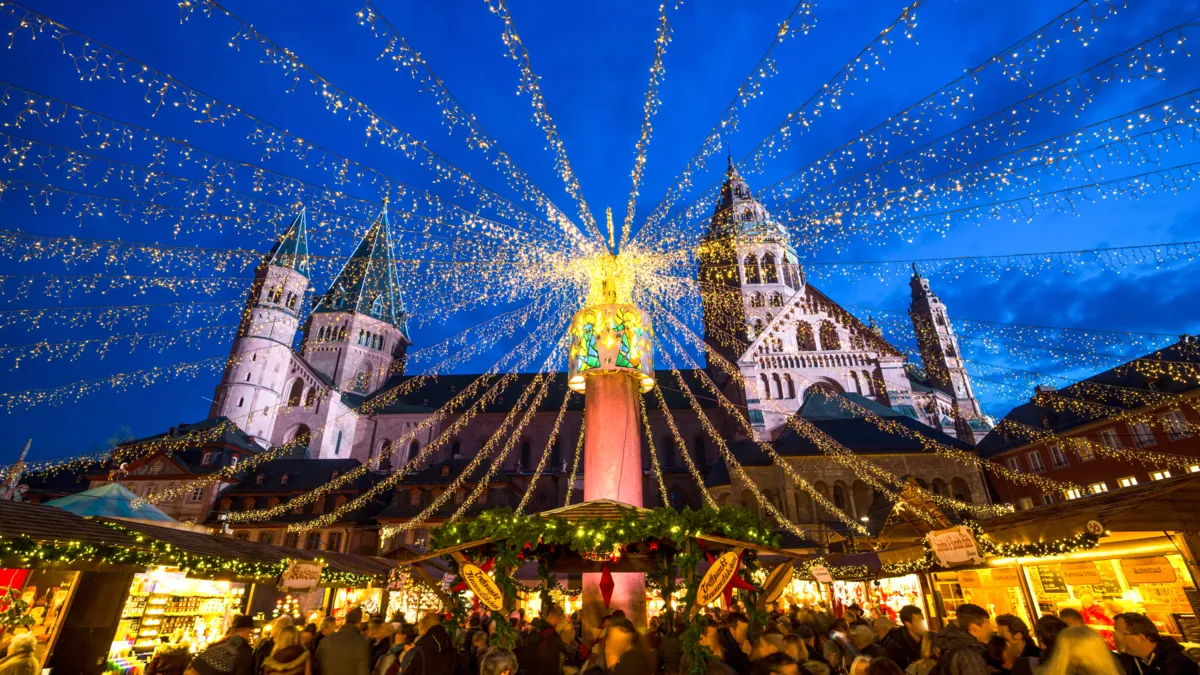
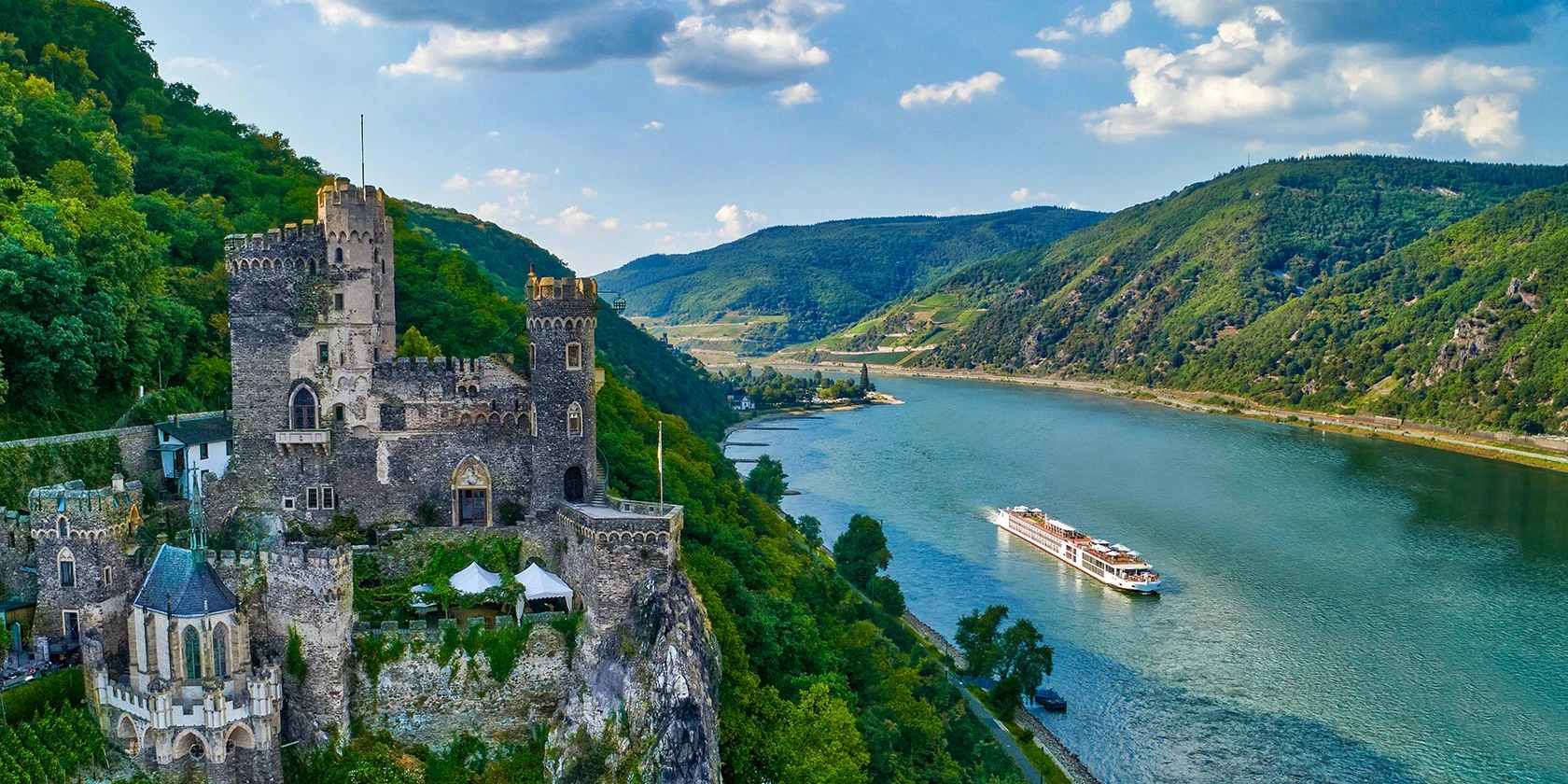
The Rhine introduces itself from the window: a castle on a steep hill, another above the next bend, vineyards climbing from the water and small towns gathered beneath church spires.
The Danube often enters through its cities. Vienna opens the door to music and imperial rooms. Budapest turns the river into a grand stage. Between them come abbeys, wine terraces, villages and the layered history of Central Europe.
Both are rewarding first river cruises. They simply tell different stories.
The short answer
Choose the Rhine for castle-lined scenery, vineyard slopes, storybook towns and a classic Amsterdam-to-Basel journey. Choose the Danube for Vienna, Budapest, Bratislava, abbeys, music and Habsburg history.
If your priority is scenery you can enjoy directly from the ship, the Rhine is the stronger starting point. If major cultural cities are the reason you are going to Europe, the Danube may feel richer.
The final decision should come from the exact route, daylight sailing time, excursion style and land extension, not the river name alone.
What does a classic Rhine cruise feel like?
The Rhine is immediately visual. On a classic route between Amsterdam and Basel, a voyage may include Cologne, Rüdesheim, Heidelberg, Strasbourg and smaller wine towns.
The defining passage is the Upper Middle Rhine Valley between Bingen and Koblenz. UNESCO describes this 65-kilometer cultural landscape through historic towns, terraced vineyards and roughly 40 hilltop castles and fortresses. The scenery is not a decorative backdrop. It explains why people have traveled, traded, defended and written about this corridor for centuries.
That concentration makes the Rhine satisfying for a first river cruise. You understand why the journey is by water even when you are sitting quietly with coffee.
The cultural variety also feels generous for one unpacking. Dutch canals, German cathedrals and wine towns, French Alsace and Swiss connections can sit within one journey.
The Rhine tends to suit travelers who enjoy:
castles, legends and medieval history;
vineyard scenery visible from the ship;
French and German cultural contrasts;
old towns, architecture and photography;
a compact one-week introduction; and
land extensions in Amsterdam, Switzerland, Alsace or Paris.

What does a classic Danube cruise feel like?
The upper Danube is shaped by cities, courts and cultural exchange. Vienna, Budapest and Bratislava often anchor the route. Depending on the itinerary, you may also see Passau, Linz, Regensburg, Dürnstein and Melk Abbey.
Between Melk and Krems lies the Wachau. UNESCO describes this stretch of the Danube as a living cultural landscape of wine terraces, orchards, villages, monasteries, castles and ruins that preserves visible layers of more than two millennia of change.
The scenery is gentler than the Rhine Gorge in places, but the story becomes grander when the ship reaches the capitals. Music, palaces, coffeehouses, religious art and Habsburg history recur throughout the journey. Budapest’s riverfront and Vienna’s cultural life can each justify extra nights.
The Danube tends to suit travelers who enjoy:
major European capitals;
imperial, political and religious history;
classical music, opera and palaces;
abbeys and monumental architecture;
wine and the Wachau Valley;
Christmas markets; and
land extensions in Prague, Salzburg, Vienna or Budapest.
Rhine versus Danube at a glance
Rhine | Danube | |
|---|---|---|
Signature scenery | Castles, steep vineyards and the Upper Middle Rhine Valley | Wachau vineyards, abbeys, riverfront capitals and castle ruins |
Major cities | Amsterdam, Cologne and Strasbourg, with Basel connections | Vienna, Budapest, Bratislava and regional gateways |
Overall mood | Storybook, medieval and cross-cultural | Imperial, musical and urban |
Strongest first impression | Scenery visible from the ship | Major cities and cultural experiences |
Easy extensions | Amsterdam, Switzerland, Alsace, Paris | Prague, Salzburg, Vienna, Budapest |
Strong starting fit | Castle lovers, photographers, wine travelers | Culture lovers, music travelers, history travelers |
Ports vary by route and direction. Some longer journeys connect the Rhine, Main and Danube, but they should be chosen because you want a longer European passage, not because you could not decide.
How do the Rhine and Danube compare?
Scenery, culture, food, season and activity level reveal the clearest differences between the two rivers.
Which river has better scenery?
The Rhine leads if scenery means a concentrated corridor of castles, fortified ruins and steep vineyards.
UNESCO’s Upper Middle Rhine Valley includes around 40 hilltop castles and fortresses across its protected stretch. Daylight cruising here is one of the clearest reasons to travel by river rather than by road.
The Danube’s beauty is more varied. The Wachau combines vineyards, apricot-growing landscapes, villages, abbeys and ruins. Budapest adds a dramatic city riverfront. The Danube’s visual power comes from the conversation between countryside and cities rather than one continuous castle passage.
Before booking, ask when the ship passes the signature landscape. A beautiful valley scheduled after dark does not deliver the same experience. Direction, lock timing and operating conditions can affect the hour, so treat published timing as a plan rather than a promise.
Which river is better for cities and culture?
The Danube usually leads for imperial cities. Vienna and Budapest can each support several days, while Bratislava adds another capital within a compact route. Music, palaces and the history of Central Europe appear repeatedly.
The Rhine is culturally rich in a different way. Cologne’s cathedral, Strasbourg’s French-German identity, Heidelberg and medieval wine towns create variety. Amsterdam and Basel can be excellent bookends, although a cruise may treat an embarkation city mainly as a practical starting point.
Do not assume the sailing gives you enough time in a city simply because its name appears in the itinerary. If Vienna, Amsterdam or Budapest matters, add hotel nights and see it without watching the clock for all-aboard time.
Which river is better for food and wine?
Both can be excellent.
The Rhine connects Riesling regions, Alsatian cooking, German beer traditions and possible Swiss or French extensions. The Danube brings Austrian wine, Wachau specialties, Vienna’s cafés, Hungarian cuisine and Central European markets.
The cruise line’s excursion design matters as much as the river. Compare included tastings, market visits, vineyard walks, cycling options and extra-cost culinary experiences. A private food tour before or after the cruise can add depth without turning a port day into a race.
If wine is central, look beyond the river name. Check the month, the specific region, time ashore, and whether the experience is a genuine visit or a short tasting arranged for a large group.
Which river is better for Christmas markets?
Both rivers have strong festive routes.
Rhine sailings may include Cologne, Strasbourg and smaller German towns. Danube routes may include Vienna, Budapest, Bratislava, Regensburg and other Central European markets.
Choose by the cities you want, then verify the exact dates. Market opening schedules vary each year. A departure can be labeled festive even when a specific market is not open for the entire call.
Winter river cruising also means cold weather, shorter daylight and a different view from the ship. The markets are the purpose of the journey, not a small seasonal addition to a summer-style cruise.
Which river is better for active travelers?
Either can work when the cruise line offers meaningful choices.
AmaWaterways currently promotes guided hikes and bike rides, daily fitness classes and Wellness Hosts on most European ships. Other lines may emphasize cultural touring, exclusive access or a gentler pace.
Check the actual day-by-day program for:
bicycle availability and route difficulty;
gentle, regular and active walking groups;
steps, cobblestones and steep terrain;
the amount of genuine free time;
whether appealing excursions overlap;
mobility support and vehicle access; and
the walk across other vessels when ships are rafted side by side.
River cruising simplifies unpacking. It does not remove the physical realities of European streets and historic buildings.

When should you cruise the Rhine or Danube?
The main season runs through spring, summer and autumn, followed by special Christmas-market departures in late November and December.
Spring
Spring can bring gardens, fresh landscapes and comfortable walking days, along with changeable weather. Earlier sailings may feel calmer, but packing needs to cover cool mornings and rain.
Summer
Long daylight helps scenic cruising and evening time ashore. Popular cities can be hot and busy. If heat affects your energy, compare excursion start times and air-conditioning rather than choosing by daylight alone.
September and October
These months often appeal to wine and culture travelers. Walking conditions can be cooler, and the landscape begins to change. They are also popular, so desirable cabins and extensions may book early.
Christmas-market season
The atmosphere can be wonderful, but the days are short and cold. Choose the sailing for the festive program and cities rather than expecting the same scenic rhythm as a warm-season cruise.
What about high or low water?
River levels can affect any month. High water may limit passage under bridges. Low water may make a river section too shallow. Conditions can change quickly, and no advisor or cruise line can guarantee a perfect level months in advance.
AmaWaterways currently says possible adjustments can include different docking locations, modified excursions or ship swaps. Uniworld’s terms explain that water, wind, locks and other river conditions may require changes. Tauck also describes possible ship swaps or ground transport when water conditions affect passage.
These are possible responses, not guaranteed outcomes. Ask how the line has handled recent disruptions, read the current terms, keep arrival and departure plans sensible and maintain appropriate travel protection.
Good planning accepts that the river cannot be controlled and focuses on how the line will support you if conditions change.
How do you choose the right sailing?
The river is only the first decision. The exact route, cruise line and land plans can change the experience just as much.
Which river is better for a first cruise?
Choose the Rhine if:
castles are the first image in your mind;
you want a classic one-week introduction;
Amsterdam or Switzerland is already on the wish list;
scenic cruising is a high priority; or
smaller historic towns interest you more than grand capitals.
Choose the Danube if:
Vienna and Budapest are priorities;
you love music, palaces and imperial history;
Prague or Salzburg would complete the trip;
you want a mixture of capitals and wine-country scenery; or
cultural events matter more than a continuous scenic corridor.
If both appeal, choose the better itinerary and cruise style now. The other river makes an excellent second journey.
The cruise line may matter more than the river
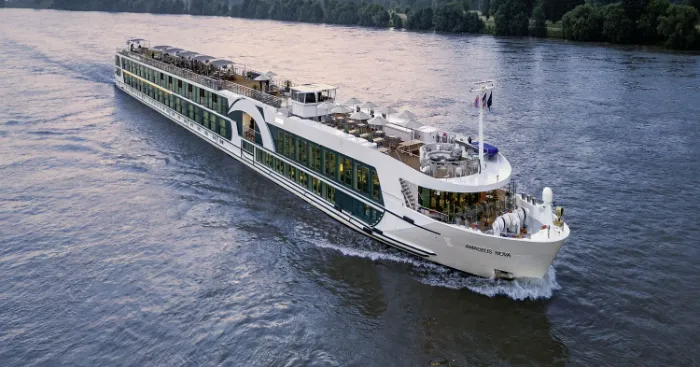
Two ships on the same water can create different vacations.
One line may offer several walking paces and active excursions. Another may concentrate on all-inclusive ease and elaborate interiors. A third may build the journey around a larger guided team, hotels and private cultural access.
Compare:
excursion group size and choice;
included and optional experiences;
time at leisure;
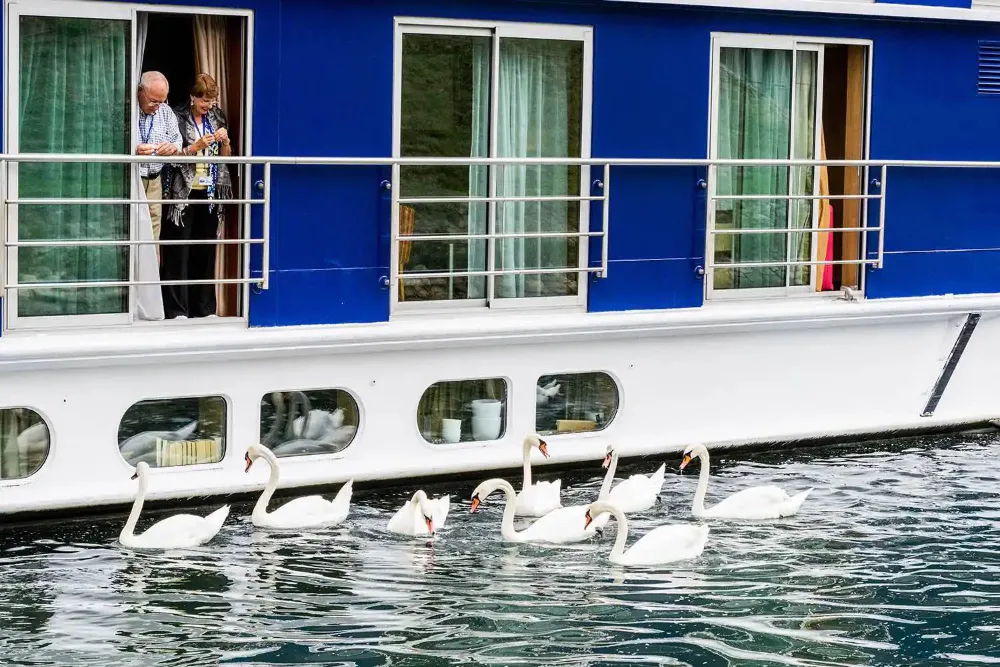
cabin layout and window design;
dining and beverage inclusions;
onboard atmosphere;
support during river disruption; and
the land program before and after the ship.
The river decides the landscape. The line decides how you meet it.
Plan the land extension deliberately
Many river cruises begin or end near cities that deserve more than one rushed day.
For the Rhine, consider Amsterdam, Switzerland, Alsace, Paris or the German wine regions. For the Danube, consider Prague, Salzburg, Vienna, Budapest or the Austrian countryside.
Prague is not on the Danube, but it can be connected by road or rail to a Danube itinerary. Amsterdam appears on many Rhine routes, but the cruise schedule may leave little time to know it.
Two or three meaningful hotel nights usually add more than squeezing another city into an already full excursion day. They also create a buffer for international flights and reduce the risk of missing embarkation.
How Evyssa helps you choose
Evyssa compares the exact route, direction, ship, cabin, excursions, walking demands and time in each place. We then design flights, hotels, private transfers and touring around the river cruise.
Explore Evyssa’s river cruises and wider cruise planning.
Tell us whether castles or capitals call to you more, and we will help you choose the right river, line and journey.
Is the Rhine or Danube better for a first river cruise?
Both are strong choices. The Rhine is often better for castles and storybook towns. The Danube is often better for Vienna, Budapest, music and imperial culture.
Which river has more castles?
The Rhine is the stronger castle route. UNESCO identifies around 40 hilltop castles and fortresses within the protected 65-kilometer Upper Middle Rhine Valley.
Which is more scenic, the Rhine or Danube?
The Rhine has more concentrated castle-and-vineyard scenery. The Danube combines the Wachau’s villages and terraces with major city riverfronts, especially Budapest.
Can I visit Prague on a Danube cruise?
Yes, as a land extension. Prague is not on the Danube, so it needs a road or rail connection before or after the sailing.
Do Rhine cruises visit Amsterdam?
Many classic itineraries begin or end there, but not all provide substantial sightseeing time. Add hotel nights if the city matters.
When is the best time for a Rhine or Danube cruise?
May, June, September and October appeal to many travelers. Summer offers long daylight, while Christmas-market season is designed around festive cities. Weather and river conditions remain variable in every month.
Can river levels cancel or change a cruise?
Yes. High or low water can lead to revised docking, excursions, ground transport, ship swaps or other changes. The response depends on the river section, timing, vessel and cruise line.
How many nights should I add before a European river cruise?
Two or three nights is a sensible minimum for many international arrivals. Add more when the embarkation city or nearby region is part of the reason for traveling.
---

Csilla Dali
Founder & Lead Travel Advisor
Itineraries to consider
Are You Planning Your Next Vacation?
Check out our top recommendations!