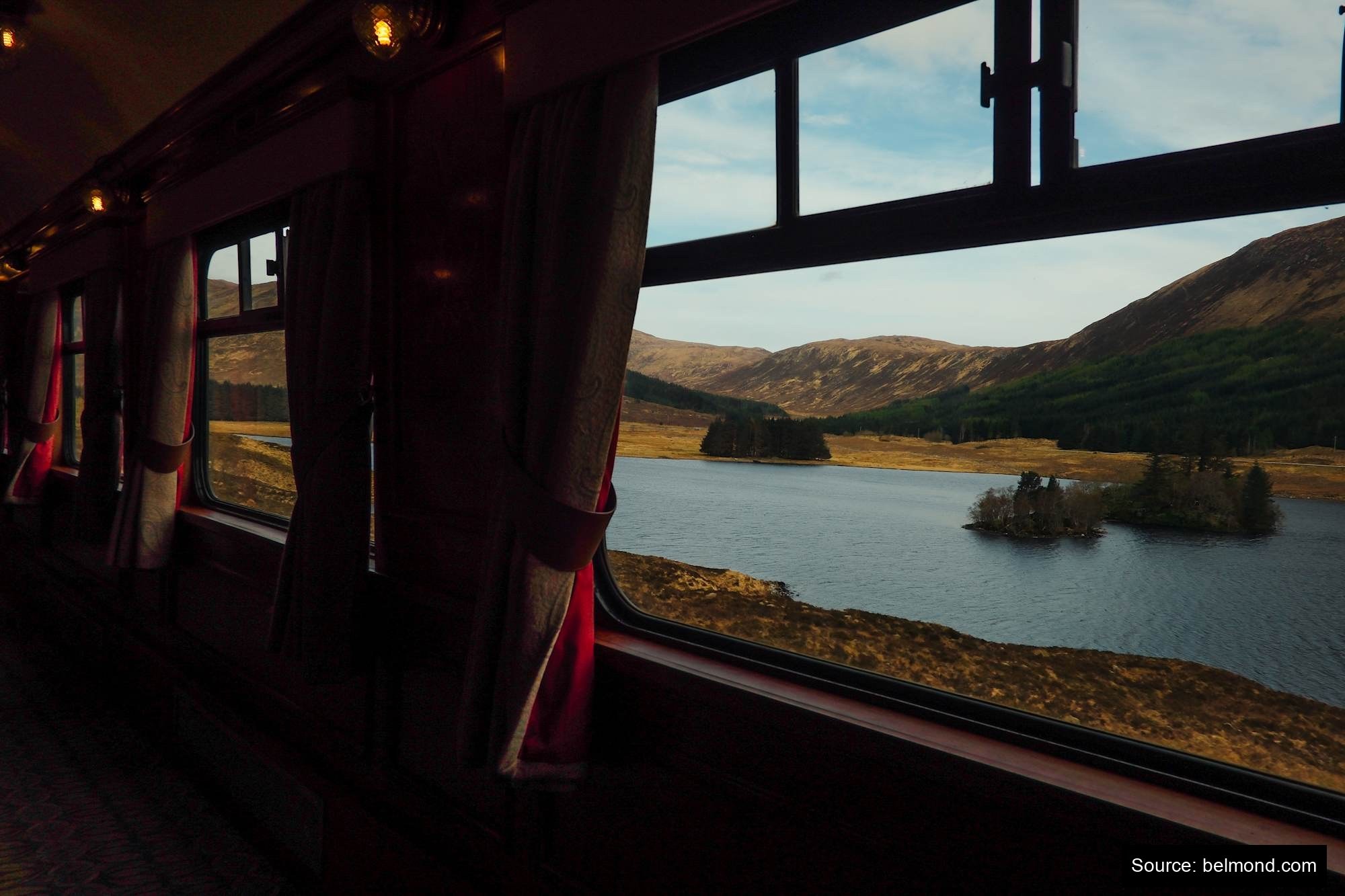
A day train gives the landscape the center of the stage, then returns you to a full hotel room. A sleeper asks you to live aboard: dress for dinner, find your balance in a moving corridor and wake somewhere new. Both can be luxurious, but they answer different wishes.
There is also a useful middle ground. Rocky Mountaineer travels by daylight and uses hotels at night. That format can deliver large-window scenery and a rail-centered itinerary without asking the traveler to sleep in a cabin.
The short answer
Choose a day train when the main pleasure is scenery, dining or access to a destination, and when hotel comfort at night matters. Choose a sleeper when cabin life, evening atmosphere and waking along the route are part of the dream. Consider daylight rail with hotel nights when you want an immersive multi-day route without sleeping aboard.
The right answer depends on sleep, bathroom needs, mobility, luggage, social style and the role rail should play in the whole vacation. A sleeper is not automatically more luxurious; it is simply more immersive.
What a day train gives you
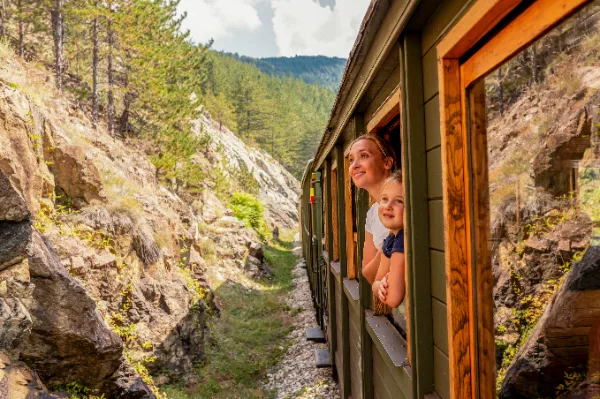
A day train can turn a transfer into the most memorable daylight hours of the trip. The traveler boards in the morning, watches the route unfold and arrives ready for a hotel bed and a full bathroom.
The format suits travelers who:
care most about landscape or a distinctive meal;
sleep lightly or need a stable hotel bed;
prefer a full-size bathroom;
want rail to occupy one vivid day;
have limited time in a wider itinerary;
are trying luxury rail for the first time.
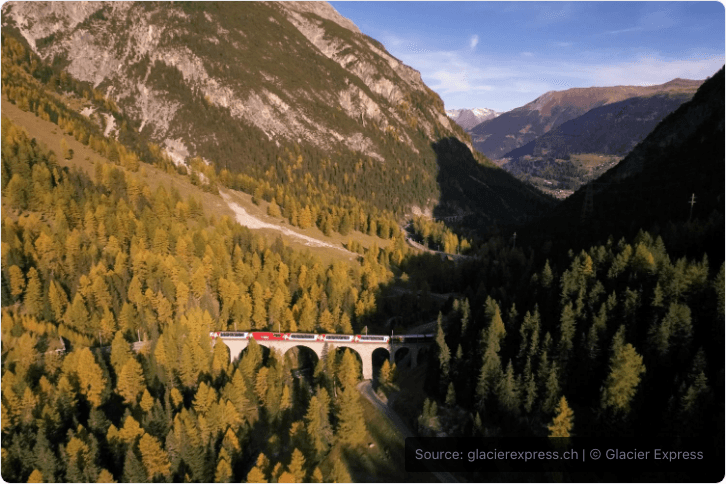
Day journeys vary widely. Glacier Express is a long panoramic route across Switzerland. Bernina Express emphasizes Alpine scenery and engineering. British Pullman centers the occasion of a day excursion or meal. Hiram Bingham combines a train journey with access to Machu Picchu under its current operating format.
These names should not be treated as interchangeable. Confirm the exact stations, duration, class, seating, meal, luggage and destination arrangements. A scenic day can still be physically demanding if it includes an early start, a long transfer or a rushed evening after arrival.
The hotel becomes part of the product. A well-located property and a calm transfer let the rail day end gracefully. Without that planning, the traveler can step from a beautiful carriage into a stressful search for luggage, transport and dinner.

What a sleeper asks you to enjoy
A sleeper train makes the onboard life part of the destination. The cabin changes function, dinner becomes an evening event and the traveler wakes on the route rather than checking into a hotel.
The format suits travelers who are excited by:
the ritual of living aboard;
a private cabin, even when compact;
meals and conversation over several days;
changing landscapes without repeated packing;
the romance of nighttime movement;
an itinerary whose excursions and public rooms are part of one hosted world.
Venice Simplon-Orient-Express, Royal Scotsman, Britannic Explorer, Rovos Rail and Journey Beyond’s Australian trains all offer overnight experiences, but their rooms, bathrooms, dress, excursions and number of nights differ. A familiar brand name cannot replace reading the exact proposal.
Some cabins have private bathrooms; some do not. Some beds are fixed; others convert from daytime seating. A double room can mean twin beds rather than one double bed. The amount of space, storage and access to public cars also changes by category.
The emotional question is simple: will the cabin feel like part of the adventure or like a room you must endure between the parts you want? An honest answer prevents an expensive mismatch.
The middle ground: daylight rail with hotel nights
Rocky Mountaineer’s Canadian journeys operate during the day, with guests staying in hotels overnight. The official route information describes daylight travel so the landscape remains visible rather than passing unseen in darkness.
This can be an excellent fit for a traveler who wants several rail days and a hosted route but not a sleeper cabin. The hotel supplies an ordinary bed, bathroom and floor space. The train supplies the views, meals and social atmosphere during the day.
It is still not the same as a one-day train. Luggage moves separately according to the current program, hotel categories matter, and motorcoach transfers can form part of the complete journey. Confirm every segment rather than assuming “hotel at night” removes all logistics.
This format may also help a traveler with sleep or mobility concerns, but it is not automatically accessible. Stations, coach transfers, hotels, seating and walking distances still need individual confirmation.
Compare the room you will actually use
Cabin names are marketing shorthand. The traveler needs the physical facts.
For a sleeper, confirm:
cabin dimensions and daytime layout;
bed size, direction and access;
fixed bed or staff conversion;
private, shared or no shower;
private or shared toilet;
storage for full-size luggage;
distance and steps to dining or lounge cars;
nighttime noise and movement expectations;
occupancy and any connecting-room arrangement.
For daylight rail, confirm:
seat style and recline;
ability to move around;
window arrangement and viewing spaces;
class and meal service;
boarding and arrival times;
luggage access during the day;
transfer from the station to the hotel.
Do not choose from the most flattering photograph. Ask for the named category and current configuration on the exact departure.

Let sleep and bathroom comfort guide the choice
Travelers often focus on the scenery and underestimate the night. A moving train has sound, motion and a different sense of space from a hotel. Some people sleep beautifully to the rhythm. Others notice every curve and stop.
A sleeper can still be right for a light sleeper if the romance matters enough and the trip is short. It may be wrong for someone whose wellbeing depends on a stable bed, substantial floor space or frequent, easy bathroom access.
Bathroom privacy deserves direct discussion. An ensuite may be compact. A shared facility may be well maintained but still unacceptable to the traveler. If the room has a toilet but no shower, say so plainly.
For mobility, trace the path at night as well as in daylight. Can the traveler reach the bathroom safely when the train is moving? Is the bed accessible without climbing? Does a companion have enough space to help? These are fit questions, not minor details.
Decide how much social structure feels good
Day trains can be sociable, but the social window is limited. A sleeper creates repeated meetings in dining rooms, lounges and excursions. That continuity can become a pleasure or a demand, depending on the traveler.
Ask whether shared dining feels welcoming, whether dressing for dinner adds delight, and whether several hosted days sound restful. A traveler who wants independent evenings may prefer a hotel-based format. Someone who wants the train to become its own small world may find a sleeper more satisfying.
Excursion style matters too. Some overnight journeys include a structured off-train program. The traveler should know how much choice exists, how physical the outings are and what happens if they prefer to rest.
Build either format into a complete trip
Day rail and sleeper rail both need protected edges. Arrive in the gateway early enough to absorb a flight or luggage delay. Use a hotel that supports the departure time. Confirm a private transfer and clear luggage instructions.
After a sleeper, avoid assuming the traveler wants immediate touring. The first hotel should offer a calm landing. After a day train, make sure the evening is not consumed by another long transfer.
Direction should follow the wider itinerary. Choose the rail route that reduces backtracking and connects meaningful stays. Do not force the vacation into an awkward order simply because one photograph was taken in the opposite direction.
Finally, compare total value. A sleeper may include accommodation, meals and excursions. A day train may require hotels, transfers and meals outside the ticket. The correct comparison is the finished vacation, not the price of one rail segment.
Run the comparison as two complete days. For the day-train version, include the hotel before, breakfast, transfer, rail journey, arrival transfer, dinner and hotel afterward. For the sleeper version, include the cabin, meals, evening atmosphere, night, breakfast and arrival. The richer option is the one whose full rhythm the traveler wants, not the one with the longer list of inclusions.
Weather and daylight also matter. A daylight route makes scenery the central promise, so the season and operating hours deserve a current check. A sleeper may cover part of the landscape after dark, while its appeal continues in the dining and cabin experience. Never imply that every celebrated view will be visible from every departure.
Consider how often the traveler wants to unpack. A sleeper can reduce hotel changes, yet a compact cabin requires a smaller onboard wardrobe. Hotel-based rail adds nightly rooms but may handle large luggage separately. A one-day train leaves most packing untouched. Choose the format whose luggage system fits the wider trip.
For couples, confirm that both people want the same degree of immersion. One may love the idea of nighttime motion while the other mainly wants scenery. A daylight route can be a thoughtful shared answer. If the sleeper remains the dream, a shorter first journey and the right cabin can protect both priorities.
For solo travelers, the social difference may be decisive. Several nights aboard provide repeated dining and excursion companions, while a day train offers a shorter social window and more independent hotel time. Neither should be sold as inherently safer or friendlier without the complete itinerary and traveler preferences.
For families, child policies are only the beginning. Sleep, cabin occupancy, dining hours, public-car behavior and excursion pace determine whether the overnight format is genuinely family-fit. A scenic day train may provide the memory without asking a child to manage formal evenings and compact nights.
When the traveler remains uncertain, choose the reversible first step. A day journey can introduce panoramic rail. A hotel-based program can test multi-day rail rhythm. A one-night sleeper can introduce cabin life. The first choice does not need to contain every possible luxury rail experience.
Dining can change the answer. On a day train, one lunch may carry much of the occasion. On a sleeper, meals and evening service repeat and become part of the culture aboard. Confirm seating, dress, dietary support and what is available outside meal times for the exact journey.
Bathroom needs should be discussed without embarrassment. A traveler who needs frequent nighttime access may enjoy a day train far more than a compact sleeper. Another may accept shared facilities for one night because waking on the route matters deeply. The right answer is personal and should be explicit before booking.
Consider the destination after arrival. A sleeper can save a hotel night, but the traveler may still need a room early to shower and rest. A daylight train may arrive at dinner time. Hotel readiness and transfer timing belong in the comparison.
Do not let the choice become a test of how adventurous someone is. Preferring a full hotel room is not a lesser rail experience. Wanting to sleep aboard is not automatically more authentic. Luxury comes from selecting the format that lets the traveler enjoy the route without spending the journey managing discomfort.
Recheck the operating format close to payment and travel. Equipment, hotel partners, route components and schedules can change. The proposal should name which nights are aboard, which are in hotels and how luggage moves on each day.
That simple calendar often makes the right format immediately clearer.
It also prevents false assumptions.
The chosen format should remain clear in the final traveler summary.
Choose how deeply rail should enter the trip
The difference is not simply day or night. It is whether the train should be one beautiful chapter or the place where the story lives for several days. The right choice protects sleep and comfort while preserving the reason the traveler wanted rail in the first place.
Evyssa can compare those formats and design the hotels, transfers and private experiences around the one that fits. Explore Evyssa’s custom rail vacations.
Is a sleeper train more luxurious than a day train?
Not automatically. A day train with generous seating, strong dining and a proper hotel at night may be more comfortable. A sleeper offers a deeper onboard experience, not a universal higher level of luxury.
What if you do not sleep well on trains?
Choose a daylight journey or a hotel-based rail program. If an overnight train remains important, keep it short and confirm the bed, bathroom, motion and nighttime arrangements before booking.
Does Rocky Mountaineer have sleeper cabins?
Its Canadian rail journeys run during daylight and use hotels at night. Confirm the exact route, service level, hotel category, transfers and luggage arrangements for the departure.
Can my first luxury train journey be one day?
Yes. A single panoramic, cultural or dining journey can test the pace and atmosphere without committing to cabin life.
Which format is better for limited mobility?
Neither is automatically better. A hotel at night may offer more space, but stations, coaches, hotels and train seating still require a full access check.