Luxury rail and luxury cruising are often grouped together because both turn the journey into part of the vacation. You unpack, someone else handles the movement, and the landscape arrives at the window. Yet the two feel very different by the second or third day.
A train keeps moving through one continuous landscape toward a destination. A ship brings several places to you while it remains your home. The right choice depends less on which is more luxurious and more on how you like to spend a travel day. This is how we think about the comparison when clients are weighing one against the other.
The short answer
Choose luxury rail if you want a linear route, a strong sense of moving through the landscape, a smaller social scale and a journey that connects naturally to a land trip on either side. Rail rewards travelers who enjoy watching a country unfold and do not need much private space.
Choose a luxury cruise if you want to unpack once, enjoy more cabin and onboard space, visit several places in one trip and move at the slower pace of sea days and port calls. The better rhythm is the one that matches how you like to spend your days, not the one with the more famous name.
Two different ideas of how a journey should move
The clearest way to compare these trips is to think about what moves, and what stays still.
On a luxury train, the scenery moves past you. The train is usually the main event of one chapter of the trip, often between one and several nights, and it carries you across a region in a single line. You see the transitions: a valley giving way to mountains, a city fading into countryside, a border crossing at dawn.
On a cruise, you arrive somewhere new and stay for a while. The ship becomes a moving hotel that docks in a different place on many mornings, with days at sea between some ports. You see each destination as a visit rather than a passage.
Neither approach is better. They answer different reasons for traveling, and they suit different temperaments:
If the idea of watching the land change hour by hour appeals to you, rail often feels more satisfying.
If you prefer arriving, exploring and returning to the same suite each evening, a cruise often feels more relaxing.
If you want both, a rail chapter and a cruise can sit inside the same longer vacation.

Space, privacy and how you will live day to day
This is often where the decision is made.
Train cabins are compact by nature. Even the most generous suites on European heritage and modern luxury trains are small compared with a typical luxury cruise suite. On some trains, the entry cabin category shares restrooms at the end of the carriage. On the Venice Simplon-Orient-Express, for example, Historic Cabins currently have a private washbasin, with shared restrooms at the end of the sleeper carriage, while Suites and Grand Suites have private bathrooms. Other trains, such as the Golden Eagle Danube Express, give every cabin a private bathroom.
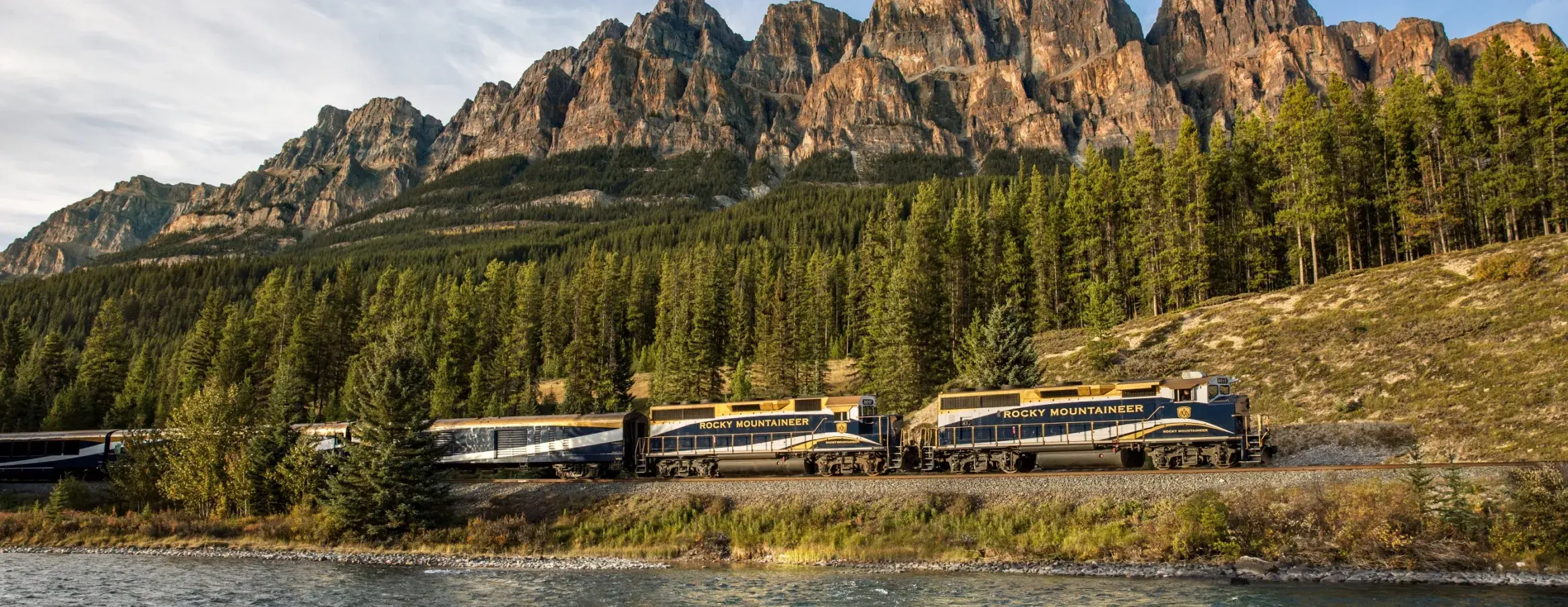
Some rail journeys are not sleepers at all. Rocky Mountaineer travels by day and stops overnight in hotels, and Swiss panoramic trains such as the Glacier Express are daytime journeys with no cabins.
Cruise ships, by contrast, offer more room to spread out. Suites usually include a private bathroom, often a balcony, and a separate seating area, and the ship has several restaurants, lounges, decks and quiet corners. On a longer voyage, that space matters.
Ask yourself honestly:
How much time do you like to spend in your room?
Do you need a private bathroom without question?
Will you be comfortable in a compact space for several nights?
Do you enjoy having many places to go on board, or do you prefer a small, intimate setting?
Travelers who value space and privacy above all often lean toward a cruise. Travelers who would rather spend every waking hour looking out of a window often find a train cabin perfectly adequate. Couples should talk about this openly, because one person’s charming compartment can be the other person’s sleepless night.
Social life, dining and the evening atmosphere
The social scale is very different.
A luxury train usually carries a relatively small number of guests. Dinner is often served at set times in restaurant cars, and you may share tables. The bar car becomes the evening’s center, and by the second night many guests know each other. Some trains, such as the Venice Simplon-Orient-Express, ask for formal dress at dinner and turn the evening into an occasion. Others are relaxed.
A luxury cruise usually offers more choice. There may be several restaurants, flexible dining times, in-suite dining and a wider range of evening venues. You can be as social or as private as you like.
If you enjoy a close-knit atmosphere and the ritual of a shared dinner, rail can be wonderful. If you want to decide each evening whether to socialize, a cruise gives you more control.
Dress follows the same pattern. A heritage train with formal evenings asks you to pack accordingly for a short, intense experience. A cruise may have a mix of relaxed and dressier nights spread across a longer voyage, with more room to store the clothes. Neither should be a reason to choose on its own, but it is worth knowing before you pack.
Destinations: passing through or arriving
This difference shapes what you will remember.
On a train, much of the destination is seen from the window. Some rail journeys include guided excursions, and some build hotel nights into the program, but the core experience is the route itself. Rail is ideal when the landscape between places is the point: the Swiss Alps, the Canadian Rockies, the Scottish Highlands or the Australian Outback.
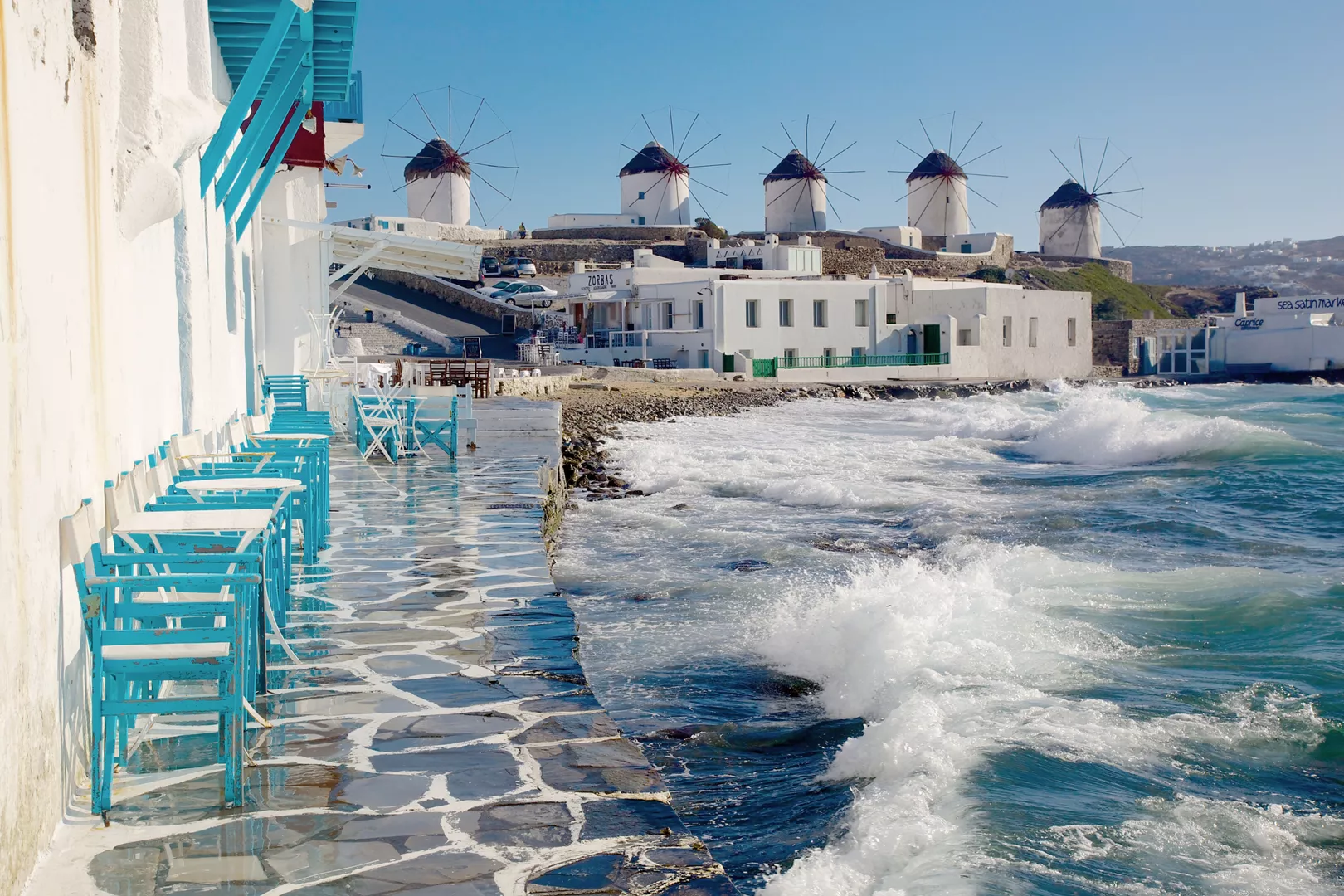
On a cruise, the destinations come in visits. You may spend a day in each port, with shore excursions or private touring, and return to the ship in the evening. This works beautifully for coastlines, islands and regions where the best places are near the water, such as the Mediterranean, the Greek Islands or Northern Europe.
Ask what you want to bring home: the memory of a single great crossing, or a collection of places you explored in turn.
The weather affects each differently, too. A train can carry you through rain and still show you a dramatic landscape, while a cruise depends more on calm seas and clear port days for its best moments. Sea conditions, tender ports and seasonal storms can change a cruise day, just as snow or engineering works can change a rail schedule. Both deserve a little flexibility in the surrounding plan.
What a typical day feels like on each
It can help to imagine an ordinary day, rather than the highlights.
On a sleeper train, you may wake to a new landscape outside the window, have breakfast in the restaurant car and spend the morning watching the route unfold. Depending on the journey, there may be a guided excursion at a station stop, followed by lunch on board. The afternoon brings more scenery, a rest in the cabin or conversation in the bar car. Dinner is a set occasion, and the cabin is made up for the night while you dine. The day has a clear shape, and most of it is spent on the move.
On a luxury cruise, a port day might begin with breakfast on your balcony, then a morning ashore with a guide or on your own. You return to the ship for lunch or stay ashore, then choose between the spa, the pool, a lecture or a quiet afternoon in your suite. Dinner is wherever and whenever you prefer. A sea day is different again: slower, unscheduled and often the most restful part of the voyage.
Neither day is better. The question is which one you would rather repeat for a week. Some travelers love the purposeful rhythm of the train. Others find the open, flexible days of a cruise exactly what a vacation should be.
How each fits into a wider vacation
A train journey usually sits inside a longer trip. You travel to a gateway city, board, travel for one or several nights, then continue your vacation elsewhere. That means hotels, transfers and flights on either side, and the train becomes one chapter.
A cruise can be the whole trip or most of it. You fly to the port of embarkation, perhaps with a night or two before, and the ship handles the rest until you disembark. There is less planning between places, because the ship is the place.
This affects how you feel at the end. A rail-centered vacation often feels varied and full, with different hotels and cities. A cruise-centered vacation often feels restful and continuous, with one home throughout.
When we plan rail, we pay close attention to the gateway hotels and connections, because they shape how calm the train day feels. When we plan a cruise, we focus on arriving early enough for embarkation and choosing the right ship and suite for the itinerary.
Length matters as well. Many luxury train journeys last one to a few nights, with some longer programs, so the train is usually a highlight rather than the whole holiday. Cruises commonly run a week or more, which makes the ship itself the setting for most of the trip. If you have ten days, a train can be one memorable part of them. A cruise can be nearly all of them.
Pace, energy and who tends to enjoy each
Different travelers find different rhythms tiring or restful.
Rail tends to suit:
travelers who love landscape and the sense of a continuous journey;
couples or friends who enjoy a small social setting and shared meals;
travelers who want the journey to link a land trip, such as Paris and Venice or Vancouver and the Rockies;
people who are happy with compact accommodation for a few nights.
A cruise tends to suit:
travelers who want to unpack once and settle in;
families and multigenerational groups who need space and choice;
travelers who want several destinations without changing hotels;
people who enjoy sea days, a wide range of onboard venues and flexible dining.
Weather sensitivity and motion are personal too. Some travelers find the gentle sway of a train soothing and the movement of a ship unsettling; others feel the opposite. If you have a strong view about either, let it count.
Mobility can be a deciding factor too. Trains involve narrow corridors, steps and movement while you walk. Many cruise ships have elevators and accessible suites. Neither should be assumed suitable without checking the exact train or ship and cabin, but the general difference is worth considering early.
Combining rail and cruise in one journey
You do not always have to choose. Some of the most rewarding trips we design include both.
For example, a Mediterranean cruise can begin or end with a rail journey through Italy or across the Alps. A cruise that ends in Venice can follow a night on a heritage train from Paris. In Canada, a Rocky Mountaineer journey can pair with an Alaska cruise from Vancouver.
When combining the two, we think about rhythm. A busy rail chapter followed by a restful cruise often works well. Two very long, structured experiences back to back can feel tiring, so we build in a few unscheduled nights between them.
The key is to let each part do what it does best: the train for the sense of movement and landscape, the ship for rest, space and a series of arrivals. When the order is right, each chapter makes the other feel fresh.
Choose the rhythm, then the brand
Rail and cruise are two beautiful ways to let the journey matter. The right one is the rhythm you will enjoy on day three, not just the one that looks best in a photograph.
If you are deciding between a train and a ship, or wondering how to combine them, we can shape the route, the cabin and the days around it. Explore Evyssa’s custom rail vacations.
Is a luxury train more expensive than a luxury cruise?
It depends on the train, ship, cabin and length. Luxury trains are often costly per night, while a cruise spreads its cost across more nights and includes accommodation, meals and transport between ports. Compare the complete trip, including hotels and flights.
Which offers more private space?
A luxury cruise generally offers more cabin and onboard space. Train cabins are compact, and on some trains the entry category shares restrooms. Confirm the exact cabin and bathroom arrangement before booking.
Does rail feel more active than a cruise?
Usually. Rail journeys often involve gateway hotels and changes of setting before and after the train. A cruise keeps one home across several ports.
Is a cruise better for families?
Often, because ships offer more space, more dining choice and more activities. Some trains accept children, but compact cabins and long dinners suit some families better than others.
Can you combine a train journey and a cruise?
Yes. Many itineraries pair a rail journey with a cruise that begins or ends nearby. Allow unscheduled time between them so the trip does not feel rushed.

Csilla Dali
Founder & Lead Travel Advisor
Itineraries to consider
Are You Planning Your Next Vacation?
Check out our top recommendations!