The Ghan is not valuable because it is the fastest way between Adelaide and Darwin. It is valuable because it turns the scale of Australia into the experience: meals, conversations, nights aboard and guided stops across the interior.
That distinction matters. Travelers who judge only the transport distance may see an expensive train. Travelers who want the train, landscape and off-train program to form one chapter may find the journey difficult to reproduce any other way.
The short answer
The Ghan can be worth it for travelers who enjoy slow travel, sociable dining, sleeper-train life and guided encounters with the interior. Its value comes from the combination of private accommodation, meals, shared spaces, scenery and off-train experiences—not from a cabin alone.
It is less likely to feel worthwhile for travelers who need a hotel-size room, dislike scheduled group activity, want to spend every day independently or are choosing the train mainly to get from one city to another. Cabin choice and journey version can change the answer.
What the fare is really buying
A useful value review separates the experience into five parts.
Part of the journey | What it contributes | What to question |
|---|---|---|
Sleeper accommodation | A private place to sit, sleep and reset | Bed access, ensuite privacy and actual room size |
Dining | A shared rhythm and a sense of occasion | Dietary fit, current inclusions and social preference |
Lounges | Landscape viewing and conversation | Whether the traveler enjoys communal time |
Off-train experiences | Context for the places crossed | Walking, coach time, weather, capacity and alternatives |
Continental route | A gradual sense of Australia’s scale | Whether the wider trip gives the gateways enough time |
If three or four of these elements appeal, the experience may justify its place in the trip. If only the private cabin matters, compare that expectation carefully with the realities of a train.

Cabins: choose comfort by function
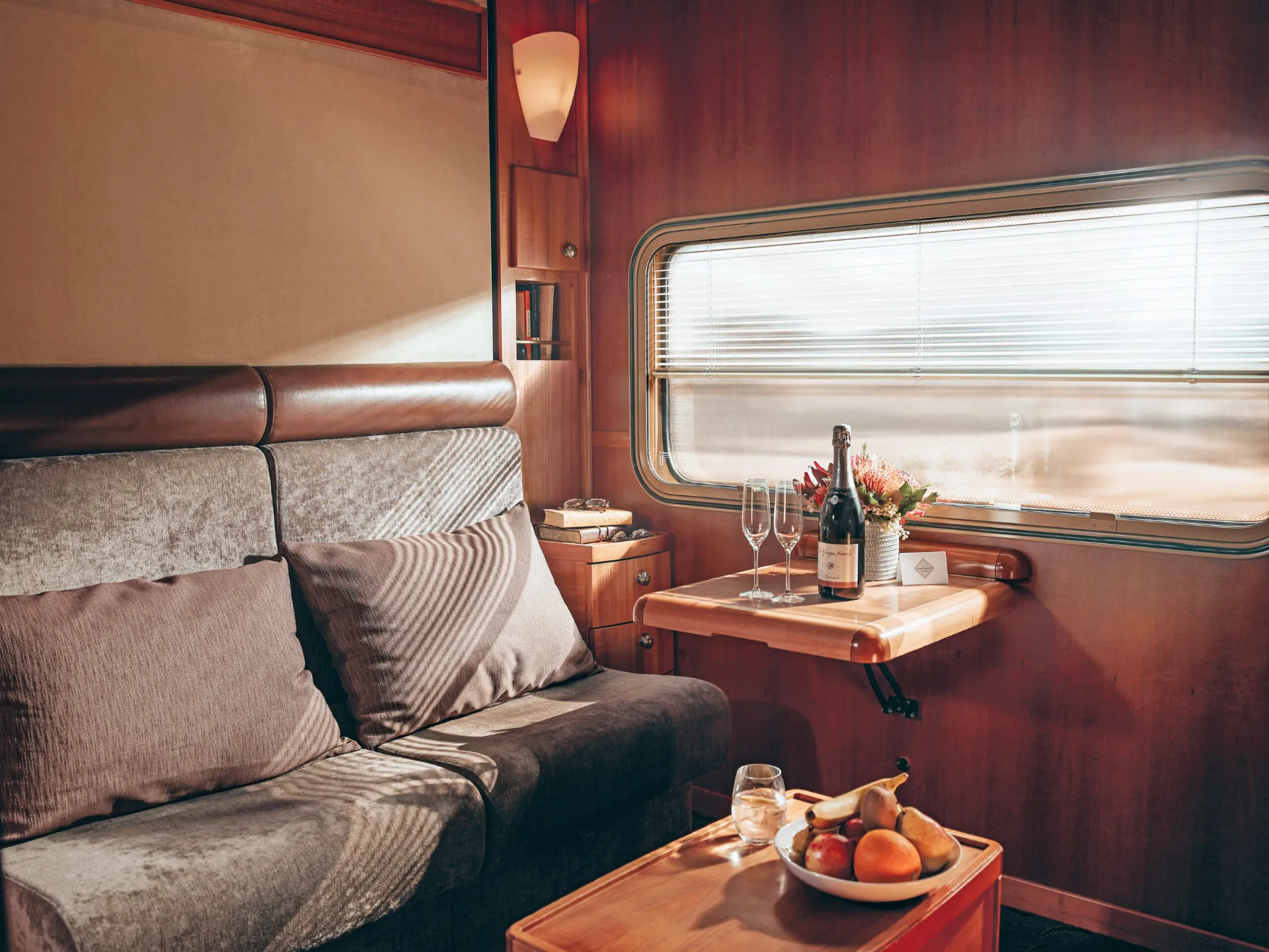
The Ghan offers a range of current layouts. Gold Single provides a private single cabin but uses shared shower and toilet facilities at the carriage end. Gold Twin converts from seating to upper and lower berths and has a compact private ensuite.
Gold Premium is not one physical cabin. Gold Premium Twin keeps upper and lower berths and a compact ensuite while adding its own lounge and dining setting. Gold Premium Suite uses a three-quarter double with a fold-down upper berth and includes a private lounge area.
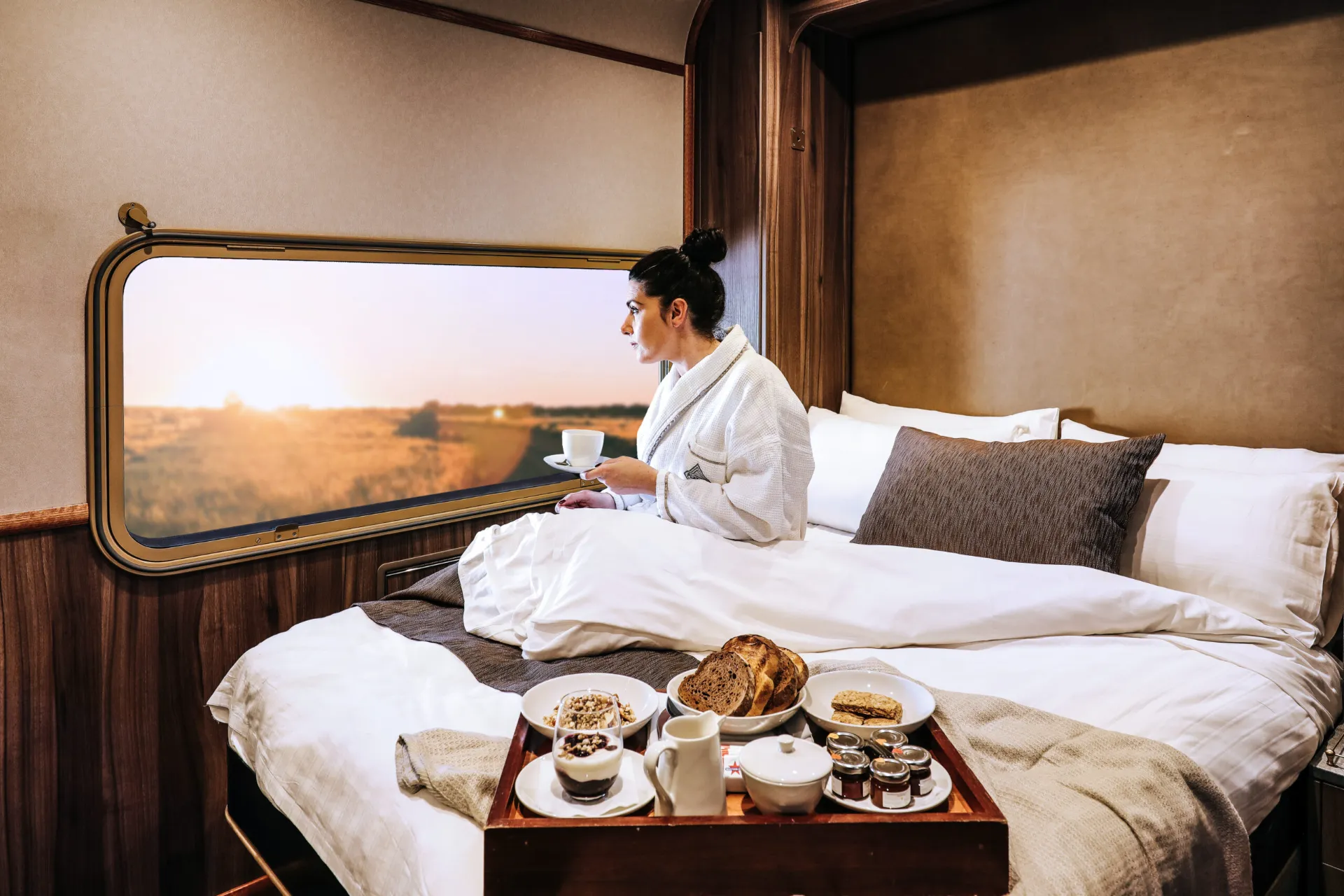
Platinum provides the largest private accommodation. It can be set as a double or twin beds, has a larger ensuite and windows on both sides, and is nearly twice the size of Gold Twin or Gold Premium Twin.
For eligible departures from April 2026, current official material also lists Aurora and Australis Suites above Platinum in space and service. They include fixed-bedroom layouts and a more private service style. This article does not compare those newer suites in detail, but a current value review must disclose them when they are available.
Value depends on which problem the upgrade solves. Platinum can be worthwhile when climbing to an upper berth is difficult, two people need more room to dress, sleep schedules differ or private downtime matters. Gold can be excellent when both travelers move easily and plan to spend the day in the lounge or on excursions.
Imagine the cabin at night. Ask who climbs, how each reaches the bathroom and what happens if one wakes earlier. The answer is more reliable than a category label.
Dining: part of the journey, not a restaurant reservation
Meals aboard The Ghan create structure. Guests leave their cabins, share tables or spaces, talk about the landscape and return to the view. For sociable travelers, this is one of the strongest reasons to choose the train.
The current service levels use different lounge and dining settings: Gold has the Queen Adelaide Restaurant and Outback Explorer Lounge; Gold Premium has its own lounge and dining environment; Platinum uses the Platinum Club. Exact operation can vary by journey.
The value is not simply the number of meals. It is the ease of being fed while crossing remote country, the atmosphere and the absence of daily restaurant logistics. But inclusive dining should not be confused with unlimited choice.
Travelers with dietary needs must notify the operator before departure and confirm what can be handled. Guests who prefer private tables, very flexible dining times or a highly customized menu should ask how the current service works before assuming the train will operate like a hotel restaurant.
Beverage inclusions also need a live check. Avoid judging value from an old brochure’s drinks list. Focus on the confirmed package and any premium choices that remain separate.
Off-train experiences: where the route gains meaning
Without the off-train program, much of Australia’s interior would remain a view through glass. The journey uses guided stops to add geography, history and local context.
The current four-day, three-night Ghan Expedition lists programmed experiences in Katherine, Alice Springs, Coober Pedy and Manguri. The shorter northbound journey has its own program. They should not be treated as mirror images.
This is where traveler fit becomes decisive. Off-train days may involve motorcoaches, early starts, steps, heat, dust or uneven surfaces. Some experiences may have choices, but capacity and mobility can affect what is available.
Ask for the current excursion descriptions. Check duration, transport, walking, shade, restrooms and the distance from the train. A traveler who loves guided storytelling may see strong value. Someone who dislikes group touring may feel constrained.
Weather and operations can change the program. The correct promise is a well-organized off-train experience, not one fixed moment at one fixed hour.
Who tends to love The Ghan
The Ghan often suits travelers who want the journey to be one of the main destinations. They enjoy watching geography change slowly and do not need constant independent choice.
It can be particularly strong for:
first-time visitors who want a broad introduction to Australia’s interior;
couples celebrating a milestone and comfortable with shared dining;
rail enthusiasts who value the rhythm and engineering of a transcontinental route;
travelers who prefer unpacking once aboard rather than taking several domestic flights;
guests who appreciate guided context and a defined daily structure.
It also works for travelers who see luxury as time and coherence. Meals, accommodation, landscapes and experiences arrive in a deliberate sequence. There is less daily decision-making than on an independent road trip.
The train can be restorative if the guest is happy to yield to its pace. It is not designed for someone who wants every hour optimized or controlled.
Who should think twice
The Ghan may disappoint travelers who expect a vast hotel suite, complete silence, permanent privacy or full freedom to leave whenever they wish. Even Platinum remains a train cabin inside a moving rail environment.
Gold Twin and Gold Premium Twin use upper and lower berths. Anyone with mobility, balance or nighttime access concerns should review that arrangement carefully. Gold Single’s shared facilities may not meet every solo traveler’s privacy expectations.
The journey is social. Guests who strongly prefer private meals and little interaction may not receive the full value of the lounges and dining cars. Those who become uncomfortable on long rail days should consider how much time is spent aboard between off-train stops.
Travelers focused on one destination may also be better served by flying there and staying longer. If Kakadu, Uluru or the Barossa is the true purpose of the vacation, do not let the train reduce that place to a hurried extension.
Finally, anyone with a fixed flight immediately after the scheduled arrival should reconsider the plan. Journey Beyond recommends an overnight stop before a connecting flight.
Measure value across the complete trip
The train fare is not the complete vacation total. Add international and domestic flights, gateway hotels, transfers, insurance, pre- and post-rail touring and any personal expenses not included.
Then compare alternatives honestly. A flight between Adelaide and Darwin is faster but does not replace the sleeper experience or interior stops. A self-drive trip offers freedom but involves different distances, risk and daily logistics. A private guided land itinerary can add depth but will not reproduce the social rail rhythm.
The question is not whether another option costs less. It is whether another option creates the same things the traveler values.
Cabin upgrades should also be measured against the land journey. A Platinum cabin may be the right milestone choice. In another itinerary, Gold plus two better gateway nights and a private Top End guide may produce more pleasure.
Use one complete proposal for each realistic version. Include the same flight comfort, hotel quality and destination time. Only then is the comparison fair.
Build Adelaide and Darwin around the train
Adelaide deserves time for food, culture and South Australia. Darwin deserves time for its tropical setting and access to the wider Top End. The train should connect these places, not erase them.
Arrive at the departure gateway early enough to recover from international travel. Two or three nights may be sensible after a long journey. At the finish, protect an overnight before a fixed flight.
Choose one meaningful extension rather than collecting regions. From Adelaide, that might be a wine-country stay or a coastal chapter. From Darwin, it might be a carefully timed lodge or national-park experience when conditions and access support it.
Uluru is a separate logistical chapter, not a casual add-on. Australia is larger than the itinerary may appear on a screen. Flights, check-in times and transfers need space.
A beautifully paced complete trip can make Gold feel generous. A rushed map can make even Platinum feel like one expensive item among too many.
One useful way to judge the final proposal is to mark the experiences that can only happen because of The Ghan. Sleeping aboard, watching the continent change gradually, dining while moving through remote country and joining the train’s current off-train program belong in that column. Gateway restaurants, national parks and private city touring belong to the wider trip.
Then ask which column carries the traveler’s strongest interests. If the rail-only moments are the ones they keep returning to, the journey likely deserves its budget and time. If every priority sits outside the train, a shorter rail chapter or a different Australia itinerary may be wiser.
This test also prevents false comparisons. A domestic flight may replace the transportation but not the experience. A private land tour may replace some excursions but not the sleeper rhythm. The alternative should be judged for what it truly provides, not only for a lower total.
For a milestone, consider the story the traveler wants afterward. “We crossed Australia slowly and shared the interior with other guests” is different from “We spent more days privately in one region.” Both can be luxurious. Worth comes from choosing the story on purpose.
Ask what would make the guest regret the decision. If it is spending several nights in a compact cabin, examine Platinum or a different journey. If it is missing independent time in Darwin, shorten the rail commitment or extend the vacation. If it is dining with unfamiliar people, discuss the social structure before booking rather than hoping the discomfort disappears.
The strongest “worth it” answer names both the benefit and the tradeoff. For example: the journey is worth it because the traveler wants the social sleeper experience and interior stops, while accepting a compact Gold Twin cabin. That statement can be checked against the actual traveler; a broad rating cannot.
Revisit that statement after the full proposal is priced and paced. If the reason still feels compelling beside the real flights, hotels and extension, the journey has earned its place.
If the reason weakens, that is useful evidence rather than a failure. It means the budget can be redirected to the part of Australia the traveler values more.
The honest answer is allowed to be no.
Decide whether the combination is worth it to you
The Ghan earns its value when the traveler wants all of it: the night aboard, meals, company, guided stops and the slow revelation of the landscape. It is not merely a premium seat between two cities.
Evyssa can compare journey versions and cabins, then build the gateway stays and wider Australia trip around the right balance. Explore Evyssa’s custom rail vacations.
Is The Ghan all-inclusive?
The rail journey includes accommodation, meals and selected beverages and off-train experiences according to the current service and itinerary. “All-inclusive” should not be used as a blanket promise for flights, gateway hotels, every drink, transfers, insurance or personal expenses.
How many nights are spent on The Ghan?
The current northbound Adelaide-to-Darwin journey is presented as three days and two nights. The current southbound Ghan Expedition is presented as four days and three nights. Verify the exact date and product.
Is Gold comfortable enough?
Gold can be comfortable for travelers who accept compact sleeper design and, in Gold Twin, upper and lower berths. Review the nighttime layout and bathroom arrangement rather than relying on the category name.
Are excursions optional?
Current journeys include programmed off-train experiences, sometimes with choices. Availability, capacity and accessibility vary. Ask what is attached to the exact departure.
Is The Ghan good for a first trip to Australia?
It can provide a powerful introduction to the continent’s scale, but it should be paired with enough time in Adelaide, Darwin or another chosen region. The train should not become the entire first visit unless that is the traveler’s clear priority.

Csilla Dali
Founder & Lead Travel Advisor
Itineraries to consider
Are You Planning Your Next Vacation?
Check out our top recommendations!