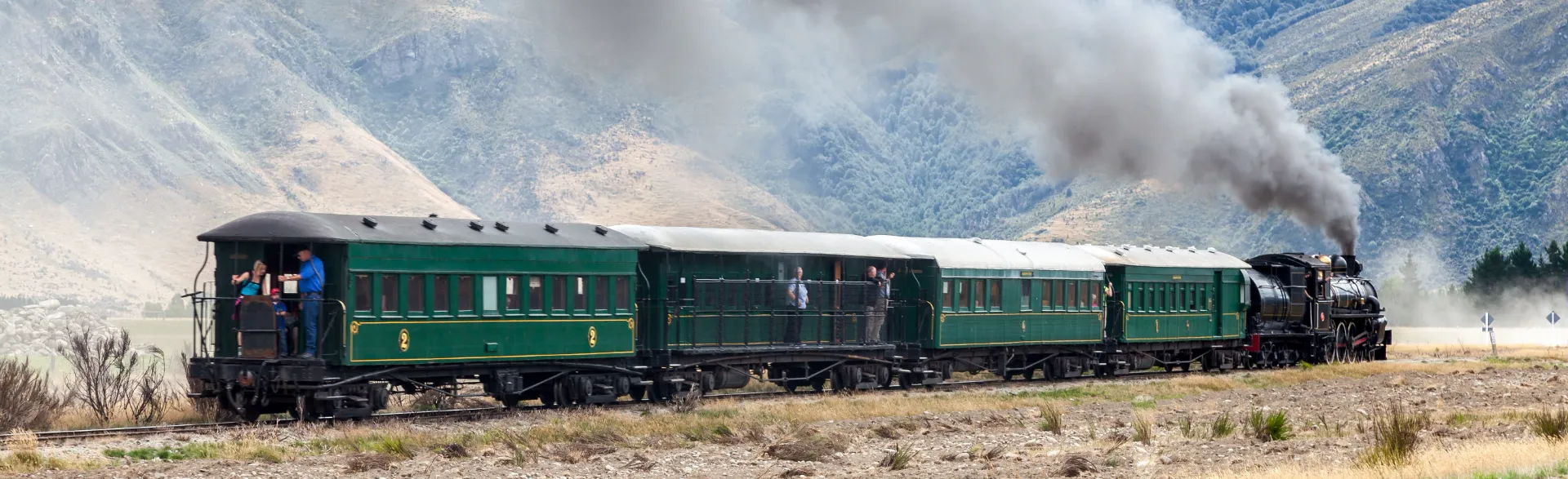
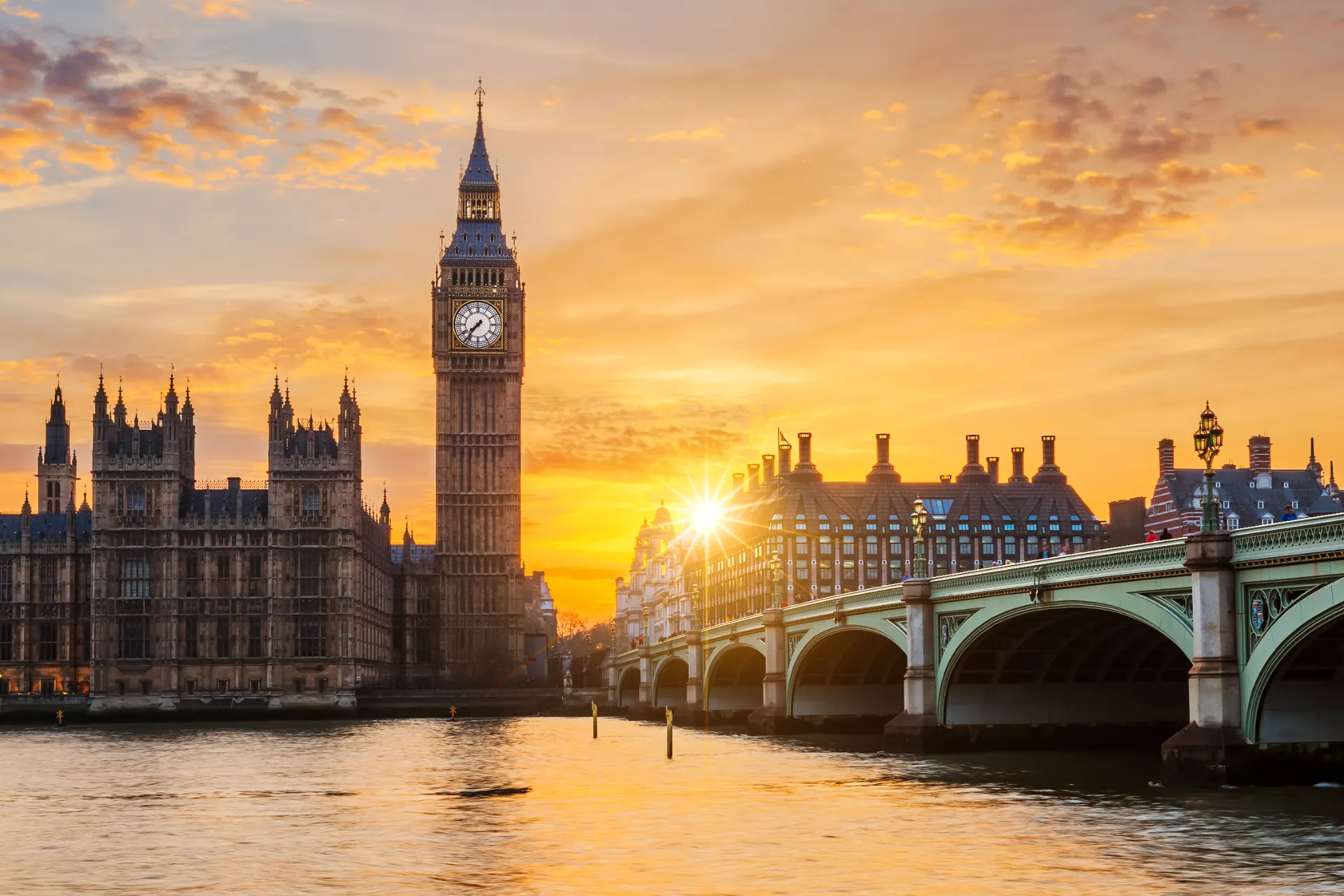
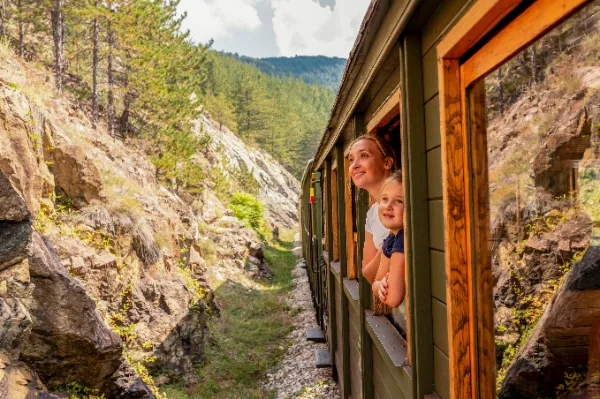
Britannic Explorer and Royal Scotsman are both overnight Belmond trains in Britain, yet the choice is rarely settled by brand or cabin category. One travels round trip from London into Cornwall, Wales or the Lake District. The other travels round trip from Edinburgh through Scotland, with journeys shaped around the Highlands, west coast and special interests.
The useful question is not which train sounds more prestigious. It is which gateway, landscape and daily program belong in the vacation you are actually planning. Cabin comfort matters, but the route will decide far more of your days.
The short answer
Choose Britannic Explorer when England or Wales is central to the trip, London is the natural gateway, and you want a contemporary sleeper with private en-suite accommodation across every current cabin category. Its current programs run for three or six nights.
Choose Royal Scotsman when Scotland is the destination, Edinburgh is the better gateway, and the appeal lies in Highland or west-coast scenery, Scottish estates, whisky, gardens, outdoor pursuits or a longer rail-led itinerary. Its current journey range runs from two to seven nights.
Neither train is the universal upgrade. Britannic Explorer offers a clear London-based route structure and modern suite proposition. Royal Scotsman offers more variation in journey length and Scottish theme. The stronger choice is the one that reduces compromises in the rest of the trip.
If both gateways work, compare the exact excursions and the number of nights before comparing cabin upgrades or onboard design.
The differences that shape the whole vacation
Decision | Britannic Explorer | Royal Scotsman |
|---|---|---|
Gateway | Round trip from London Victoria | Round trip from Edinburgh Waverley |
Current duration | Three or six nights | Two to seven nights |
Geographic focus | Cornwall, Wales and the Lake District | The Highlands, west coast and wider Scotland |
Current cabin mix | 11 Double Suites, 4 Twin Suites and 3 Grand Suites | 5 Double Cabins, 9 Twin Cabins and 4 Grand Suites |
Bathroom position | Current Double, Twin and Grand Suites are en suite | Current Double, Twin and Grand Suite categories are en suite |
Strongest planning use | A rail chapter within a London, England or Wales trip | A Scotland-centered trip with Edinburgh on either side |
Main decision risk | Choosing by the train's design before checking the route | Choosing by a romantic idea of Scotland before checking the exact excursions |
Both trains currently list 18 sleeper cabins. That makes the unsupported description of Royal Scotsman as the "smaller" train misleading. The more useful distinction is how the cabins are divided, how many nights you spend in them and what happens after you leave the train each day.
Britannic Explorer keeps the duration choice simple: a focused three-night route or a combined six-night program. Royal Scotsman offers more steps between a short introduction and a week-long rail vacation. That flexibility is useful, but it also makes departure-level comparison more important.

Choose Britannic Explorer when England or Wales leads the plan
Britannic Explorer currently offers three-night journeys to Cornwall, Wales and the Lake District. Six-night journeys combine Cornwall with Wales or the Lake District with Wales. All leave from and return to London Victoria.
The route names are broad, so the day plan deserves attention. The current Cornwall journey includes choices connected with the coast, St Ives, galleries, gardens, wine, boating and distillery visits. The Wales program reaches toward Eryri National Park and the Pembrokeshire coast, with current activities that may include hiking, wild swimming and clay pigeon shooting. The Lake District route combines outdoor time and country-estate visits with a strong food component.
That creates three distinct traveler profiles:
Cornwall suits travelers who want coast, art, gardens and food to share the itinerary rather than allowing one theme to dominate.
Wales asks for more interest in active outdoor time and varied terrain. It deserves a closer mobility and weather review.
The Lake District makes sense when landscape, estate access and culinary experiences carry similar weight.
The six-night combinations are not simply two short trips joined together. They commit a larger share of the vacation to the train and to a set program. Check whether every region earns its place. A traveler who cares deeply about Cornwall but only mildly about Wales may prefer the three-night train and a private land extension instead.
Britannic Explorer also fits neatly when London is already part of the plan. An international arrival, a few nights in the city and a round trip from Victoria can create a clean sequence. The train returns to the same gateway, so there is no need to solve an open-jaw rail itinerary afterward.
Choose Royal Scotsman when Scotland is the point
Royal Scotsman is built around Scotland rather than Britain as a whole. Current journeys range from a two-night Highlands introduction or guest-chef departure to three-night Highlands and west-coast programs, four-night classic or special-interest journeys, five-night circuits and seven-night grand tours.
The differences are concrete. A two-night Highlands journey gives limited time on board and focuses the experience tightly. The three-night West Coast journey follows the West Highland Line and currently highlights places such as Glenfinnan, Fort William and the Isle of Bute. The four-night Highlands journey names Plockton, Kyle of Lochalsh, Boat of Garten and Dundee, while Heritage Homes & Gardens and the Scotch Malt Whisky Tour use the same number of nights for much more specific interests.
Five-night choices add another layer. Clans, Castles & Isles emphasizes landscape, historic sites and islands. Scotland: The West and the Highlands combines the Cairngorms, Culloden and the Royal Yacht Britannia in its current highlights. The seven-night Grand Tour reaches farther, with Orkney, Skye and Loch Lomond named on the current journey page.
This variety is Royal Scotsman's advantage and its main planning trap. "Scotland" is too broad a reason to choose a departure. A guest who wants gardens should not be placed on a whisky-led journey because the dates are convenient. Someone dreaming of the west coast may be disappointed by a route whose strongest days sit elsewhere.
Royal Scotsman is especially convincing when the train replaces several hotel changes and long drives that would otherwise be needed to connect Scottish regions. It is less convincing when it repeats the same castles, distilleries or landscapes already planned with private guides.
Compare the cabin for the number of nights you will use it
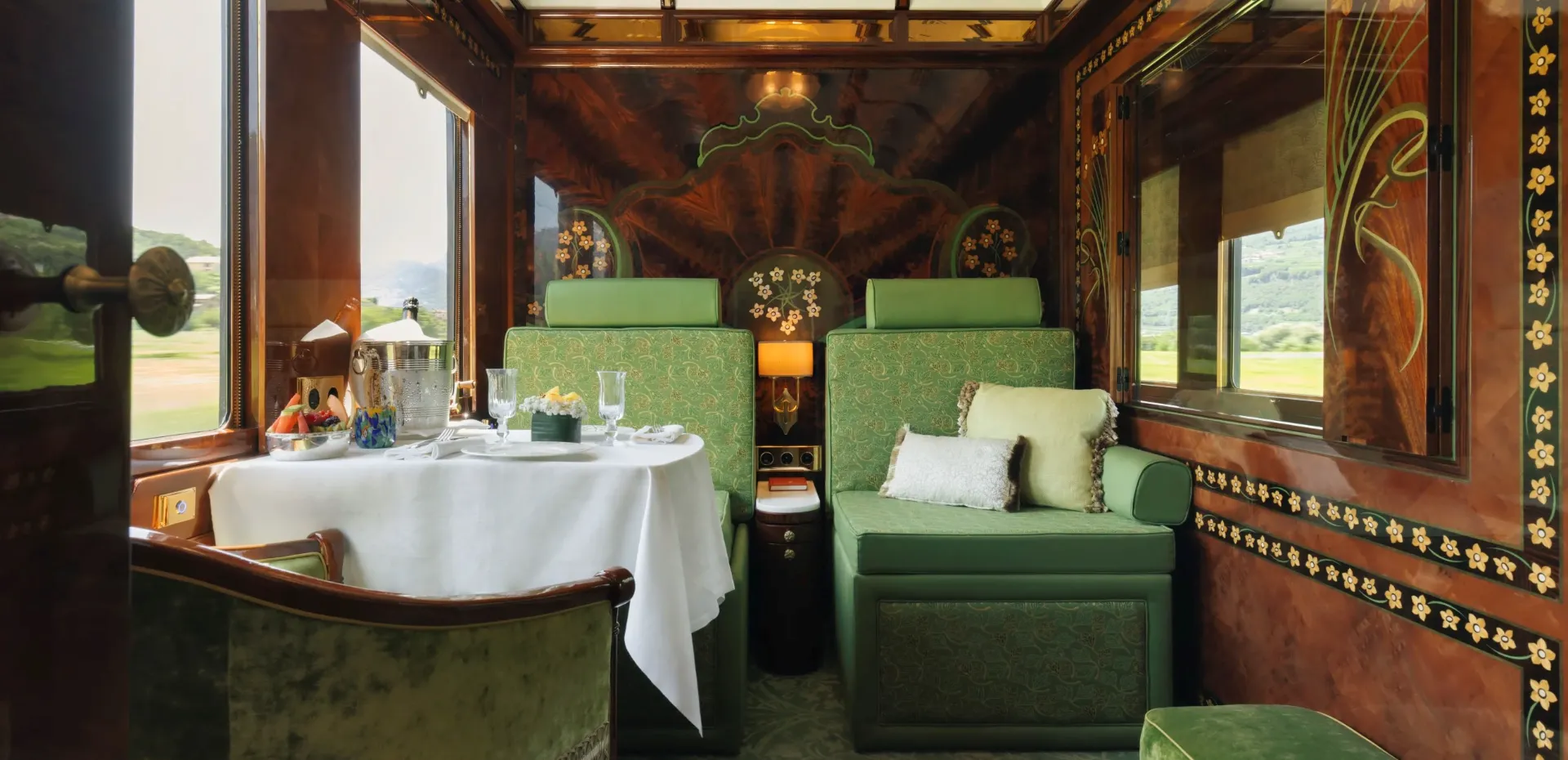
Britannic Explorer's current Double and Twin Suites use daytime seating that the steward converts for sleeping. Each has a private en-suite shower. Grand Suites add more living space and a broader service proposition. Across the train, the cabin decision is mainly about bed arrangement, private space and how much retreat you want between meals and excursions.
Royal Scotsman currently lists Double and Twin Cabins at 7.9 square meters and Grand Suites at 14 square meters. The current accommodation pages describe en-suite bathrooms in the Double and Twin categories as well as the Grand Suites. Exact layout and availability should still be confirmed for the selected departure.
Duration changes the cabin calculation. A compact room may work comfortably for two or three nights when both travelers enjoy the observation and dining cars. The same room can feel restrictive over five or seven nights if one person retires early, needs quiet time or carries more formal and outdoor clothing.
Ask practical questions before comparing names:
Does the couple need a double bed or twin beds?
How will each person move around the cabin at night?
How much private time does either traveler usually need?
Will formal clothing and weather layers fit within the luggage plan?
Is the cabin position suitable for any mobility or sleep concern?
Would extra suite space be used, or would most waking time be spent in the public cars?
Wi-Fi is another small but useful difference. Britannic Explorer currently says Wi-Fi is available throughout the train, although it may be intermittent in remote areas. Royal Scotsman currently limits Wi-Fi to the Observation Car and warns that it works for only parts of the journey. Anyone who expects to work should treat both trains as unreliable office environments.
Let the excursions decide before the decor does
Off-train time is not filler on either train. It supplies much of the destination experience. Read the exact departure itinerary instead of relying on a route-family summary.
For Britannic Explorer, compare the balance of activity, culture and food. Cornwall's current options are broader and more elective than the name suggests. Wales includes more physically active possibilities. The Lake District combines estate, outdoor and culinary elements. A six-night route can produce several active days, so recovery time matters.
For Royal Scotsman, compare theme as well as geography. The current collection includes classic Highlands routes, the west coast, a whisky journey, homes and gardens, guest-chef departures, island-and-castle content and longer circuits. Two departures with the same number of nights may have almost nothing else in common.
For either train, ask:
Which two off-train experiences would be genuinely disappointing to miss?
Which activities involve steps, uneven ground or extended walking?
Are there alternatives when an included activity is unsuitable?
How much of each day is guided, and how much is unstructured?
Does the itinerary duplicate the private touring before or after the train?
Do both travelers share the main interest, especially on a themed departure?
The answer often makes the train choice obvious. A route with fewer compromises is more valuable than a more spacious cabin on a program that does not fit.
Plan the gateway, luggage and evenings as one system
Britannic Explorer asks travelers to check in at London Victoria. Royal Scotsman currently starts its check-in process at The Balmoral Hotel beside Edinburgh Waverley before guests board the train. Both return to the city where they began.
Build a buffer before the train after an international flight. A late aircraft, delayed bag or missed connection should not threaten a fixed rail departure. The first city also deserves enough time to feel like part of the vacation, rather than a holding room before boarding.
Luggage needs similar restraint. Britannic Explorer currently recommends one suitcase, one carry-on and one garment bag per guest. Royal Scotsman recommends one suitcase and one carry-on, with luggage storage at The Balmoral available when necessary. The written allowance is only the first check; cabin storage and a longer land itinerary may justify leaving part of the wardrobe at the gateway hotel.
Evening expectations differ in detail. Britannic Explorer describes daytime dress as informal, dinner as smart casual with a jacket requested for gentlemen, and the final evening as a chance for more elegant clothing. Royal Scotsman recommends smart casual dress for dinner and more formal attire for formal or gala evenings. The final documents for the exact departure should control the packing list.
Who should pause before choosing either train?
Britannic Explorer may not fit a traveler whose central dream is Scotland, who wants a two-night introduction, or who does not want London as the rail gateway. Royal Scotsman may not fit someone whose priorities are Cornwall, Wales or the Lake District, or whose flights make Edinburgh awkward.
Pause on both trains if you need hotel-size rooms, dislike group excursions, require spontaneous daily choices or are uneasy sleeping on a moving train. The same caution applies when one traveler loves organized social time and the other needs long private intervals.
Mobility should be assessed against the full day. Boarding, corridors and cabin position matter, but so do coaches, estate paths, distilleries, docks and uneven outdoor ground. General accessibility language is not enough. Request written answers for the exact journey and selected activities before committing.
Is Royal Scotsman smaller than Britannic Explorer?
Not by the current published sleeper-cabin count. Both official train overviews list 18 sleeper cabins. Their cabin mix, public spaces, routes and daily rhythm are different, so the shared total should not be used as a shortcut for atmosphere.
Which train is better for a shorter first sleeper journey?
Royal Scotsman currently offers two-night departures, while Britannic Explorer's current routes begin at three nights. The shorter option can reduce commitment, but the excursion fit and gateway still matter more than one saved night.
Do both trains have private bathrooms?
The current accommodation pages list en-suite facilities across Britannic Explorer's Double, Twin and Grand Suites and Royal Scotsman's Double, Twin and Grand Suite categories. Confirm the exact cabin description in the booking documents.
Which train is more formal?
Both expect polished evening dress, but the written guidance differs. Britannic Explorer requests smart casual dinners and a more elegant final evening. Royal Scotsman advises smart casual dress for regular dinners and formal clothing for formal or gala dinners.
Can both trains fit into one vacation?
They can, but using both should serve a clear purpose. London and Edinburgh need connecting time, and two sleeper programs can repeat the same social and dining rhythm. For many travelers, one train plus a contrasting private land itinerary creates a more balanced vacation.
Choose the geography first, then the exact days, and only then the cabin. That order protects the wider trip from being designed around a famous train name.
For help placing the right British sleeper within a complete itinerary, explore Evyssa's Rail Vacations.

Csilla Dali
Founder & Lead Travel Advisor
Itineraries to consider
Are You Planning Your Next Vacation?
Check out our top recommendations!